A remarkable archaeological discovery in central Italy is providing researchers with a rare opportunity to study one of the ancient world’s most fascinating civilizations. An international team of archaeologists has uncovered a completely sealed Etruscan tomb dating back approximately 2,600 years, offering an extraordinary glimpse into the burial traditions and daily life of the Etruscans.
Unlike many ancient tombs that were looted centuries ago, this burial chamber remained untouched since it was sealed in the late 7th century BC. Its exceptional state of preservation has allowed experts to examine the original placement of human remains and grave goods exactly as they were left more than two millennia ago.
Four Individuals Buried Together
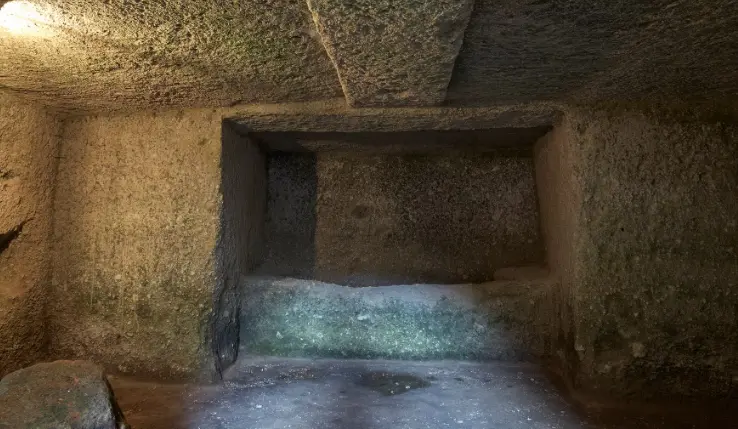
Inside the tomb, archaeologists discovered the skeletal remains of four individuals carefully laid on carved stone burial beds. Although researchers have not yet confirmed their identities or relationships, the arrangement suggests they may have belonged to the same family or social group.
The discovery offers valuable insight into Etruscan funerary customs, which often reflected a person’s social standing, beliefs, and family connections.
Experts will now conduct detailed osteological examinations, DNA testing, and isotope analysis to determine the age, sex, health, and possible family relationships of the individuals buried inside the chamber.

Credit: San Giuliano Archaeological Research Project (SGARP)
More Than 100 Ancient Artifacts
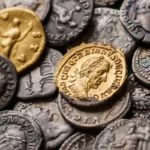
The tomb also contained an impressive collection of well-preserved grave goods. Archaeologists recovered more than one hundred artifacts, including dozens of ceramic vessels, iron weapons, bronze ornaments, silver hair accessories, and various everyday objects that accompanied the deceased into the afterlife.
Each artifact provides important clues about Etruscan craftsmanship, trade, religious beliefs, and social hierarchy. The excellent preservation of these objects allows researchers to study manufacturing techniques and decorative styles that have survived for over two and a half millennia.
According to archaeologists, the careful arrangement of these objects is just as important as the objects themselves, since their placement may reveal symbolic meanings connected to ancient burial rituals.

Credit: San Giuliano Archaeological Research Project (SGARP)
Why the Discovery Matters
Finding an untouched ancient tomb is extremely rare. Throughout history, countless burial sites were damaged by grave robbers, natural disasters, or later construction activities, leaving archaeologists with only partial evidence.
This newly discovered chamber is different because it remained sealed for centuries, preserving the original archaeological context. That means every object, every skeleton, and every detail can be examined exactly where it was left during the burial ceremony.
Such discoveries allow researchers to reconstruct ancient traditions with much greater accuracy than is usually possible.
Who Were the Etruscans?
The Etruscans were one of the most influential civilizations in Italy before the rise of ancient Rome. They flourished between the 8th and 3rd centuries BC and established prosperous cities across what is now Tuscany, Lazio, and parts of Umbria.
They were highly skilled metalworkers, architects, merchants, and artists whose innovations influenced Roman culture in many ways. Historians believe the Romans adopted several important traditions from the Etruscans, including aspects of religion, engineering, architecture, and political organization.
Despite decades of research, many aspects of Etruscan society remain mysterious. Their language is only partially understood, and much of what scholars know today comes from archaeological excavations rather than written historical records.
For that reason, every new discovery has the potential to answer long-standing questions while raising new ones.
Scientific Research
The excavation marks only the beginning of a much longer scientific process. Researchers are now carefully documenting every artifact before conservation work begins.
Advanced laboratory testing will help determine whether the individuals were related, where they spent their childhood, what kind of diet they followed, and whether they suffered from any diseases or injuries during their lives.
Scientists also hope to identify where the raw materials used to create the jewelry, pottery, and weapons originated. These studies may reveal previously unknown trade connections between Etruscan communities and other Mediterranean civilizations.

Credit: San Giuliano Archaeological Research Project (SGARP)
A Site Rich in History
The tomb was discovered as part of ongoing archaeological work in the San Giuliano area of central Italy, a region well known for its extensive Etruscan necropolises and rock-cut tombs.
For decades, archaeologists have considered the area one of Italy’s most important archaeological landscapes. The latest discovery suggests that many more undiscovered tombs may still lie beneath the surrounding terrain.
Every excavation in the region contributes new information about the people who lived there long before Rome became a dominant power.
Looking Back Through Time
While spectacular discoveries often capture public attention because of their age or the treasures they contain, archaeologists emphasize that the real value lies in the information preserved within the site.
An untouched burial chamber provides an authentic snapshot of a single moment in history, allowing researchers to better understand ancient beliefs, family structures, craftsmanship, and social customs.
As scientific analysis continues over the coming months, experts hope the findings will offer fresh insights into one of Europe’s most influential ancient civilizations. The combination of well-preserved human remains and more than one hundred artifacts makes this discovery one of the most significant Etruscan archaeological finds in recent years, opening a rare window into a culture that helped shape the foundations of early Italy.
This article is based on archaeological research conducted by the San Giuliano Archaeological Research Project and collaborating institutions, along with reports from scientific and archaeological media.
Written by Hidden Civilizations Editorial Team