Archaeological Discovery Challenges What We Know About the Stone Age
When most people imagine life during the Stone Age, they picture small groups of hunter-gatherers constantly moving across the landscape in search of food. For decades, archaeologists believed these communities simply relied on whatever nature provided without making significant changes to their environment.
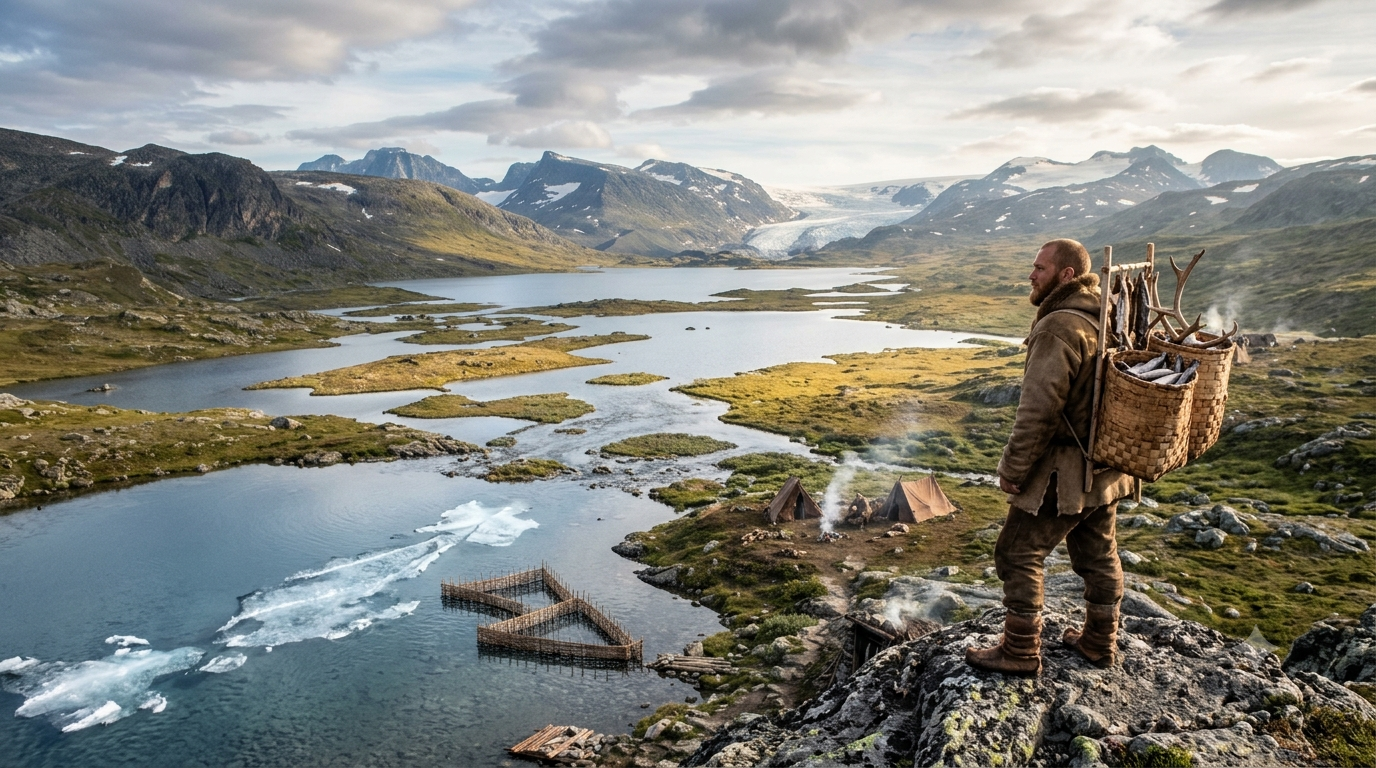
However, new archaeological research from Norway is changing that perspective. Evidence discovered in the country’s mountainous regions suggests that people living around 7,000 years ago actively reshaped their surroundings to secure a reliable food supply. Rather than waiting for nature to provide, these ancient communities appear to have transported live trout into mountain lakes that previously contained no fish, creating sustainable fishing grounds that could support generations.
Empty Mountain Lakes After the Ice Age
Following the end of the last Ice Age, glaciers left behind thousands of lakes scattered throughout the Scandinavian mountains. Although these lakes offered clean, cold water—an ideal habitat for trout—many remained completely fishless.
The reason was simple. Waterfalls, steep rivers, and natural barriers prevented fish from reaching these isolated lakes on their own. As a result, countless freshwater lakes remained empty for thousands of years despite having perfect living conditions.
For prehistoric communities living nearby, these untouched lakes represented an opportunity waiting to be discovered.

Archaeologists Unearth Ancient Fishing Structures
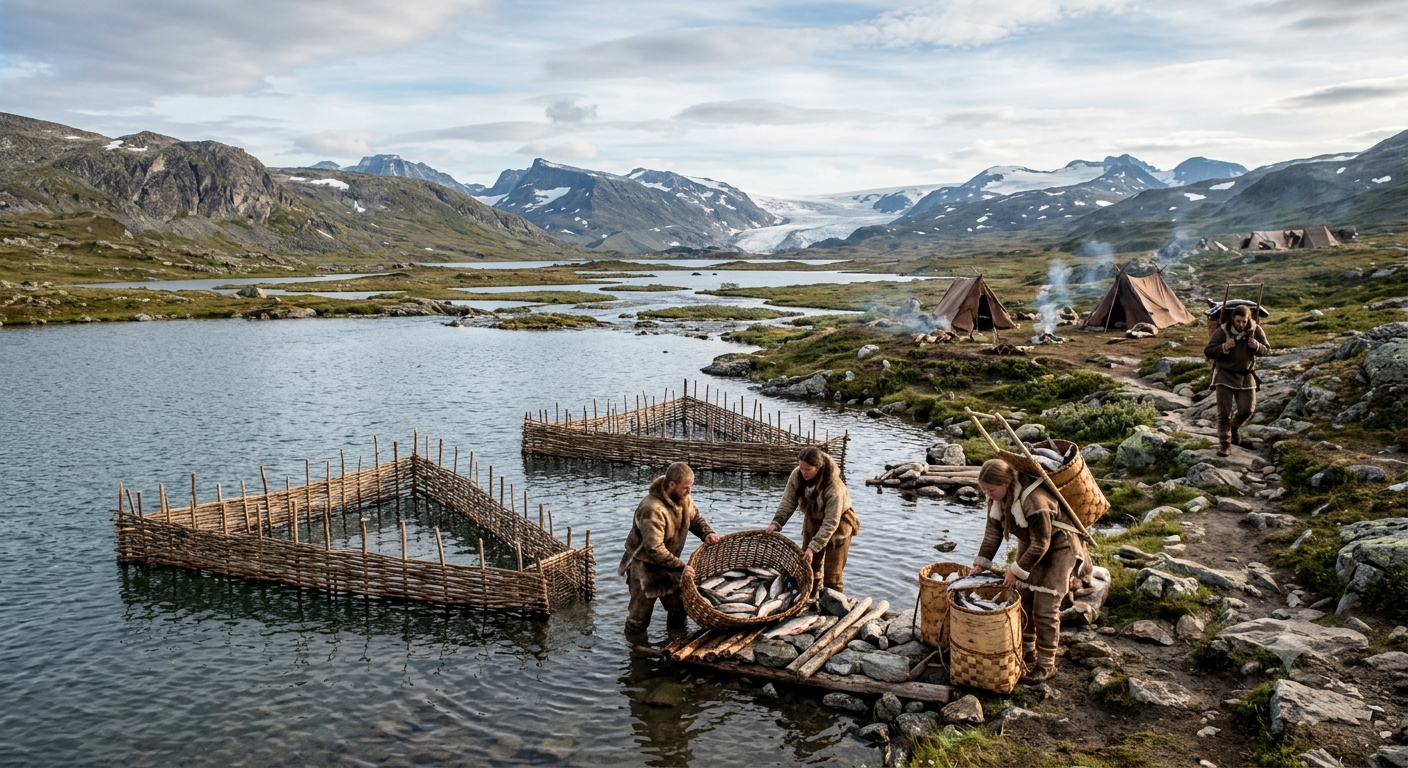
Researchers working near Lake Tesse in southern Norway uncovered several remarkably preserved wooden structures beneath the water. Detailed analysis revealed that these were carefully constructed fish traps rather than random pieces of wood.
Radiocarbon dating showed that some of the structures were built around 5000 BC, making them approximately 7,000 years old. These finds represent some of the oldest known evidence of organized freshwater fishing in northern Europe.
The discovery immediately raised an important question: if these lakes originally contained no fish, how were people catching trout there thousands of years ago?
Transporting Fish Was No Easy Task
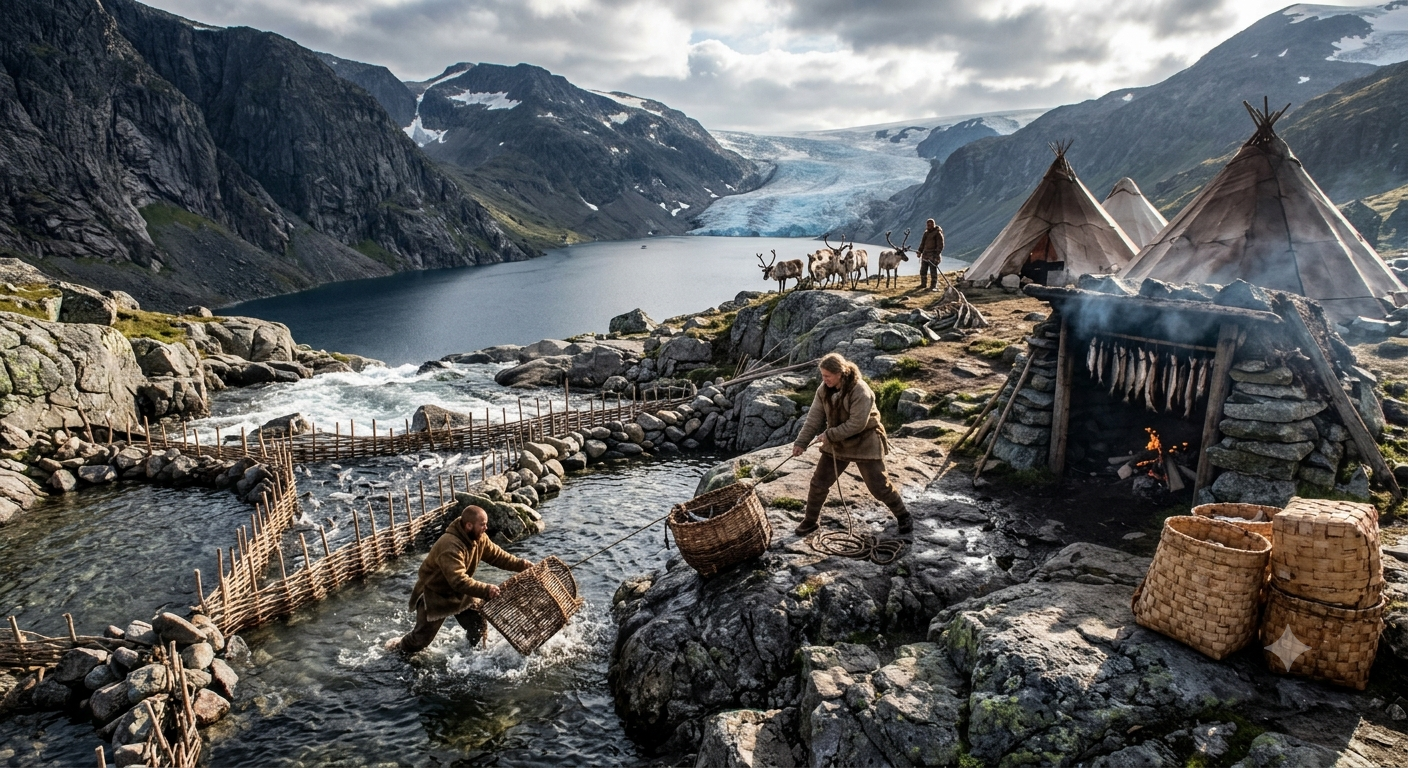
Scientists believe prehistoric people deliberately moved live brown trout from rivers and lower-altitude lakes into isolated mountain lakes.
Although the exact methods remain unknown, transporting live fish would have required planning, teamwork, and practical knowledge. The fish had to survive the journey, meaning people likely carried them in water-filled containers or other carefully prepared vessels.
Such an effort would not have been accidental. It suggests these communities understood fish behavior, seasonal conditions, and the geography of the landscape remarkably well.
A Long-Term Investment in Food
Unlike hunting wild animals, which depended on migration patterns and changing seasons, introducing trout into new lakes offered a dependable food source for years to come.
Once the fish adapted to their new environment, they could reproduce naturally and establish self-sustaining populations. Future generations would then have reliable places to fish without traveling long distances.
This strategy reflects long-term planning rather than short-term survival. Instead of simply consuming available resources, these communities invested effort in creating future resources.
Evidence of Advanced Environmental Knowledge
The discovery also highlights how well prehistoric people understood the natural world around them.
Successfully introducing fish into a new ecosystem required recognizing suitable habitats, understanding seasonal water conditions, and selecting healthy fish capable of reproducing. These decisions demonstrate practical ecological knowledge developed through centuries of observation and experience.
Rather than living randomly within nature, these hunter-gatherers were actively managing it.
Rethinking Hunter-Gatherer Societies
For many years, historians associated environmental management primarily with the rise of agriculture around 10,000 years ago. Farming communities were believed to be the first societies capable of intentionally modifying landscapes.
The Norwegian evidence tells a different story.
Long before crops and livestock became common in Scandinavia, hunter-gatherers were already making deliberate changes to local ecosystems. Introducing fish into isolated lakes represents one of the clearest examples of prehistoric environmental engineering discovered in northern Europe.
It suggests that innovation did not begin with farming—it had already become part of human survival thousands of years earlier.
Ancient Decisions Still Shape Nature Today
One of the most fascinating aspects of the research is that many of these mountain lakes still contain thriving trout populations.
Scientists believe some of today’s fish may be descendants of the original trout introduced by prehistoric people thousands of years ago. If true, a single human decision made during the Stone Age continues to influence local ecosystems even today.
Few archaeological discoveries demonstrate such a direct connection between ancient human activity and the modern environment.
Why This Discovery Matters
Beyond fishing, the discovery offers valuable insight into human intelligence and adaptability.
It shows that prehistoric communities were capable of planning years into the future, organizing complex tasks, and working together to improve their chances of survival. They were not simply reacting to nature—they were shaping it.
The findings also challenge outdated assumptions that hunter-gatherers lived simple, unorganized lives. Instead, they reveal societies capable of careful planning, cooperation, and sophisticated environmental knowledge.
Looking Toward the Past to Understand the Future
As archaeologists continue studying ancient landscapes, discoveries like this remind us that humans have influenced ecosystems for far longer than previously believed.
Understanding how prehistoric societies interacted with nature can also help scientists better understand modern environmental change. These ancient communities achieved lasting results without advanced technology, relying instead on observation, experience, and cooperation.
Their story demonstrates that innovation is not a modern invention. It has always been one of humanity’s greatest strengths.
Conclusion
The discoveries in Norway paint a new picture of life during the Stone Age. Around 7,000 years ago, hunter-gatherers were doing far more than surviving from one season to the next. They were actively managing natural resources, reshaping ecosystems, and creating sustainable food supplies for future generations.
This remarkable research continues to transform our understanding of prehistoric societies. Rather than viewing ancient people as passive inhabitants of nature, we now see them as skilled planners and problem-solvers whose decisions can still be observed thousands of years later.
As new archaeological discoveries emerge, they continue to reveal that our ancestors were far more innovative, organized, and knowledgeable than once imagined.
Source: archaeologymag.com
Written by Hidden Civilizations Editorial Team