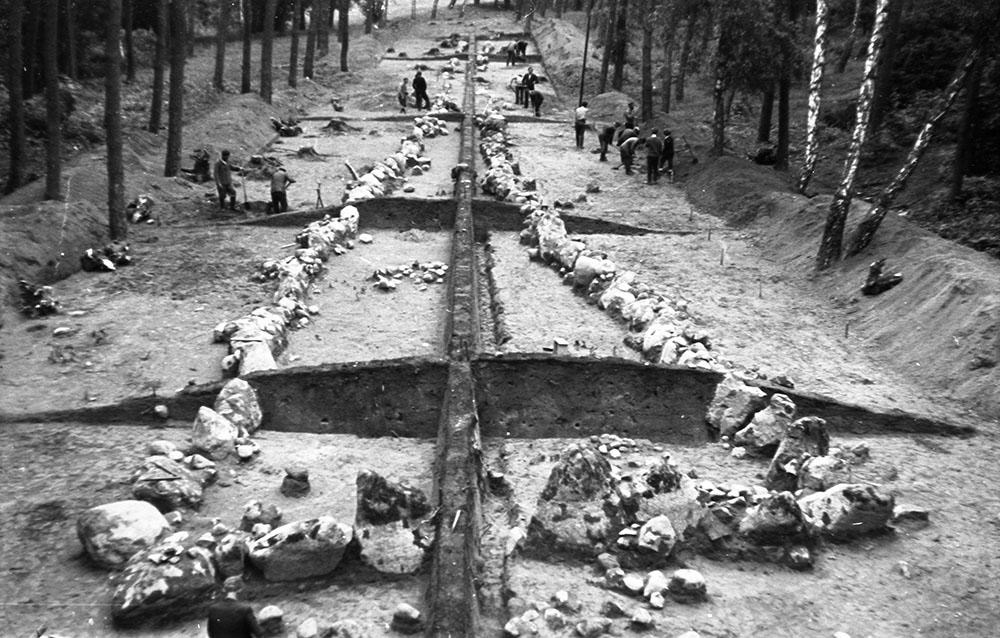
A remarkable archaeological discovery in western Poland may shed new light on one of Europe’s earliest farming communities. Archaeologists have identified an unusual elongated earthwork near the village of Wyrzec that is believed to be a monumental megalithic tomb dating back roughly 5,500 years.
Hidden within a wooded landscape near the village of Wyrzec, in the Śrem municipality of western Poland, archaeologists have uncovered the remains of a prehistoric monument that had remained largely unnoticed for thousands of years.
At first glance, the site appeared to be little more than a long, low mound in the landscape. However, closer investigation revealed that the structure was far from natural.
Researchers now believe that the earthwork represents a monumental Neolithic tomb, constructed around 5,500 years ago by communities associated with the Funnel Beaker culture, one of the most important prehistoric cultures of northern and central Europe.
The discovery is particularly significant because relatively few confirmed monuments of this type have been identified in this part of Poland.
The discovery began with LiDAR technology
The monument was first identified in 2024, not through traditional excavation, but through modern remote-sensing technology.
Archaeologists used LiDAR, a laser-based scanning technique that can create highly detailed images of the ground surface. The technology has become an increasingly valuable tool in archaeology because it can reveal ancient structures hidden beneath vegetation, woodland and centuries of natural changes.
In this case, the LiDAR data revealed an unusual elongated feature in the landscape near Wyrzec.
Its shape immediately attracted the attention of researchers. Rather than appearing to be a natural geological formation, the feature resembled the distinctive form of a prehistoric long barrow or megalithic burial monument.
Further non-invasive investigations were carried out in 2025. These surveys provided enough evidence for archaeologists to begin targeted excavations at the site.
What they found strengthened the theory that the mound had been deliberately constructed by prehistoric people.
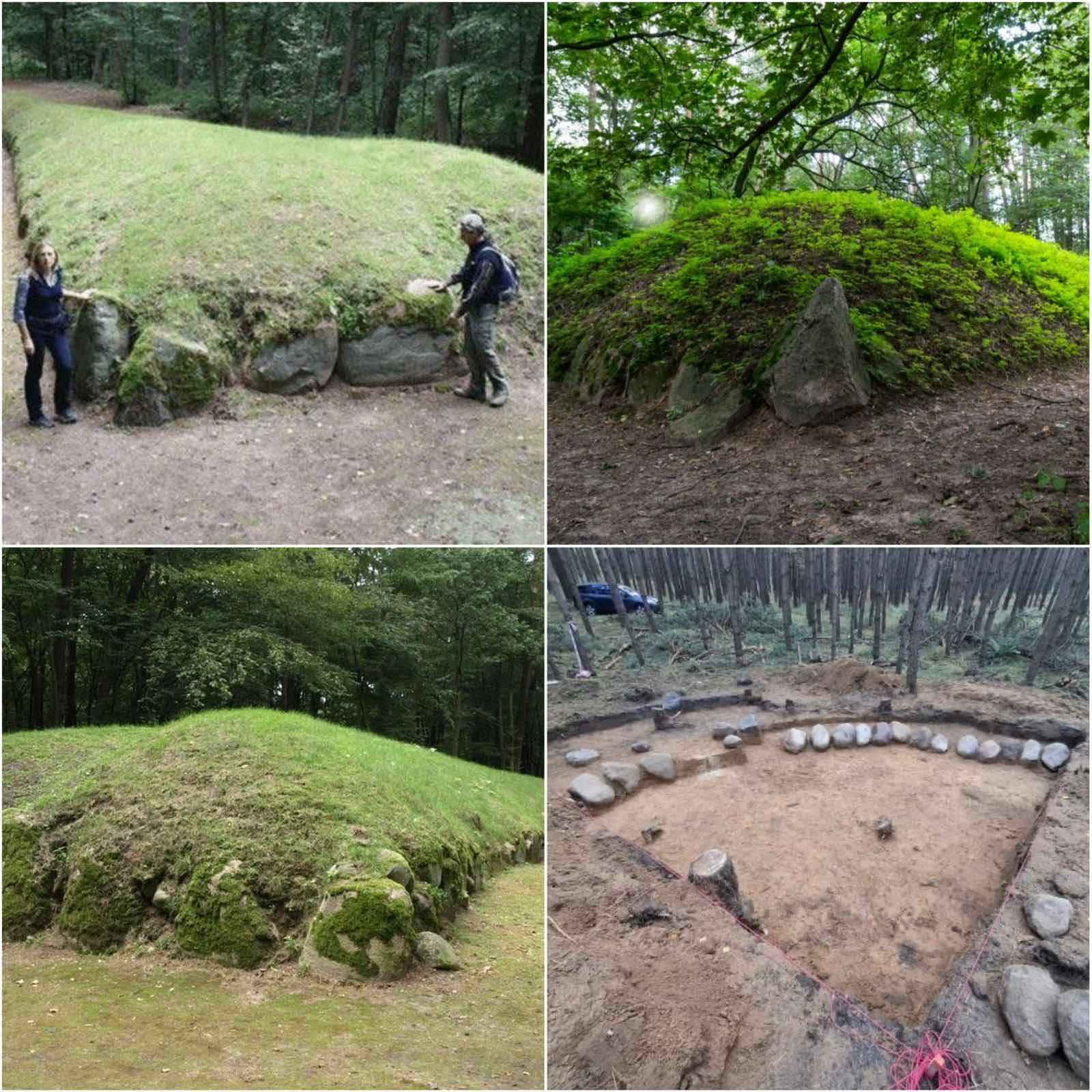
Credit: Jakub Kaczmarczyk / HeritageDaily — for the lead image published with the original HeritageDaily article.
A monument built by early farmers
The tomb is believed to date to approximately 5,500 years ago, a period when farming communities were becoming firmly established across large parts of central and northern Europe.
These prehistoric communities cultivated crops, raised domesticated animals and lived in permanent or semi-permanent settlements. But they were also capable of organizing large communal projects that required considerable planning and cooperation.
The construction of a monumental tomb would have been a major undertaking.
It required people to move large quantities of soil, transport stones and carefully arrange the structure. Such a project could not have been completed by one or two individuals. Instead, it likely involved coordinated work by a substantial part of the local community.
Archaeologists working at Wyrzec have identified large stone blocks and smaller stones that appear to have formed part of the structure supporting the earthwork.
These remains are important because they provide strong evidence that the mound was deliberately constructed.
The combination of its unusual shape, stone elements and archaeological material makes a natural origin extremely unlikely.
Who was buried inside?
One of the biggest mysteries surrounding the discovery is the identity of the person or people for whom the monument was built.
Monumental tombs from the Neolithic period were not necessarily constructed for everyone in a community. Their enormous size and the amount of labour involved suggest that some of them may have been associated with individuals who held a special position.
The person buried inside could have been an important member of the community — perhaps a respected elder, leader or individual with a religious or ceremonial role.
However, archaeologists have not yet been able to determine exactly who was buried at the site.
Much of the monument still requires investigation, and further excavation could potentially reveal human remains, burial deposits or other objects that could help reconstruct the history of the tomb.
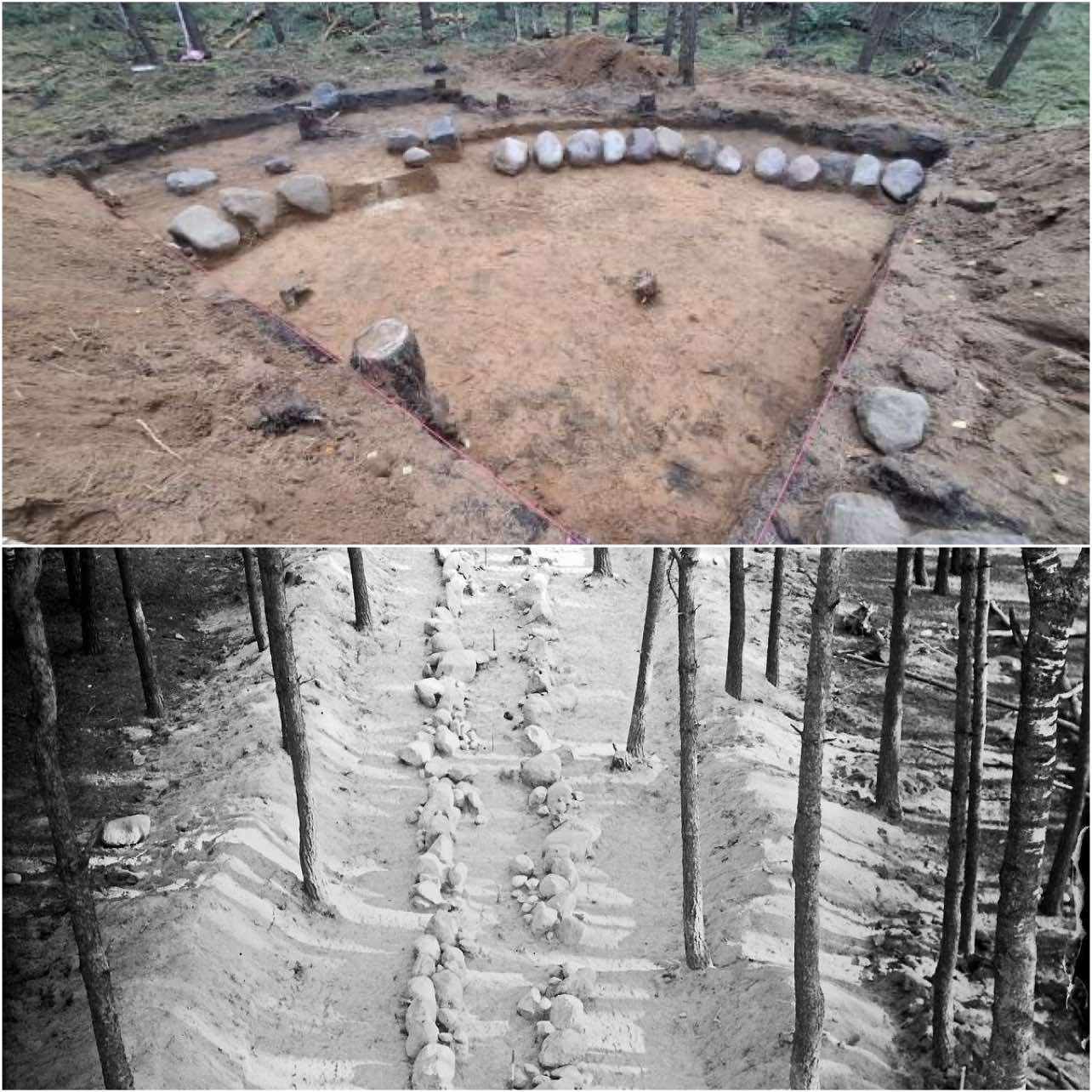
Credit: Polskie Radio PiK, photograph published with its archaeological report.
Pottery fragments provide another important clue
Among the archaeological finds recovered from the site are fragments of prehistoric pottery.
Although small pieces of broken pottery may seem insignificant compared with massive stones or monumental earthworks, such objects are extremely valuable to archaeologists.
Pottery can help researchers establish the approximate age of a site and identify cultural connections between different prehistoric communities.
In this case, the ceramic fragments appear to support a connection with the Funnel Beaker culture, the prehistoric society commonly associated with many megalithic monuments across parts of northern and central Europe.
The Funnel Beaker culture existed during the Neolithic period and is known for its distinctive pottery, agricultural lifestyle and monumental architecture.
Its communities constructed a variety of large burial monuments and other structures, demonstrating that prehistoric societies were capable of organizing complex communal activities long before the emergence of cities and states.
Why the discovery matters
The Wyrzec monument is important not simply because it is an ancient tomb, but because it contributes to our understanding of how prehistoric communities transformed the landscape.
The Greater Poland region has relatively few confirmed examples of monumental megalithic tombs of this particular type.
The discovery therefore provides archaeologists with another important piece of evidence for understanding the spread and development of megalithic traditions across prehistoric Europe.
Other Neolithic long barrows found elsewhere in Europe could reach extraordinary dimensions. Some were more than 130 metres long, demonstrating the enormous scale of certain prehistoric construction projects.
These monuments required far more than physical labour. Their construction would also have demanded planning, leadership, cooperation and a shared social or religious purpose.
The Wyrzec monument may therefore offer clues about how early farming communities were organized and how they understood death, memory and their relationship with the landscape.
More than just a burial place
For archaeologists, prehistoric monuments such as this are valuable because they reveal much more than burial practices.
They can provide information about the social structure of ancient communities and the relationships between individuals.
Building a large communal monument required people to work together toward a common objective. This suggests that these communities possessed systems of cooperation and organization that were considerably more sophisticated than the simple image of isolated prehistoric farmers might suggest.
The monument may also have served as a place for ceremonies or gatherings.
Megalithic tombs were not necessarily spaces that were used only once, at the moment of burial. Some may have remained important places for communities long after the original burial took place.
People could have returned to such locations to perform rituals, commemorate ancestors or reinforce connections between the living and the dead.
Although archaeologists cannot yet say exactly how the Wyrzec monument was used, its monumental scale suggests that it had a meaning extending far beyond the individual burial.
Reconstructing a prehistoric landscape
Another fascinating aspect of the discovery is the way modern technology has helped researchers rediscover a landscape that was created thousands of years ago.
The area surrounding Wyrzec would have looked very different when the monument was built.
There would have been no modern roads, villages or infrastructure. Instead, the landscape would have consisted of forests, open areas, cultivated land and small prehistoric settlements.
The people who constructed the tomb lived at a time when farming was fundamentally changing human society.
Communities were becoming more settled, populations were growing and people were developing stronger connections to particular places.
Building a permanent monument in the landscape may have been one way for these communities to establish a lasting connection with their ancestors and their territory.
Thousands of years later, the monument itself has become evidence of that relationship.
A glimpse into the lives of people who lived 5,500 years ago
Perhaps the most remarkable aspect of the discovery is its age.
Around 5,500 years ago, the societies that built these monuments had no written records. They left behind no books or historical accounts explaining who they were, what they believed or why they constructed their tombs.
Instead, archaeologists must reconstruct their lives from physical remains.
A stone placed in a particular location, a fragment of pottery, a burial and the shape of an earthwork can each provide a small piece of evidence.
When these clues are combined, researchers can begin to reconstruct the story of a community that disappeared thousands of years ago.
The Wyrzec monument is another such piece of evidence.
Excavations are still underway
Despite the significance of the discovery, archaeologists have not yet uncovered everything the monument may contain.
Only part of the structure has been investigated, meaning that important questions remain unanswered.
Researchers still need to determine the monument’s full dimensions, understand its internal construction and establish whether additional burials or ritual features are present.
They will also be looking for organic remains and other archaeological material that could provide additional information about the people who built and used the site.
Future excavations may reveal evidence capable of answering some of the biggest questions surrounding the monument.
Who was buried there?
Why was this particular location chosen?
How many people were involved in constructing the tomb?
And what role did the monument play in the lives of the people who returned to it?
A monument that survived for thousands of years
The discovery near Wyrzec is a reminder that some of Europe’s most important archaeological sites can remain hidden in plain sight.
What looks today like an ordinary mound in a wooded landscape may actually be the remains of a carefully planned monument created by people who lived thousands of years before the rise of the first cities in the region.
The combination of LiDAR scanning, archaeological surveying and excavation has allowed researchers to identify a structure that had largely disappeared from human memory.
For the archaeologists studying the site, the discovery provides an opportunity to learn more about the communities that inhabited Greater Poland during the Neolithic period.
It also demonstrates how much remains to be discovered beneath Europe’s modern landscapes.
The ancient monument at Wyrzec may have been built to preserve the memory of someone who lived more than five millennia ago. Today, it is doing something remarkably similar for the people who built it: it is preserving a small but valuable trace of their existence.
As research continues, archaeologists hope that the site will reveal more of its secrets and help place the monument within the wider story of Europe’s prehistoric megalithic traditions.
For now, the ancient earthwork stands as a striking reminder that long before written history, farming communities were already reshaping the European landscape, creating monuments intended to endure — and, in this case, succeeding for more than 5,000 years.
Written by Hidden Civilizations Editorial Team