More than four centuries ago, one of King Henry VIII’s most important warships disappeared beneath the waters off the English coast. On board were hundreds of sailors, soldiers, weapons, tools, and everyday objects that would eventually provide an extraordinary glimpse into life during the Tudor era.
The ship was the Mary Rose, and its story is one of war, disaster, discovery, and one of the most remarkable archaeological recoveries ever carried out beneath the sea.
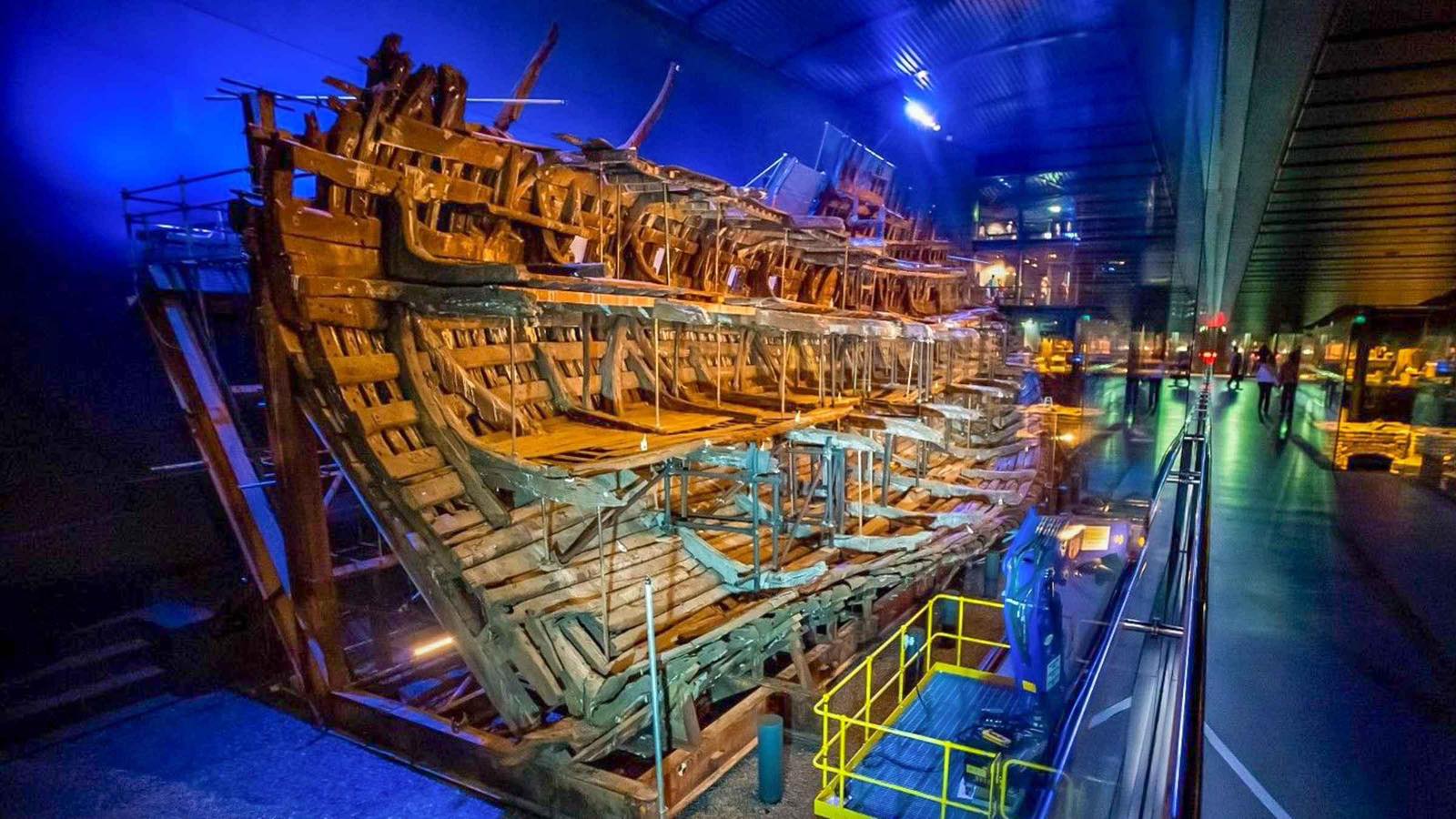
Photo credit: Wikimedia Commons — CC BY-SA 3.0
A Warship Built for a King
The Mary Rose was commissioned in 1510, shortly after Henry VIII came to the throne. At a time when England was working to strengthen its naval power, the ship became an important part of the king’s growing fleet.
Its name is believed to combine religious symbolism with the Tudor dynasty’s famous rose emblem.
For more than three decades, the Mary Rose served England and took part in several military campaigns. It eventually became one of the most recognizable ships associated with Henry VIII.
But its most famous mission would end in tragedy.
The Disaster of 1545
In 1545, England was once again at war with France. A large French fleet entered the waters around the Isle of Wight, threatening the English coast.
The Mary Rose was among the English ships sent into battle.
During the fighting, the ship suddenly turned sharply. Exactly why it sank remains a subject of discussion, but historians believe that the vessel heeled over far enough for water to rush through open gun ports. Within moments, the ship was in serious trouble.
The Mary Rose sank rapidly, taking hundreds of people with it. Only a small number of the people aboard survived. Henry VIII was reportedly watching the battle from the shore and witnessed the loss of his warship.
Forgotten Beneath the Water
Attempts to recover the Mary Rose began soon after the sinking. Salvage experts tried to raise the vessel, but their efforts failed.
The ship was eventually abandoned on the seabed.
For centuries, the remains slowly disappeared beneath layers of sediment. The wreck became little more than a forgotten piece of England’s maritime past.
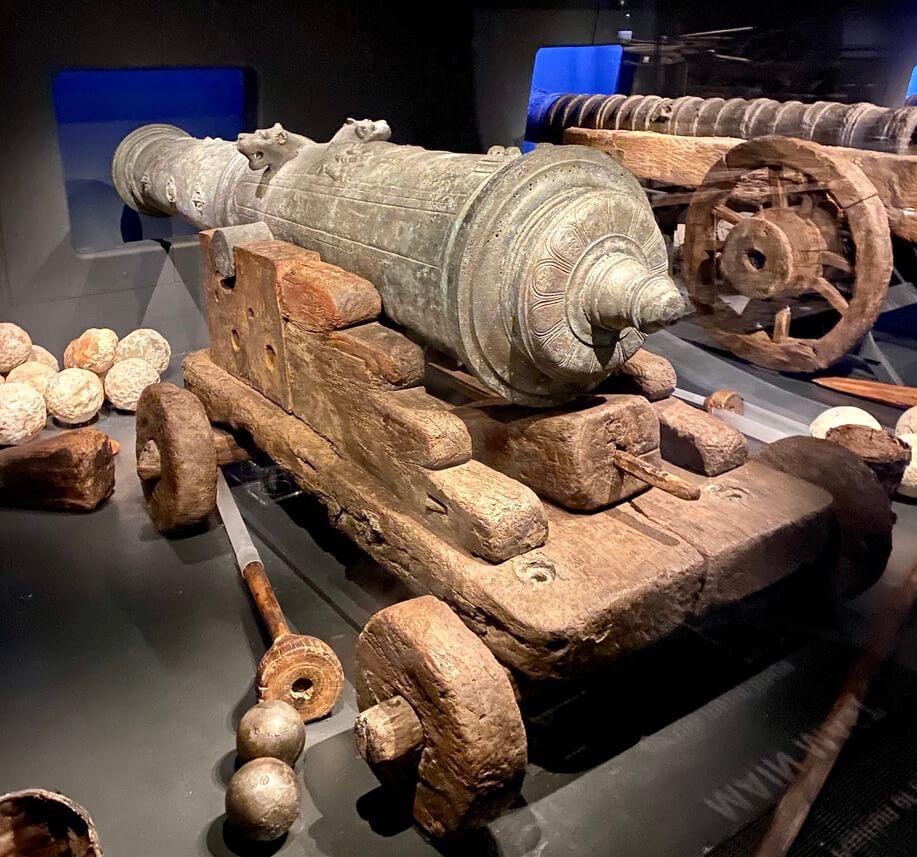
Then, in the nineteenth century, fishermen accidentally encountered parts of the wreck while working in the area. Divers recovered several objects, including pieces of timber and a cannon.
Yet the discovery did not immediately lead to a full investigation. The *Mary Rose remained hidden for many more decades.
The Search Begins Again
The modern search for the wreck began in the twentieth century. During the 1960s, researchers studying shipwrecks in the Solent began investigating possible locations of the Mary Rose. Archaeologists and divers used historical records, maps, sonar equipment, and underwater surveys to narrow down the search. Eventually, they found what appeared to be a large wooden structure buried beneath the seabed.
It was the remains of the Mary Rose.
What followed was years of painstaking archaeological work. Divers carefully removed layers of sediment and recovered objects that had been sitting underwater since the sixteenth century. Thousands of artifacts emerged from the wreck.
A Tudor Time Capsule
The extraordinary thing about the Mary Rose was not simply that the ship itself had survived. It was what remained inside.
Archaeologists recovered weapons, tools, clothing, personal belongings, cooking equipment, navigational instruments, and countless other objects.
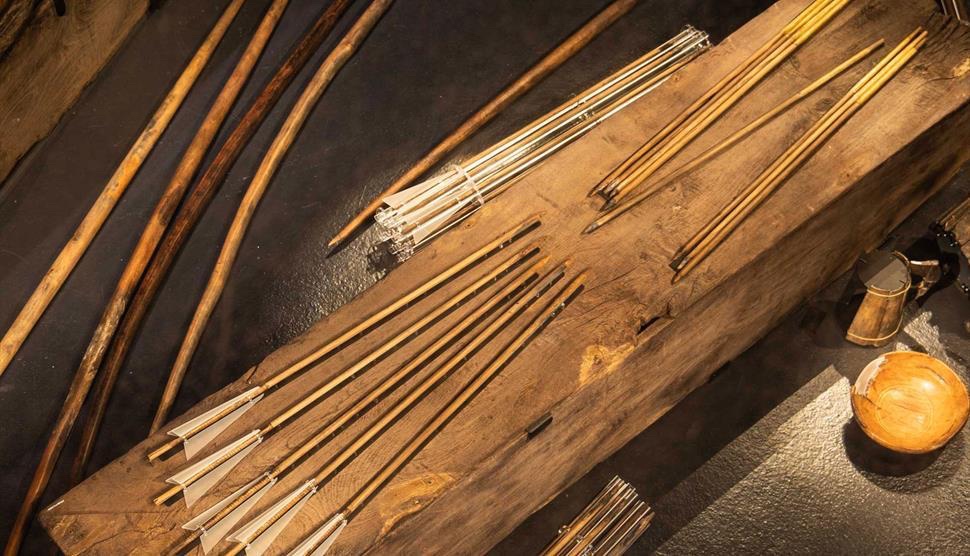
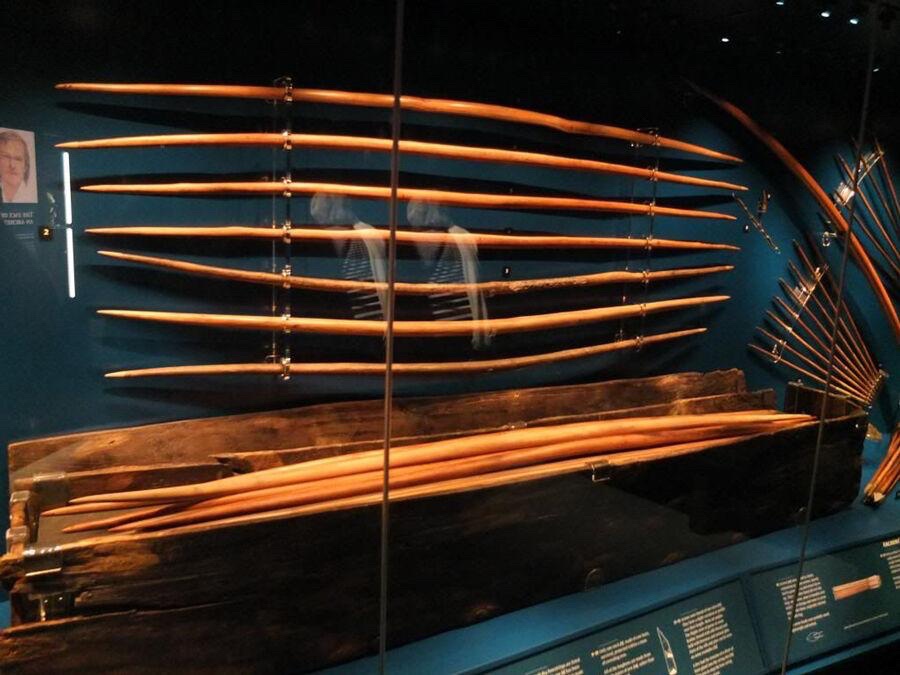
Among the discoveries were cannons, ammunition, swords, daggers, bows, arrows, and other military equipment.
The wreck also contained objects that had nothing to do with warfare. Everyday items belonging to the crew revealed what sailors ate, how they worked, what tools they used, and what they carried with them.
In that sense, the Mary Rose became something much more valuable than an old warship.
It became a snapshot of Tudor life frozen in time.
The People Behind the Ship
Human remains were also discovered at the wreck site, giving researchers an unusual opportunity to study the people who lived and worked aboard a sixteenth-century warship.
Their bones provided clues about age, health, physical activity, diet, and aspects of their lives.
Together with the thousands of artifacts, these discoveries helped archaeologists reconstruct a picture of the crew that would have been impossible to obtain from written records alone.
The Mary Rose therefore tells two stories at once: the story of Henry VIII’s navy and the story of the ordinary people who served aboard it.
Raising the Mary Rose
Recovering the ship was an enormous engineering and archaeological challenge.
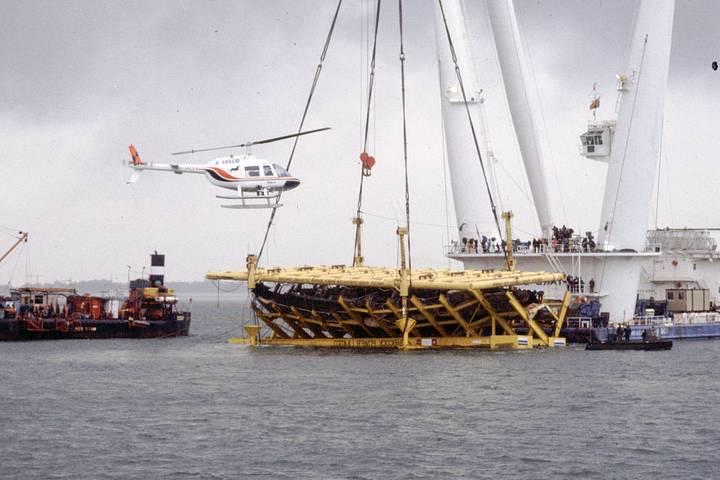
After years of excavation and preparation, the surviving section of the Mary Rose was finally raised from the seabed in 1982.
The operation attracted worldwide attention.
The ship was lifted using a specially designed support structure and carefully transferred from the sea to the surface. It was one of the most ambitious maritime archaeological projects ever attempted.
But raising the wreck was only the beginning.
The centuries underwater had transformed the wooden structure, and preserving it required years of careful scientific treatment.
A Ship That Changed Archaeology
Today, the Mary Rose is preserved and displayed in Portsmouth, close to the historic naval dockyard where it was originally built. The artifacts recovered from the wreck have helped historians and archaeologists understand Tudor England in extraordinary detail. Weapons reveal how naval warfare was changing. Personal possessions reveal how sailors lived. Human remains provide evidence about the people themselves.
Very few archaeological discoveries offer such a detailed look at an entire society at one specific moment.
The Mary Rose is one of them.
What began as a powerful warship belonging to Henry VIII ended as a disaster beneath the sea. Yet its sinking ultimately preserved thousands of clues about the past.
For more than 400 years, the wreck remained hidden beneath the water.
When it finally returned to the surface, it brought an entire chapter of Tudor history with it.
Written by Hidden Civilizations Editorial Team