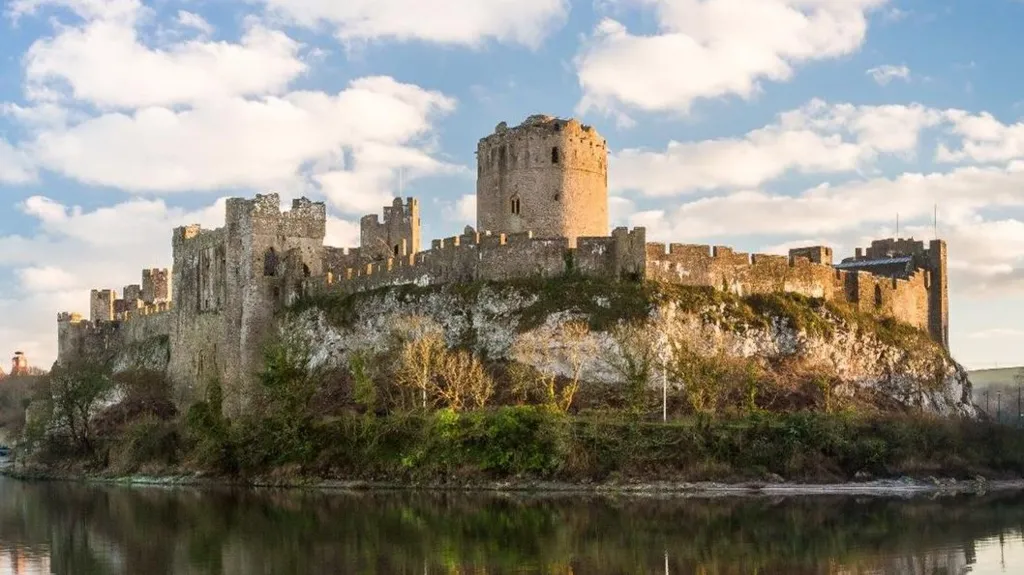
Archaeologists believe the discovery beneath Pembroke Castle could change our understanding of Britain’s ancient past.
At first glance, Pembroke Castle in Wales appears to be another historic landmark that tells stories of medieval rulers, battles, and royal families. However, beneath its ancient stone walls lies a much older mystery — a vast underground cave that could reveal important clues about prehistoric humans, extinct animals, and the changing landscape of Britain over thousands of years.
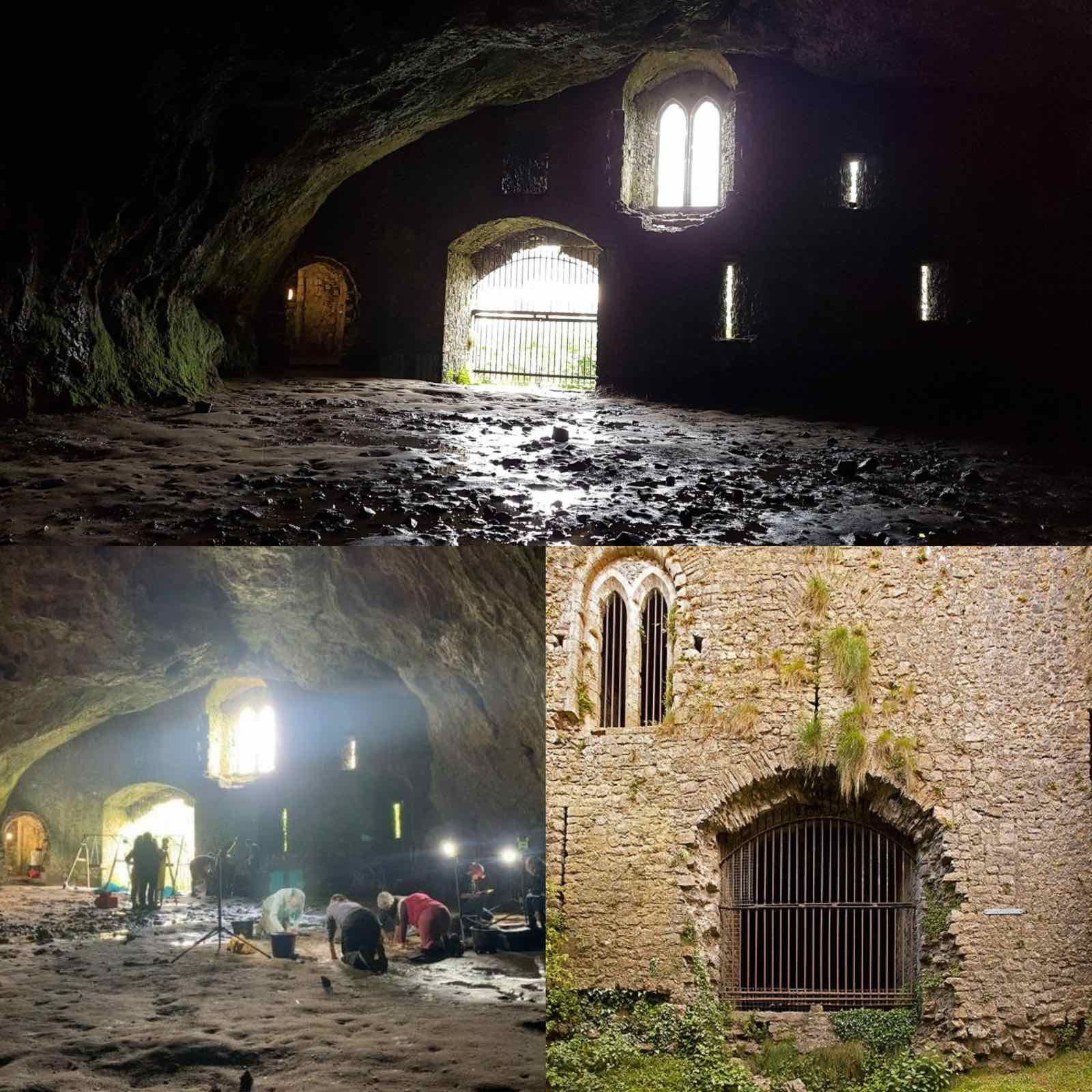
Researchers have started new investigations into Wogan Cavern, a natural cave located beneath Pembroke Castle. Scientists believe the site has the potential to become one of the most significant archaeological discoveries in Britain because the underground layers may preserve evidence from several different periods of human and natural history.
What appears today as a hidden chamber beneath a medieval fortress may actually be a gateway into a world that existed long before castles, cities, and written records.
A Cave That Predates the Medieval World
Pembroke Castle is widely known as an important part of Welsh history. For centuries, the fortress played a role in political struggles, royal events, and major moments that shaped Britain.
However, the cave beneath it existed long before humans began building castles. Natural caves like Wogan Cavern often act as time capsules because they can preserve bones, stone tools, and other traces of ancient life inside layers of sediment.
Over thousands of years, these layers collect valuable information about climate changes, animal populations, and the people who once lived in the surrounding area.
This is what makes the cave so important to archaeologists searching for answers about Britain’s distant past.
Evidence of Ancient Human Activity
One of the most fascinating aspects of the research is the possibility that the cave contains evidence of early human presence in Britain.
Archaeologists have discovered clues suggesting that ancient humans used the area thousands of years ago. Although research is still ongoing, scientists believe the site could provide valuable information about how early populations moved across Europe, survived changing environments, and adapted to different climates.
Researchers are especially interested in the possibility that some discoveries could be connected to periods when Neanderthals and other early human groups lived in Britain.
If future studies confirm these links, Wogan Cavern could provide important new information about human evolution and the earliest chapters of life on the British Isles.
Credit: Rob Dinnis
Ancient Animals Preserved Beneath the Castle
The cave is not only important because of its possible human history. It also contains evidence of animals that lived in Britain thousands of years ago.
Scientists are studying animal remains discovered inside the cave, including species that no longer exist in the region today. These fossils can help researchers understand how the environment changed over time and what kinds of animals once occupied the landscape.
Among the most remarkable discoveries are remains linked to a hippopotamus that lived around 120,000 years ago, during a period when parts of Europe experienced a much warmer climate than today.
The discovery highlights how dramatically Britain’s environment has changed throughout history. The country’s modern landscape represents only one moment in a much longer natural story.
What Was Britain Like Thousands of Years Ago?
Many people associate Britain’s history with medieval castles, ancient cities, and famous historical figures. However, long before those periods, the region was home to a completely different world.
The landscape was filled with large animals, changing ecosystems, and human groups that had to adapt to difficult conditions.
Caves played an important role in prehistoric life. They offered protection from harsh weather and provided places where early humans could shelter, store resources, and leave behind traces of their existence.
Because of this, every well-preserved prehistoric cave has the potential to reveal new information about how our ancestors lived.
Credit: Rob Dinnis / Wogan Cavern Excavation Project
Modern Technology Helping Scientists Discover the Past
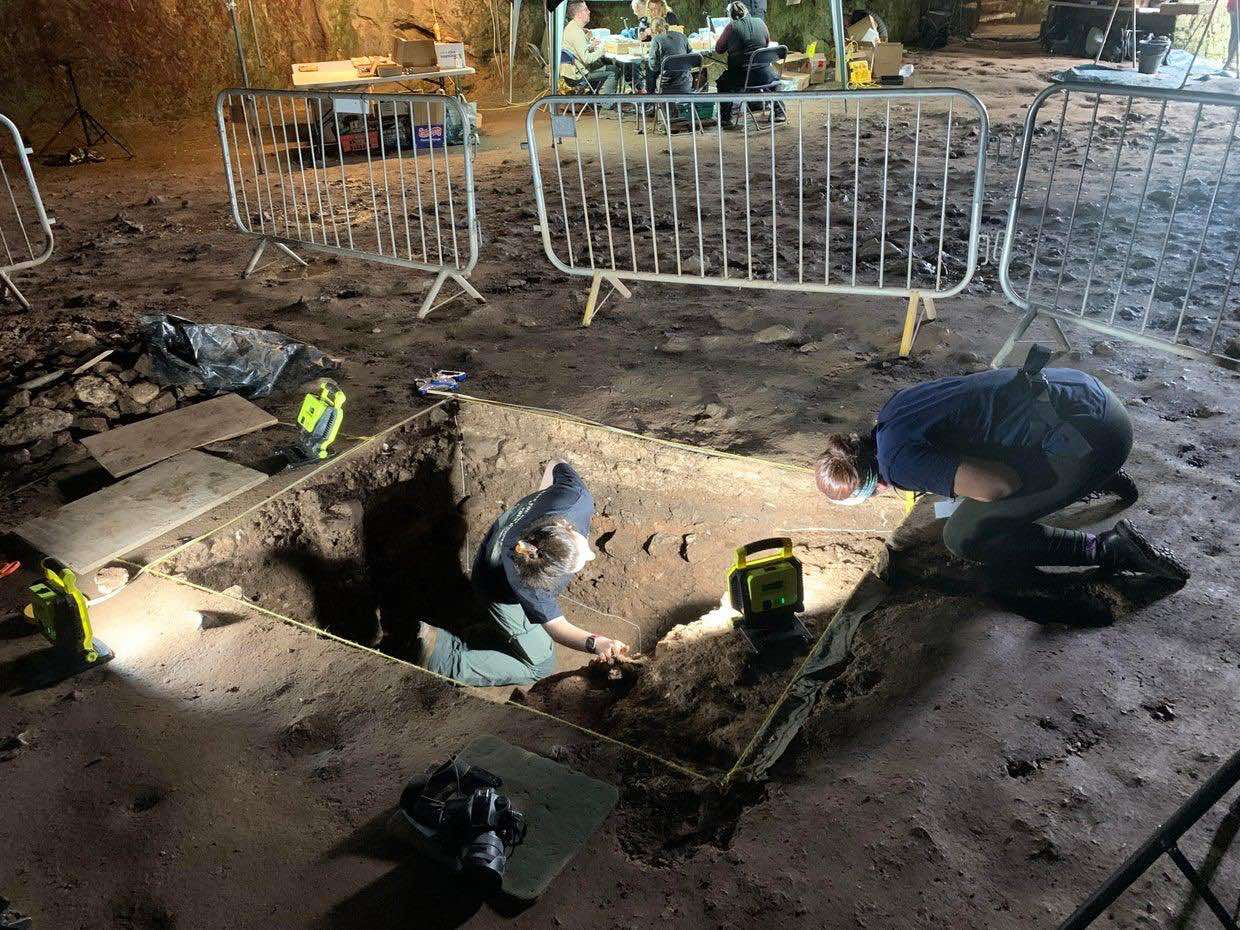
The research at Wogan Cavern is not based only on traditional archaeological excavation. Modern science allows researchers to study ancient sites using advanced techniques.
Scientists can analyze soil layers, animal bones, microscopic remains, and chemical changes within sediments to reconstruct what happened thousands of years ago.
These methods can help determine when certain animals lived in the area, how the climate changed, and whether humans used specific parts of the cave for shelter or other activities.
By combining archaeology, geology, and modern laboratory analysis, researchers can create a clearer picture of prehistoric Britain.
A Long-Term Research Project With Global Importance
Because of the possible importance of the site, investigations at Wogan Cavern are expected to continue as part of a long-term scientific project.
Researchers hope that future studies will uncover more evidence that could reshape our understanding of prehistoric Britain.
Discoveries like this are important because they help fill gaps in human history. Much of the ancient past remains unknown, and every fossil, tool, or fragment found underground can provide another piece of the puzzle.
A Hidden Cave That Could Rewrite History
The discovery beneath Pembroke Castle is a reminder that some of the greatest historical secrets are hidden in places people have known for centuries.
While the castle above tells stories of medieval kings, conflicts, and politics, the cave below may reveal a far older story — one about early humans, extinct animals, and a changing planet.
If future research confirms the significance of the findings, Wogan Cavern could become one of the most important archaeological locations for understanding Britain’s ancient past.
Sometimes history is not buried in distant places. Sometimes it is waiting beneath our feet.
This article is based on archaeological research conducted by the University of Aberdeen and collaborating institutions, along with reports from scientific and archaeological media.
Written by Hidden Civilizations Editorial Team


One Comment
That’s fascinating! The idea of a hidden cave impacting our understanding of that period is really exciting.