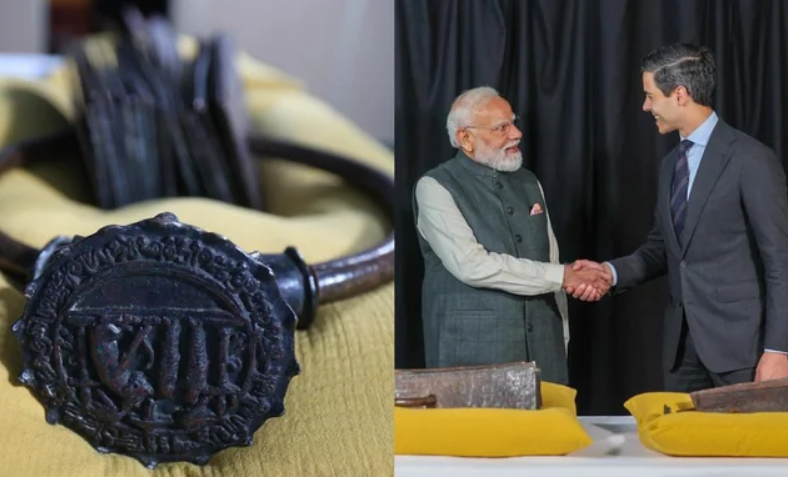
In a significant step toward the preservation and restoration of cultural heritage, the Netherlands has returned a set of rare copper plates dating back nearly a thousand years to India. The artifacts, known as the Leiden Copper Plates, originate from the powerful Chola Empire and are considered among the most important historical records from medieval South India.
The return of these centuries-old inscriptions marks the end of a long journey that began more than three hundred years ago when the plates were transported from India to Europe. Historians, archaeologists, and cultural heritage experts have welcomed the move, describing it as an important example of international cooperation in protecting and restoring historical treasures.
A Valuable Link to India’s Medieval Past
The copper plates date to the 11th century and were created during the reign of the Chola dynasty, one of the most influential empires in Indian history. The Cholas ruled large parts of southern India and established extensive maritime trade networks that connected the Indian subcontinent with Southeast Asia, China, and beyond.
The inscriptions engraved on the plates provide valuable information about the political, religious, and social life of the period. Written in both Sanskrit and Tamil, they record royal grants, donations to temples, and details about administrative practices during the reign of Chola rulers.
For historians, the plates are far more than ancient objects. They serve as primary historical documents that help reconstruct the history of a civilization that flourished more than a millennium ago.
The Story Behind the Copper Plates
The artifacts became known as the Leiden Copper Plates because they were preserved for centuries in the Dutch city of Leiden. Historical records suggest that they were brought to Europe during the era of Dutch maritime expansion and eventually became part of a collection housed in the Netherlands.
Over time, the plates attracted the attention of scholars who studied the inscriptions to better understand the history of the Chola Empire. Their contents revealed details about royal patronage, religious institutions, and international trade connections that helped shape medieval South Asia.
Despite their scholarly value in Europe, many in India argued that the artifacts belonged to the country where they were created and where their cultural significance was most deeply rooted. Calls for their return grew stronger in recent years as governments and museums around the world began reassessing the ownership of historical objects acquired during colonial and early trading periods.
Why the Chola Empire Matters
The return of the copper plates has also renewed public interest in the Chola civilization itself. The Chola dynasty emerged as one of the most powerful kingdoms in South India and reached its peak between the 9th and 13th centuries.
Known for their military strength, administrative sophistication, and impressive architectural achievements, the Cholas left a lasting impact on Indian history. Their rulers sponsored the construction of magnificent temples, many of which remain standing today and continue to attract visitors from around the world.
One of the most famous monuments associated with the dynasty is the Brihadisvara Temple, a UNESCO World Heritage Site renowned for its architecture and engineering. The temple stands as a testament to the wealth and artistic achievements of the Chola period.
The empire also maintained extensive trade links across the Indian Ocean, connecting India with regions that now include Indonesia, Malaysia, Thailand, Sri Lanka, and China. These connections helped spread cultural influences, religious ideas, and commercial practices throughout Asia.
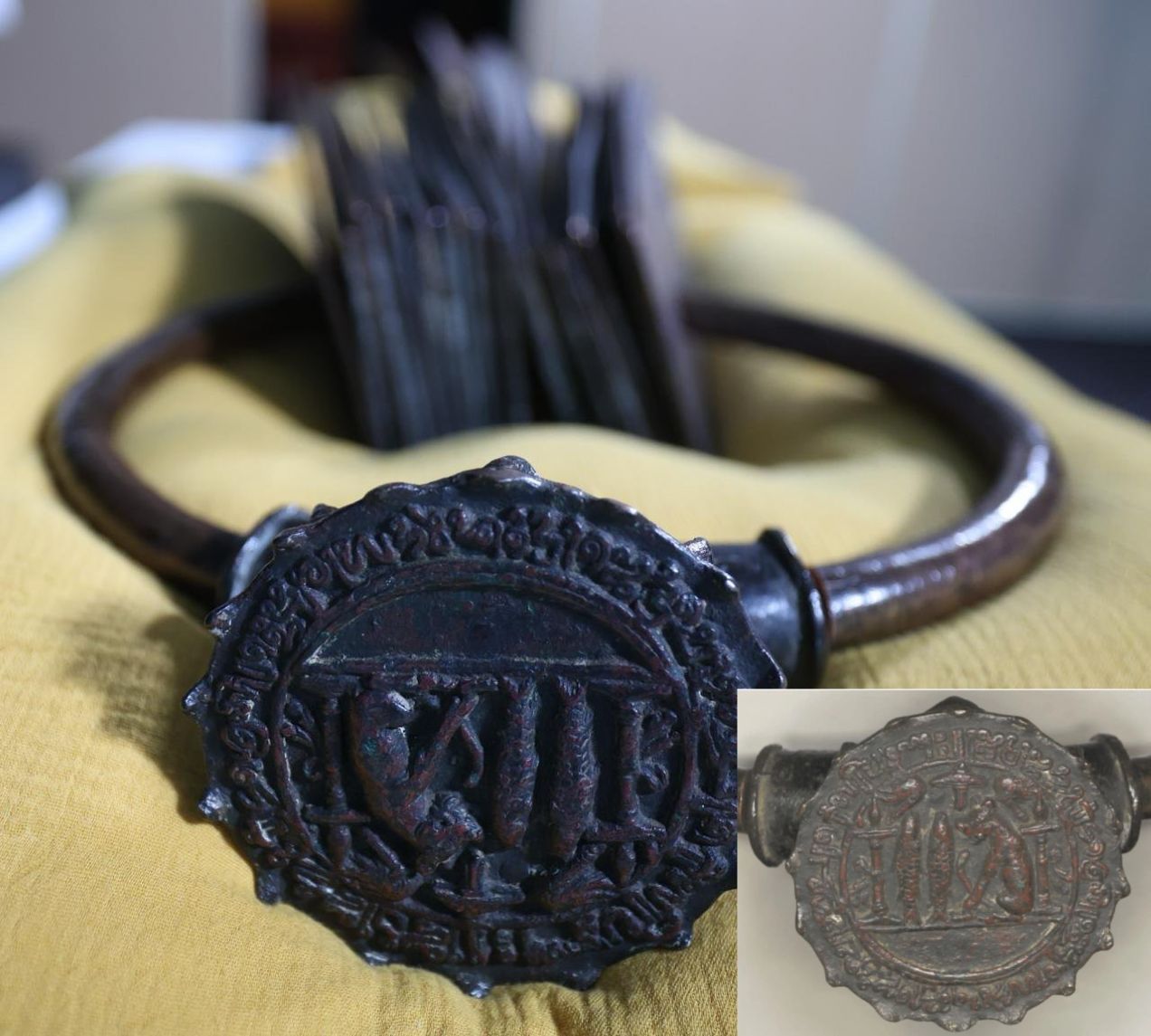
Credit: Leiden University Libraries Special Collections
What the Inscriptions Reveal
The Leiden Copper Plates contain detailed inscriptions that provide historians with unique insights into medieval governance and society.
Among the information preserved on the plates are records of land grants and donations made by Chola rulers to religious institutions. Such inscriptions were commonly used to document royal decisions and ensure that future generations recognized and respected the grants.
The texts also offer clues about the structure of local administration, taxation systems, and relationships between rulers and religious communities. Because many ancient records have been lost over time, surviving inscriptions such as these are invaluable sources of historical evidence.
Researchers have long used the plates to better understand how the Chola state functioned and how authority was exercised across its vast territories.
Growing Efforts to Repatriate Cultural Heritage
The return of the copper plates reflects a broader international trend involving the repatriation of cultural artifacts. In recent years, museums, universities, and governments have faced increasing calls to return historical objects to their countries of origin.
Supporters of repatriation argue that artifacts are often best understood within their original cultural and historical contexts. Returning such objects can strengthen cultural identity, support historical research in their home countries, and help address longstanding concerns about how certain items were acquired.
Many institutions have responded by reviewing the histories of their collections and engaging in discussions with countries seeking the return of significant cultural objects.
The decision by Dutch authorities to return the Chola-era copper plates is being viewed as part of this evolving approach to cultural heritage management.
A Symbolic Homecoming
For India, the return of the plates carries symbolic importance beyond their historical value. The artifacts represent a direct connection to one of the country’s most celebrated dynasties and provide tangible evidence of a rich cultural and intellectual tradition.
Officials and heritage experts have described the return as an opportunity for future generations to engage more closely with their history. Once properly conserved and displayed, the plates are expected to contribute to educational programs, museum exhibitions, and ongoing academic research.
The homecoming of the artifacts may also encourage further cooperation between India and other countries regarding the preservation and exchange of cultural heritage.
Looking Ahead
As historians continue to study the inscriptions, the copper plates are likely to yield new information about the Chola world and its influence across Asia. Advances in imaging technology, digital preservation, and epigraphic analysis may reveal details that were previously difficult to interpret.
The return of the Leiden Copper Plates serves as a reminder that historical artifacts are more than museum objects. They are witnesses to the lives, achievements, and beliefs of people who lived centuries ago. By preserving and sharing
Amazing Facts we found about the Chola Dynasty
Chola Dynasty built a powerful maritime empire long before European naval powers dominated the oceans, also, Under Rajendra Chola I, the Cholas launched naval expeditions across the Bay of Bengal, attacking and influencing kingdoms in modern-day Indonesia, Malaysia, and Thailand. This was one of the largest naval operations in medieval Asia.
This article is based on official information released by Indian government authorities and cultural heritage institutions involved in the restitution of the 1,000-year-old Chola-era copper plates, along with reports published by archaeological and historical news outlets covering their return from the Netherlands to India.
Written by Hidden Civilizations Editorial Team