1,200-Year-Old Buddhist Monastery Unearthed in India: Archaeologists Discover Rare Artifacts and Ancient Structures
A remarkable archaeological discovery in eastern India is offering new insights into the region’s rich Buddhist heritage. Researchers have uncovered the remains of a Buddhist monastery estimated to be around 1,200 years old in Bihar’s Gaya district, an area long associated with the origins and spread of Buddhism.
The excavation has revealed a complex network of ancient structures, religious monuments, sculptures, and everyday objects that provide a fascinating glimpse into the lives of Buddhist monks who once lived and studied there. Experts believe the site may have played an important role in the religious and intellectual landscape of medieval India, a period when Buddhism flourished across much of Asia.
The discovery has generated excitement among archaeologists and historians, who say the newly uncovered remains could help fill important gaps in the understanding of Buddhist monastic life during the early medieval period.
Discovery in the Heart of Buddhist Heritage
The site is located near Gaya in the Indian state of Bihar, a region considered one of the most sacred areas in Buddhism. Just a short distance away lies the famous town of Bodh Gaya, where Siddhartha Gautama is believed to have attained enlightenment beneath the Bodhi Tree more than 2,500 years ago.
For centuries, Bihar served as a major center of Buddhist learning, attracting monks, scholars, and pilgrims from across Asia. Ancient universities and monasteries once dotted the landscape, helping spread Buddhist teachings to countries such as China, Japan, Korea, Thailand, Sri Lanka, and Tibet.
The newly discovered monastery appears to have been part of this broader network of religious institutions that made the region one of the most influential spiritual centers in the ancient world.
Credit: Press Information Bureau (PIB), Government of India
What Archaeologists Found
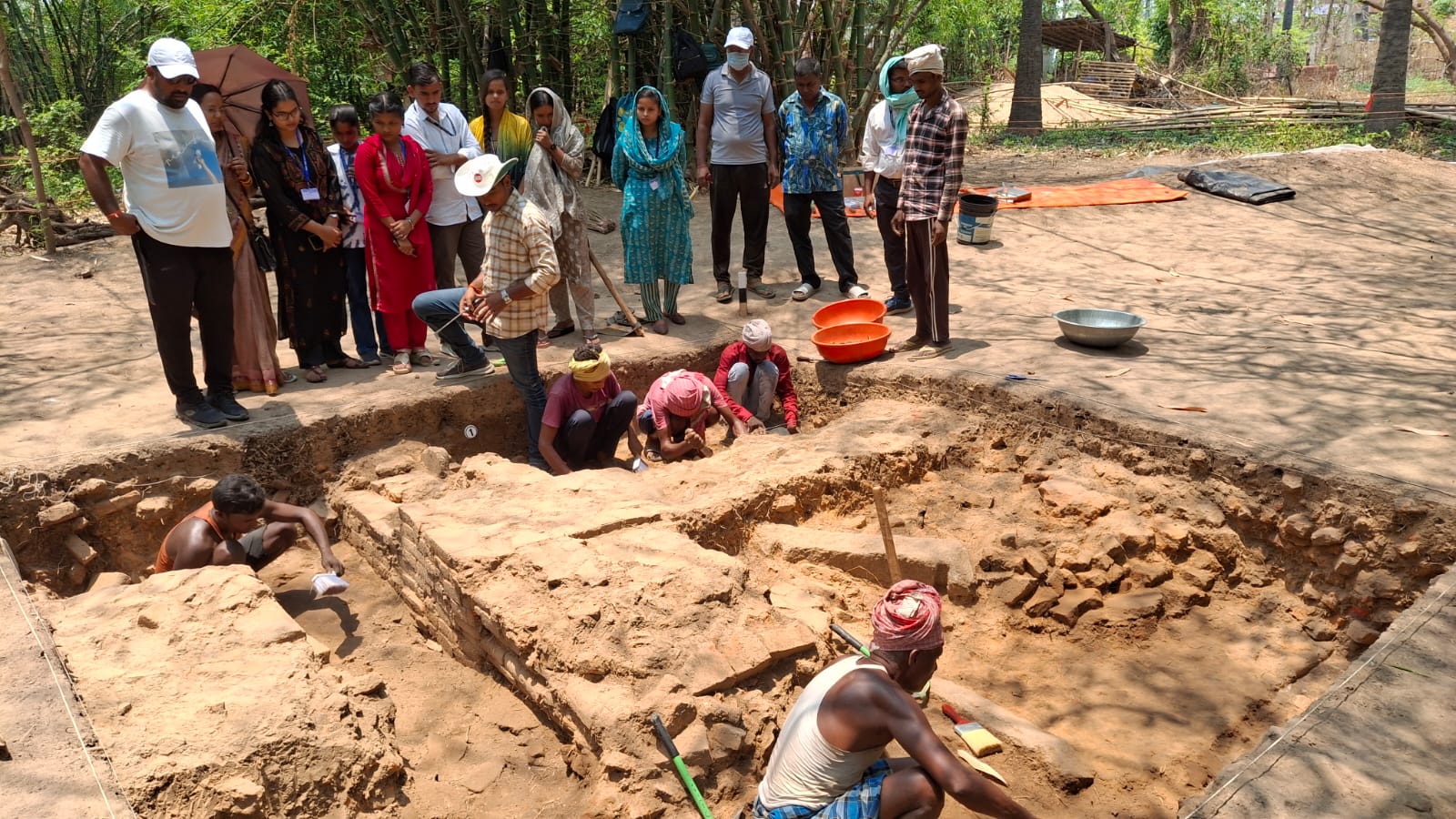
Excavations at the site uncovered the foundations of several brick-built structures believed to have been used by monks for living, studying, and meditation. Archaeologists identified residential cells, walls, courtyards, and ritual spaces arranged in a manner consistent with known Buddhist monasteries from the same period.
The layout suggests that the complex was carefully planned and may have accommodated a substantial monastic community.
Researchers also discovered the remains of smaller stupas—sacred Buddhist monuments often built to commemorate important religious events or individuals. Such structures were central to Buddhist worship and frequently served as focal points for prayer and pilgrimage.
The architectural remains indicate that the monastery was an active and thriving institution, likely supported by local communities and regional rulers.
Rare Sculptures and Religious Artifacts
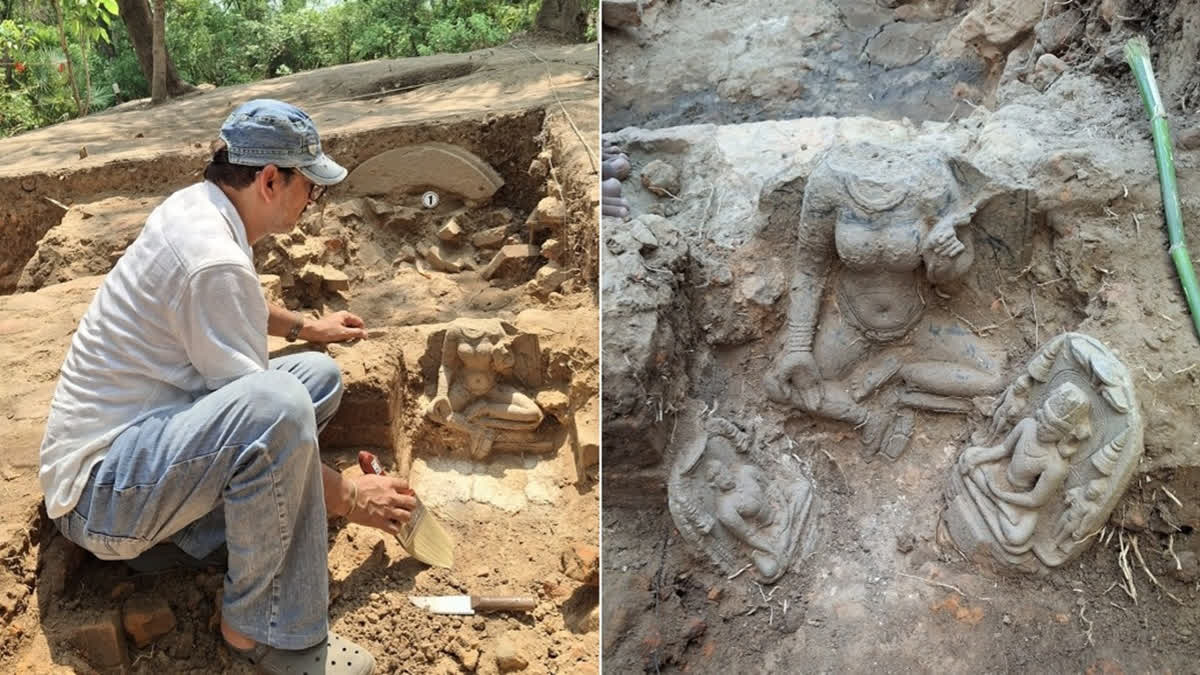
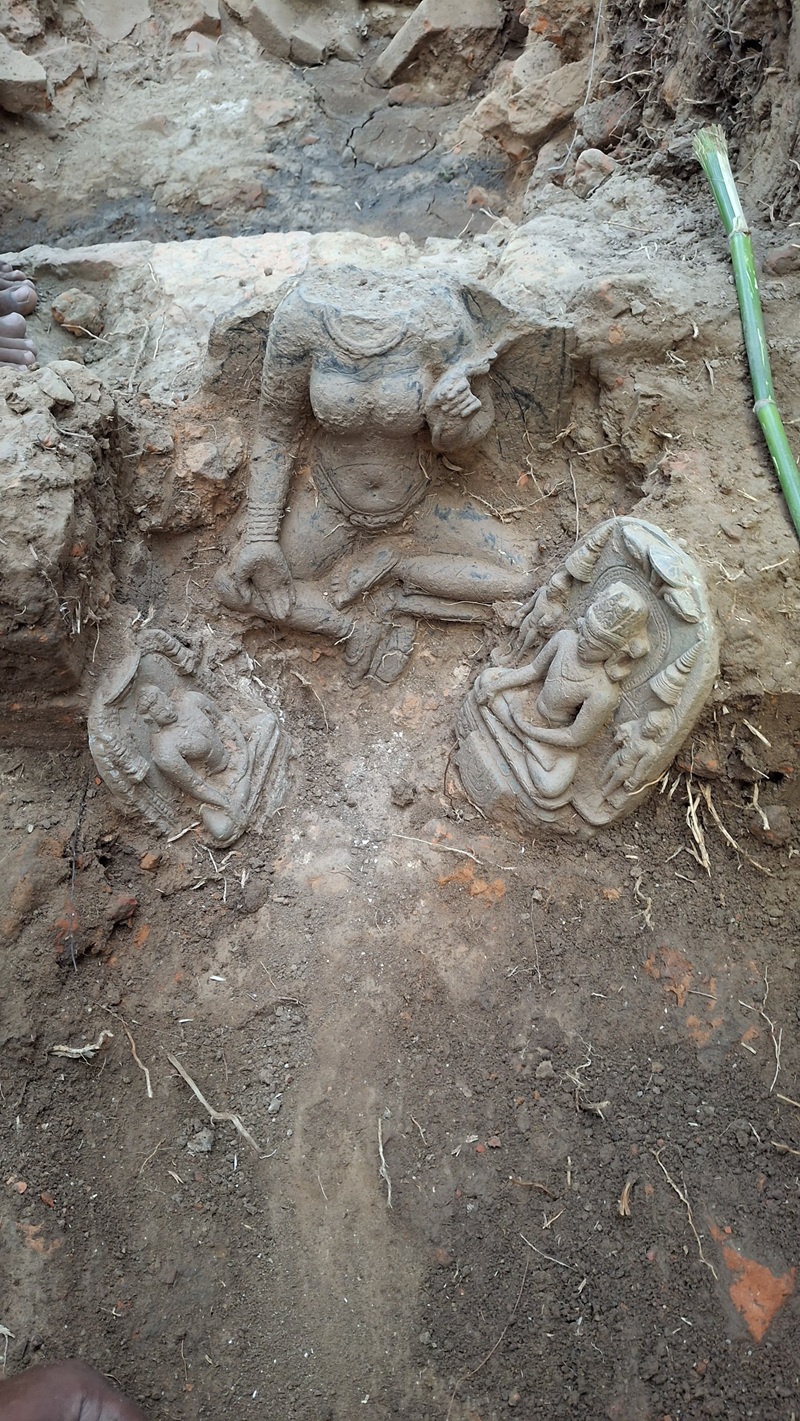
Among the most significant discoveries are stone sculptures depicting the Buddha and other figures associated with Buddhist traditions.
One sculpture portrays the Buddha in the Bhumisparsha Mudra, or “Earth-Touching Gesture,” one of the most recognizable representations in Buddhist art. The pose symbolizes the moment when the Buddha called upon the Earth to witness his enlightenment, overcoming the final temptations and obstacles on his path to awakening.
The excavation team also recovered fragments of decorative carvings, ritual objects, and architectural ornaments that once adorned the monastery’s buildings.
Experts believe these artistic elements may provide valuable information about the religious influences, artistic styles, and cultural exchanges that shaped Buddhism in the region during the early medieval era.
Everyday Life in an Ancient Monastery
In addition to religious objects, archaeologists uncovered numerous items connected to daily life within the monastery.
Among the finds were pottery fragments, terracotta beads, storage vessels, and various household objects used by the monastic community. These discoveries help researchers move beyond purely religious interpretations and gain a better understanding of how monks lived, worked, and interacted with the surrounding population.
One particularly unusual artifact is a terracotta lotus-shaped stopper that may have been used to seal containers holding food, medicines, oils, or ceremonial substances. Such objects offer rare insights into the practical aspects of monastic life that are often absent from historical texts.
Credit: Press Information Bureau (PIB), Government of India
By studying these artifacts, archaeologists hope to reconstruct aspects of diet, trade, craftsmanship, and economic activity at the site.
Bihar’s Role in the Spread of Buddhism
The discovery reinforces Bihar’s importance as one of the most significant regions in Buddhist history.
During the first millennium CE, the region was home to several major centers of learning, including the legendary university of Nalanda Mahavihara. At its peak, Nalanda attracted thousands of students and teachers from across Asia and was considered one of the greatest educational institutions of the ancient world.
Monasteries such as the newly discovered site likely played a supporting role within this wider intellectual and religious network. They served not only as places of worship but also as centers of education, manuscript production, philosophical debate, and cultural exchange.
The existence of such institutions helped transform Buddhism from a regional faith into one of the world’s major religions.
Evidence of a Longer Human Presence
Archaeologists believe the area may have been occupied long before the monastery itself was established.
Preliminary findings suggest traces of human activity dating back several centuries earlier, raising the possibility that the site evolved through multiple historical phases. If confirmed, this would indicate that the location remained important across different cultural and religious periods.
Future excavations may reveal evidence of earlier settlements, shrines, or communities that existed before the construction of the Buddhist complex.
Such discoveries could significantly expand knowledge of the region’s long and complex history.
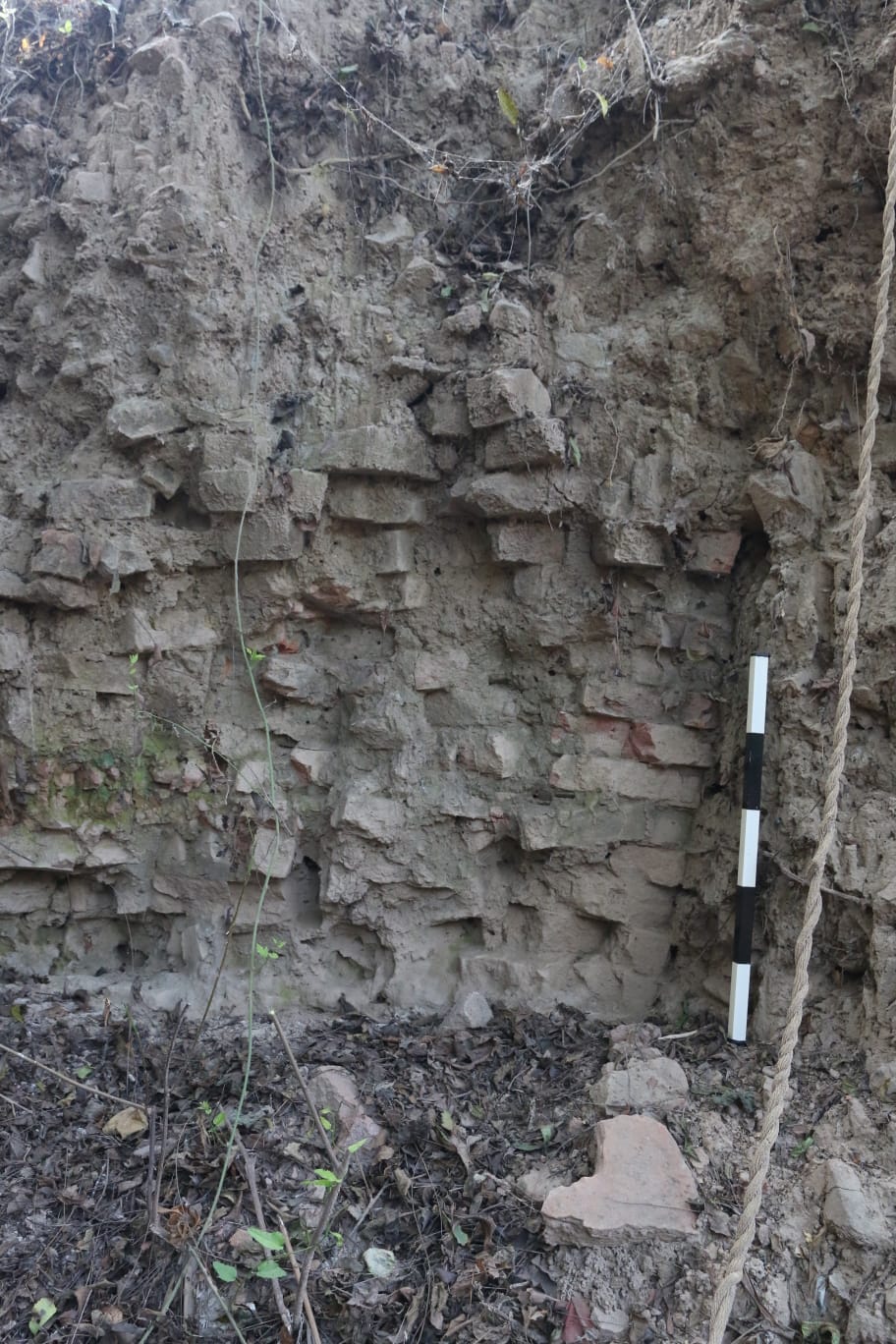
Credit: Press Information Bureau (PIB), Government of India
Modern Technology Meets Ancient History
Researchers are now using a variety of scientific methods to analyze the site and its artifacts.
Advanced dating techniques, material analysis, digital mapping, and conservation studies will help determine the precise age of the structures and establish how the monastery developed over time.
Experts also hope to identify the sources of construction materials and determine whether the monastery maintained connections with other Buddhist centers across India and Asia.
These studies could reveal important information about trade routes, migration patterns, and the movement of religious ideas throughout the medieval world.
The Importance of Archaeological Preservation
The discovery highlights the importance of protecting archaeological sites that remain hidden beneath the modern landscape.
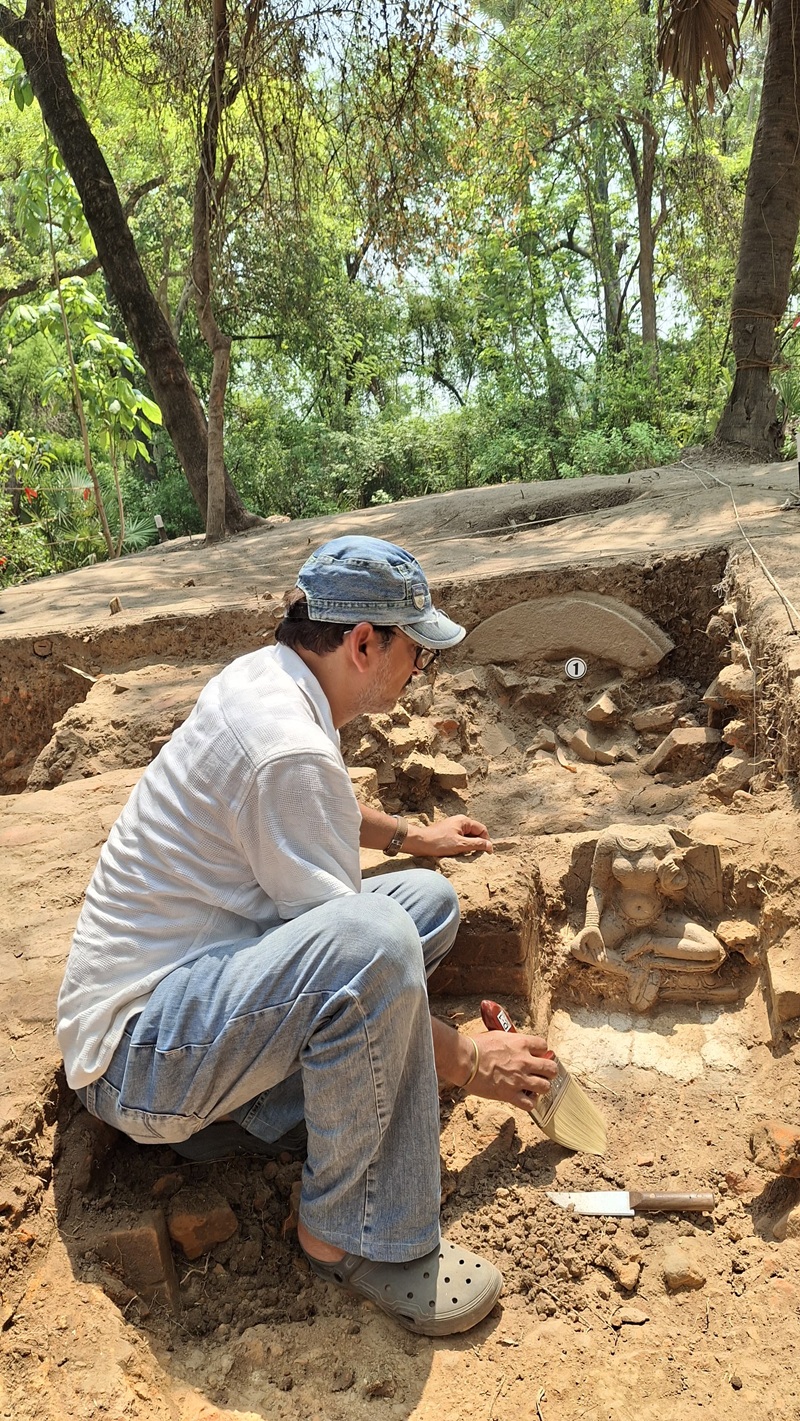
Credit: Press Information Bureau (PIB), Government of India
Many ancient settlements and religious centers have disappeared over the centuries due to natural erosion, urban development, and changing land use. Each new excavation provides an opportunity to preserve pieces of history that might otherwise be lost forever.
Archaeologists emphasize that careful documentation and conservation are essential to ensuring that future generations can continue to learn from these remarkable remnants of the past.
Looking Ahead
The excavation is still in its early stages, and researchers believe the site may hold many more secrets waiting to be uncovered.
Additional structures, inscriptions, sculptures, and artifacts could emerge as work continues, offering new perspectives on Buddhist monastic life and the cultural history of Bihar.
For historians, the discovery represents more than the unearthing of ancient bricks and artifacts. It provides a rare opportunity to reconnect with a period when Buddhist monasteries served as centers of learning, spirituality, and cultural exchange that influenced societies across Asia.
As archaeologists continue their investigations, the 1,200-year-old monastery may become one of the most important recent discoveries related to India’s Buddhist heritage, helping scholars better understand a civilization whose ideas and teachings continue to shape millions of lives around the world today.
The Birthplace of Buddhism
India is the land where Gautama Buddha attained enlightenment under the Bodhi Tree in Bodh Gaya over 2,500 years ago, making it one of the world’s most important pilgrimage destinations.
This article is based on information released by archaeological authorities and academic institutions involved in the excavation of the ancient Buddhist monastery site in Gaya, Bihar, along with reports published by Indian and international media covering the discovery of the 1,200-year-old monastery remains and rare Buddhist artefacts.
Written by Hidden Civilizations Editorial Team