New Evidence Sheds Light on the Survival Strategies of Our Earliest Ancestors
A remarkable archaeological discovery in Kenya is offering scientists a fascinating glimpse into the lives of early humans who lived approximately 1.6 million years ago. Researchers studying ancient animal bones have uncovered evidence suggesting that our ancestors were far more organized and strategic than previously believed. Rather than consuming food wherever they found it, these early humans appear to have selected the most nutritious parts of animal carcasses and transported them to safer locations for later consumption.
The findings challenge long-standing assumptions about the behavior of early members of the human family and provide valuable insights into how intelligence, planning, and cooperation may have evolved long before modern humans appeared.
A Window Into the Distant Past
The discovery comes from an archaeological site known as FwJj 80 in Kenya’s famous Koobi Fora region, located near Lake Turkana. This area has produced some of the most important fossils related to human evolution and has been studied by scientists for decades.
Around 1.6 million years ago, the landscape looked very different from the dry environment seen today. The region featured grasslands, rivers, and a rich diversity of wildlife. Large herbivores roamed the area, providing opportunities for early humans to obtain valuable food resources.
Researchers examined more than a thousand fossilized animal bones recovered from the site. Many of these remains belonged to antelope-like animals and other grazing species that inhabited the ancient African savanna.
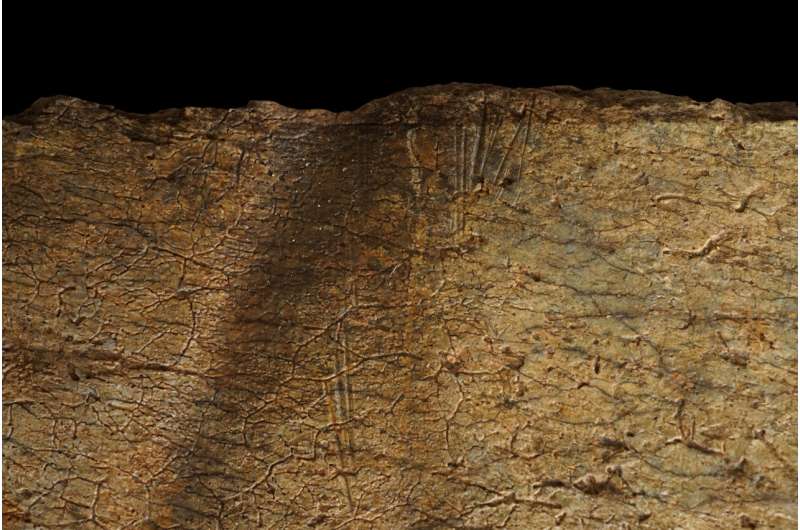
What attracted the attention of scientists were the distinct marks preserved on the bones. Detailed analysis revealed numerous cut marks made by stone tools, providing direct evidence that early humans were actively processing animal carcasses.
The Story Hidden in Bone Marks
To the untrained eye, a fossilized bone may seem like a simple relic of the past. However, for archaeologists, every scratch and fracture can reveal a story.
The cut marks found on the bones indicate that early humans carefully removed meat from animal carcasses using sharp stone tools. In addition to these cuts, researchers identified impact marks created when bones were struck with stones.
These impacts are particularly important because they suggest that people were intentionally breaking open bones to access marrow. Bone marrow is rich in calories, healthy fats, and nutrients, making it an extremely valuable food source in environments where resources were not always guaranteed.
This behavior demonstrates a sophisticated understanding of how to maximize the nutritional value of an animal. Rather than taking only the visible meat, early humans extracted every possible source of energy.
Selective Transport of Valuable Body Parts
One of the most intriguing aspects of the research involves the types of bones found at the site.
Scientists noticed that leg bones were far more common than other skeletal elements such as ribs, vertebrae, or skull fragments. This pattern suggests that early humans were not simply consuming entire animals where they died.
Instead, they appear to have selectively transported the most valuable portions of the carcass. Limbs contain large quantities of muscle tissue and marrow, making them among the most nutritious parts of an animal.
By carrying these high-value resources away from kill sites, early humans could reduce the risk of encounters with dangerous predators while ensuring access to food at a more secure location.
This behavior reflects planning and decision-making abilities that were once thought to emerge much later in human evolution.
Surviving in a Dangerous World
Life in East Africa 1.6 million years ago was far from easy. Early humans shared their environment with formidable predators, including large cats, hyenas, and crocodiles.
Leaving valuable food behind could mean losing it to scavengers within minutes. At the same time, remaining at a carcass for too long increased the risk of becoming prey.
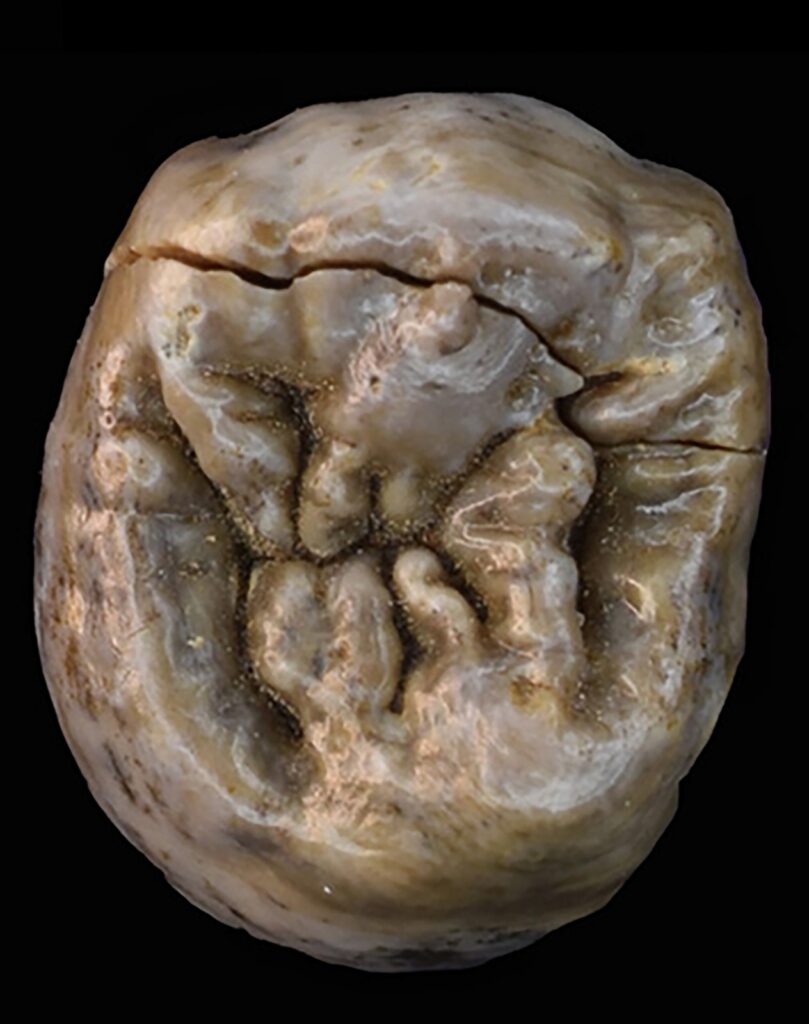
Top view of the fossilized molar showing its distinctive chewing surface
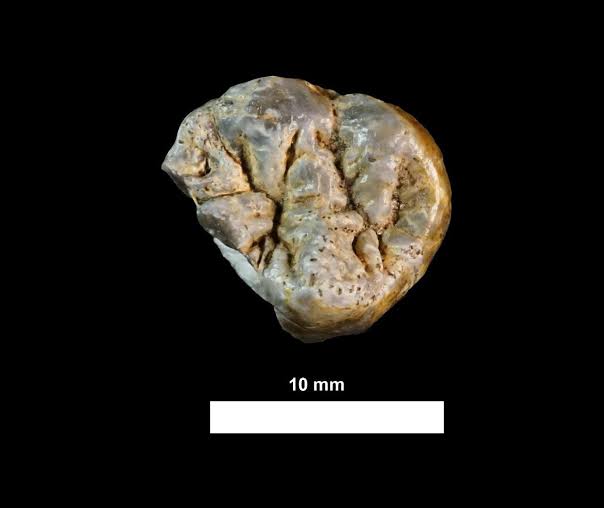
Credit for the photos: Qiaomei Fu / Institute of Vertebrate Paleontology and Paleoanthropology (IVPP), Chinese Academy of Sciences
The evidence suggests that early humans developed practical solutions to these challenges. By quickly removing the most valuable parts of a carcass and transporting them elsewhere, they could gain access to essential nutrients while minimizing danger.
This strategy demonstrates an impressive ability to adapt to environmental pressures and make decisions that improved survival.
The Possible Origins of Food Sharing
Although bones alone cannot prove social behavior, the findings raise interesting questions about cooperation among early humans.
Transporting large animal limbs requires effort. In many cases, it may have been easier or more beneficial to carry food back to a location where other group members were waiting.
If this interpretation is correct, the behavior may represent one of the earliest forms of food sharing in human history. Sharing food can strengthen social bonds, improve group survival, and support individuals who are unable to hunt or gather for themselves.
Many anthropologists believe that cooperation played a critical role in the success of the human lineage. Discoveries like this help build the case that such behaviors may have deep evolutionary roots.
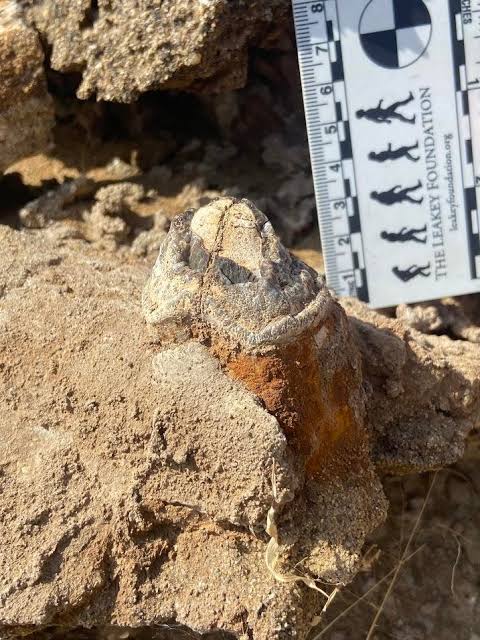
Credit: Kaye E. Reed / Ledi-Geraru Research Project
Meat and the Evolution of the Human Brain
The research also contributes to a larger scientific discussion about the role of diet in human evolution.
The human brain requires a significant amount of energy to function. Compared with other organs, it consumes an unusually large share of the body’s calories.
Many scientists have suggested that increased access to meat and animal fats may have helped support the growth of larger brains among early members of the genus Homo.
At the time these bones were processed, species such as Homo erectus were already appearing in Africa. These early humans possessed larger brains, more advanced tools, and greater mobility than many of their predecessors.
While the study does not prove a direct link between meat consumption and brain expansion, it provides strong evidence that nutrient-rich animal foods were an important part of early human diets.
More Than Simple Scavengers
For many years, researchers debated whether early humans were active hunters or primarily scavengers who relied on leftovers abandoned by predators.
The new evidence suggests that the reality was likely more complex.
Whether they hunted animals themselves or gained early access to carcasses through scavenging, these humans clearly knew how to process and transport valuable resources efficiently.
The relatively low number of carnivore tooth marks on the bones indicates that humans often reached the carcasses before large predators could consume everything. This suggests a level of success and resourcefulness that challenges older stereotypes of early humans as weak competitors in the ancient ecosystem.
A New Perspective on Human Origins
The discoveries from Kenya paint a picture of early humans that is far more sophisticated than many people imagine.
These individuals were not simply wandering across the landscape in search of food. They were making decisions, using technology, evaluating resources, and possibly cooperating with one another to improve their chances of survival.
Every cut mark preserved on these ancient bones represents a moment in the lives of our ancestors—a moment that reveals intelligence, adaptability, and innovation.
More than 1.6 million years later, those marks continue to tell the story of how the foundations of human behavior were established long before the rise of civilization. They remind us that the traits that define humanity today—planning, problem-solving, and cooperation—may have begun developing much earlier than once believed.
This article is based on research published in the Proceedings of the National Academy of Sciences (PNAS) and reports from archaeological and scientific publications covering the analysis of 1.6-million-year-old animal bones from the Koobi Fora Formation in Kenya, which revealed evidence of early Homo processing and transporting valuable meat resources.
Written by Hidden Civilizations Editorial Team