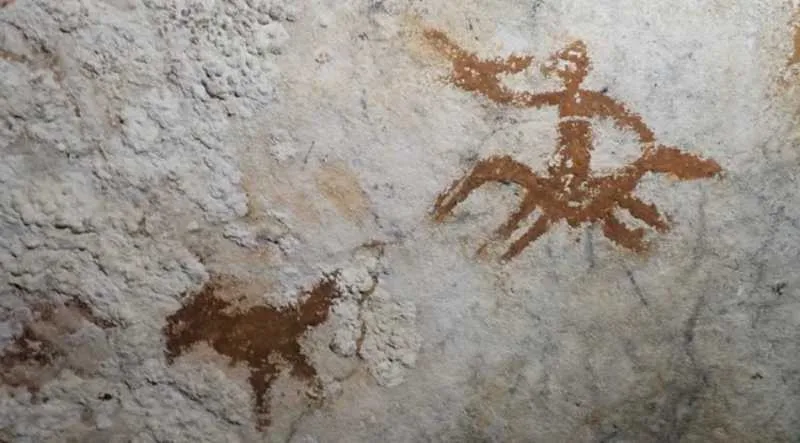
Deep inside a limestone cave on the Indonesian island of Sulawesi, scientists have uncovered a remarkable discovery that is changing our understanding of early human creativity, storytelling, and cultural development. A prehistoric cave painting found in Leang Karampuang cave has been dated to at least 51,200 years old, making it the oldest known example of figurative rock art in the world.
The discovery provides important evidence that early humans were capable of creating complex images and telling visual stories much earlier than previously believed. The ancient artwork does not simply show an animal or an isolated symbol. Instead, it appears to represent a scene involving human-like figures interacting with a wild pig, suggesting that people tens of thousands of years ago were already using images to communicate ideas, experiences, and possibly stories.
This finding challenges the traditional view that advanced symbolic art first developed mainly in Europe. Instead, it shows that human creativity was already spreading across different regions of the world during prehistoric times.
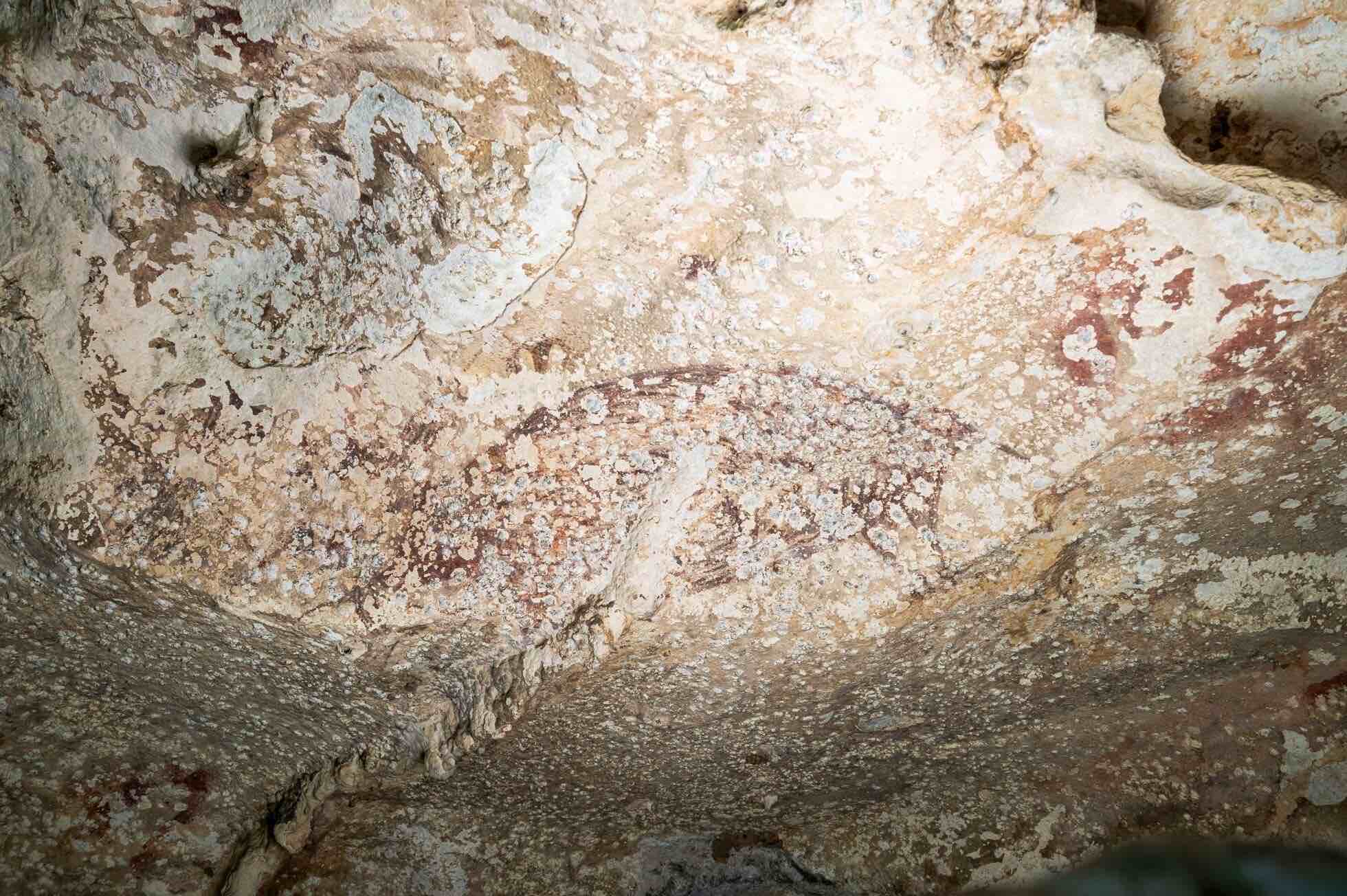
Credit: Adhi Agus Oktaviana / Indonesian National Research and Innovation Agency (BRIN)
A Remarkable Discovery in the Caves of Sulawesi
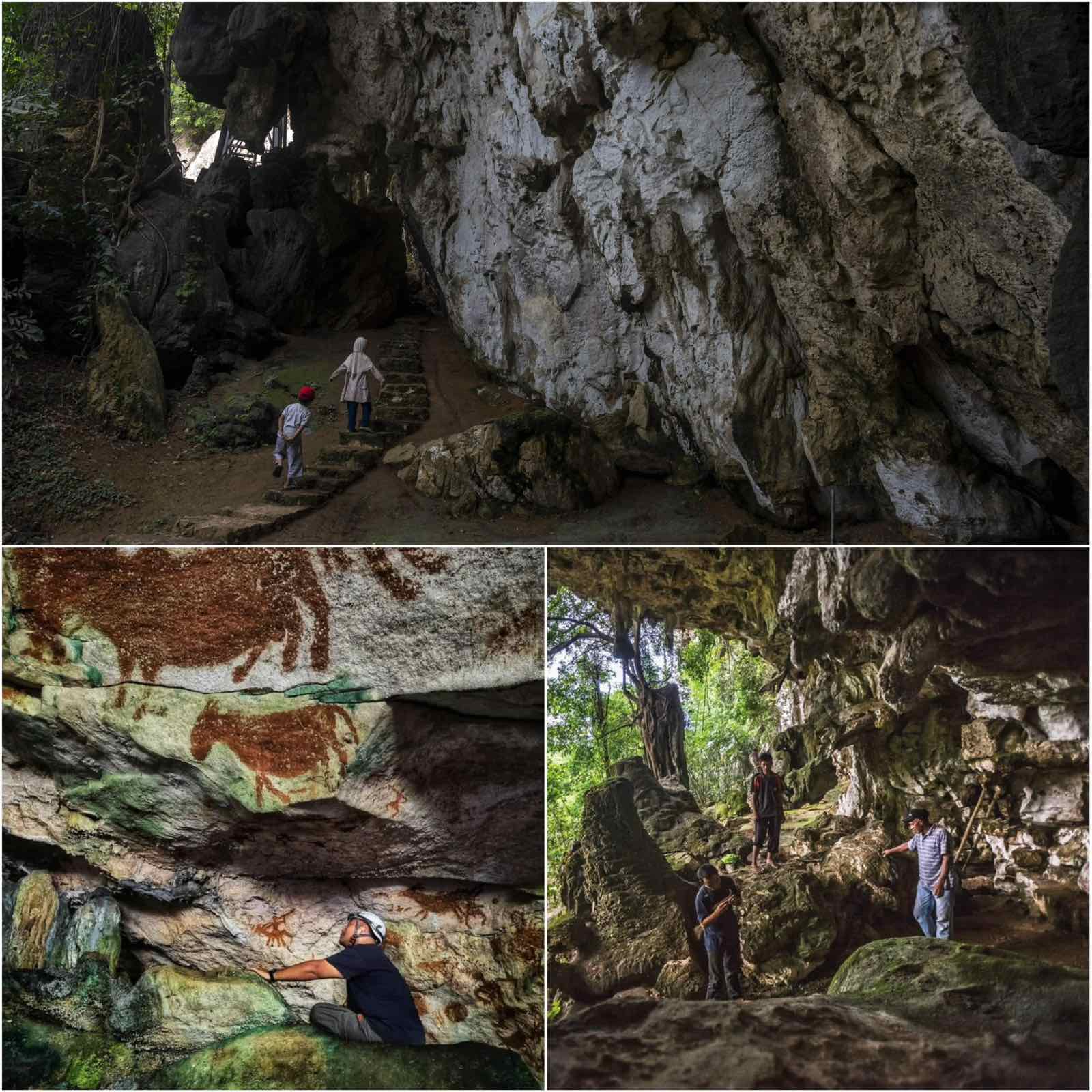
The ancient painting was discovered in the Maros-Pangkep region of South Sulawesi, Indonesia, an area known for its extraordinary archaeological importance. The caves in this region contain some of the oldest known examples of human artistic expression, including hand stencils, animal drawings, and other prehistoric markings.
The newly discovered artwork in Leang Karampuang cave stands out because of its complexity. Unlike simple animal drawings, the image appears to show a relationship between different figures, creating what researchers describe as an early form of visual storytelling.
The painting includes a wild pig and several human-like figures positioned around it. Although scientists cannot know exactly what message the ancient artists wanted to communicate, the scene suggests that these early humans were not only observing the world around them but also creating symbolic representations of events.
This ability to create and share stories through images is considered one of the most important steps in the development of human culture.
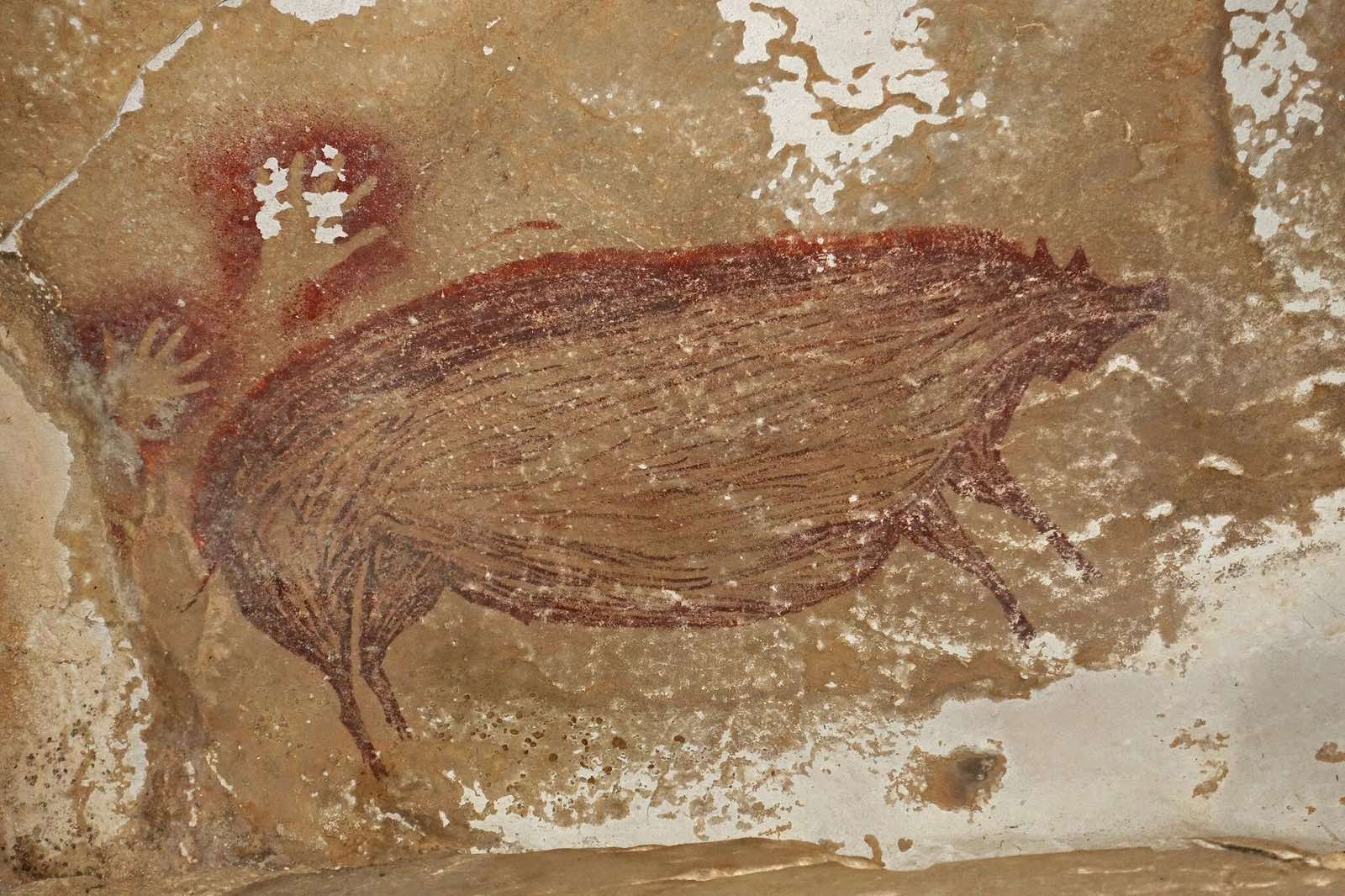
Credit: Adhi Agus Oktaviana / BRIN (Research Organization for Archaeology, Language and Literature, National Research and Innovation Agency, Indonesia)
The Earliest Evidence of Storytelling Through Art
For many years, archaeologists believed that the oldest examples of complex cave art were found in Europe. Famous prehistoric paintings discovered in places such as France and Spain have provided valuable information about early human societies.
However, discoveries in Indonesia have changed this perspective. The Sulawesi cave paintings demonstrate that artistic expression was not limited to Europe and that humans in Southeast Asia were also creating sophisticated symbolic artwork thousands of years ago.
The newly discovered painting may represent one of the earliest known examples of storytelling through art. The scene appears to include characters and an action, rather than simply showing an object or animal.
This suggests that ancient humans were already capable of imagination, planning, and abstract thinking. They were able to transform real-life experiences into symbols that could be understood and shared by others.
How Scientists Determined the Age of the Painting
Determining the age of prehistoric artwork is one of the biggest challenges in archaeology. Scientists used advanced dating techniques to analyze mineral layers that naturally formed over the painted surface.
By studying these deposits, researchers were able to estimate when the artwork was created. The results revealed that the painting is at least 51,200 years old, making it significantly older than many previously known examples of figurative cave art.
Modern dating methods allow researchers to study ancient paintings without damaging them. These techniques are helping scientists discover more about the origins of human creativity and the development of symbolic communication.
Future research using similar methods may reveal even older examples of prehistoric art hidden in caves around the world.
Credit: Adhi Agus Oktaviana / BRIN (Research Organization for Archaeology, Language and Literature, National Research and Innovation Agency, Indonesia)
What This Discovery Reveals About Ancient Humans
The discovery of the Indonesian cave painting provides valuable insight into the lives and abilities of early humans. It shows that prehistoric people were not only focused on survival, hunting, and finding shelter. They also had the ability to create art, express ideas, and preserve cultural knowledge.
Ancient artwork may have served many purposes. It could have been used to teach younger generations about animals and hunting strategies, to record important events, or to represent spiritual beliefs and traditions.
The fact that the painting shows an interaction between humans and an animal is especially significant. It suggests that early artists were interested in representing relationships and actions, not just individual objects.
This type of thinking requires imagination and symbolic understanding — abilities that are central to what makes humans unique.
Indonesia’s Important Role in Human History
Indonesia has become one of the most important regions for understanding early human development. The islands of Southeast Asia were home to ancient human populations that left behind remarkable evidence of their lives and cultures.
The caves of Sulawesi have already produced several groundbreaking discoveries. Previous research revealed ancient hand stencils and animal paintings, showing that people in the region were creating art tens of thousands of years ago.
The latest discovery strengthens the idea that Southeast Asia played a major role in the development of human culture. It also encourages scientists to search for more undiscovered archaeological sites throughout the region.
Many experts believe that additional ancient artworks may still be hidden inside caves, waiting to reveal more about our distant past.
A New Chapter in the Story of Human Creativity
The discovery of the world’s oldest known figurative rock art is more than just an archaeological achievement. It is a reminder that creativity, imagination, and storytelling have deep roots in human history.
More than 50,000 years ago, an unknown artist entered a dark cave in Sulawesi and created an image that survived countless generations. Today, that painting provides a rare connection between modern humans and our ancient ancestors.
It shows that prehistoric people were capable of complex thought, communication, and artistic expression. They were not simply surviving from day to day — they were creating meaning and leaving messages for the future.
As scientists continue exploring Indonesia’s caves, future discoveries may reveal that the history of human art is even older and more fascinating than we currently understand.
This article is based on archaeological research conducted by Griffith University, Indonesia’s National Research and Innovation Agency (BRIN), and collaborating institutions, along with reports from scientific and archaeological media.
Written by Hidden Civilizations Editorial Team