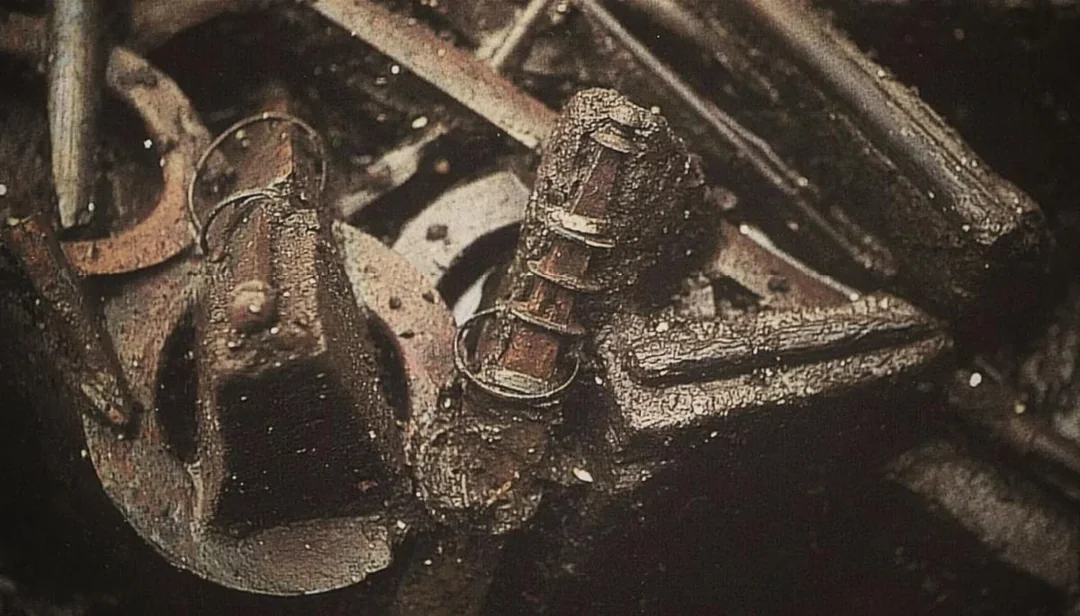
A remarkable archaeological discovery in Denmark is shedding new light on the complex relationship between the Roman Empire and the peoples of northern Europe nearly 1,800 years ago. Thousands of artifacts recovered from an ancient battlefield have led some researchers to propose that a large force of warriors may have been on its way to join the Roman military when it was defeated.
Although the theory remains under debate, the discovery has sparked renewed interest among historians and archaeologists studying the movement of people, trade, and warfare during the early third century AD.
A Battlefield Preserved for Nearly Two Millennia
The discovery centers on Illerup Ådal, an archaeological site in eastern Denmark that has become one of the most important Iron Age battlefields ever uncovered in Northern Europe.
For decades, archaeologists have excavated the site, recovering more than 15,000 remarkably well-preserved artifacts from the bog. The waterlogged environment protected many of the objects from decay, allowing researchers to study weapons and military equipment in extraordinary detail.
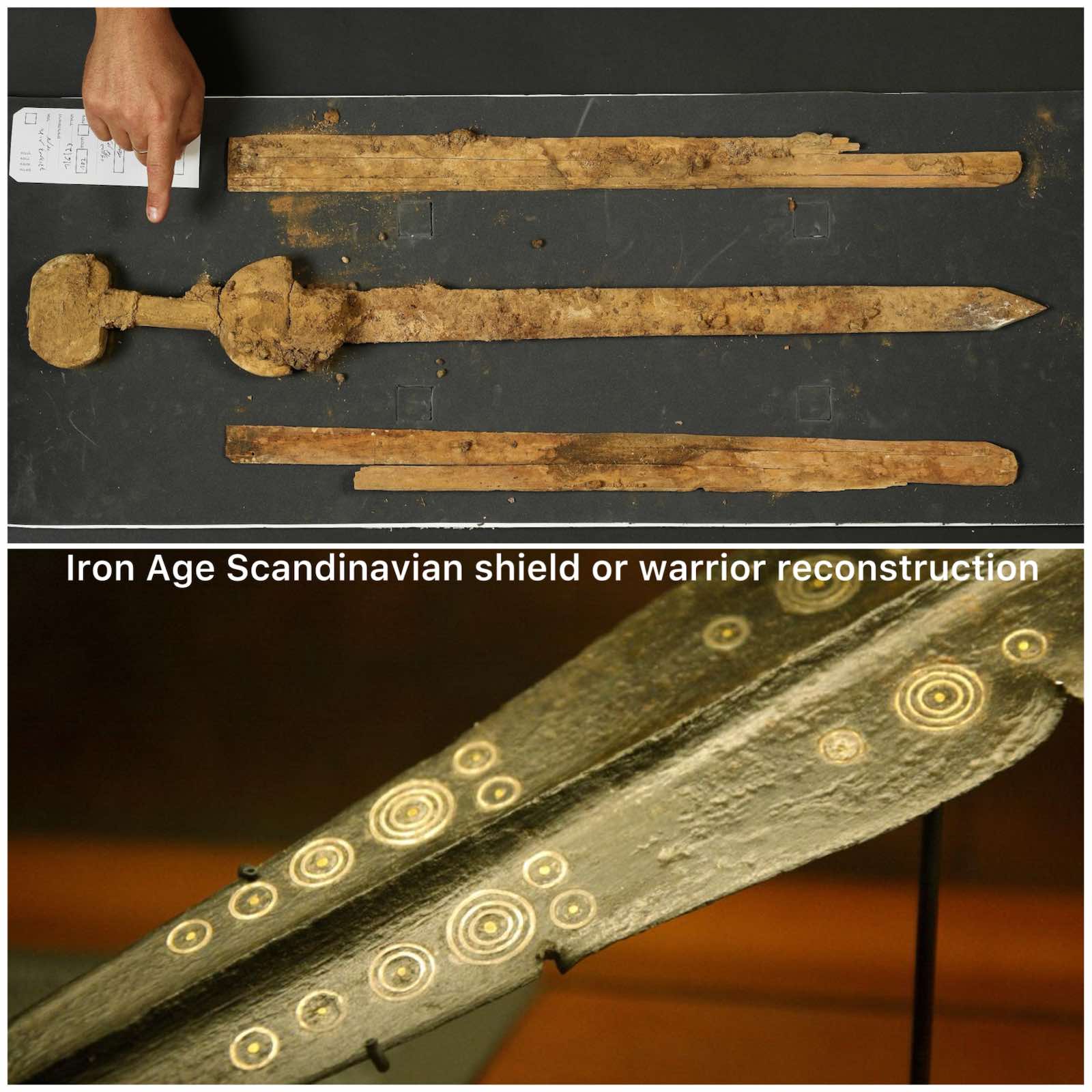
Among the discoveries are swords, spears, shields, arrowheads, belts, horse gear, and numerous personal belongings that once belonged to the defeated warriors. Together, these artifacts paint a vivid picture of a large-scale military confrontation that took place around AD 205.
Evidence of a Major Defeat
Based on the quantity of recovered equipment, researchers estimate that the defeated force may have consisted of approximately 1,000 warriors. For the period, this would have represented a significant military force.
After the battle, the victorious side appears to have gathered the weapons and equipment of their enemies before deliberately placing them in the bog. Archaeologists believe this was not simply a method of disposal but a ritual practice common among several Germanic tribes, who offered captured weapons to their gods following major victories.
The site has therefore become an invaluable source of information about warfare, religious traditions, and military organization during the Iron Age.
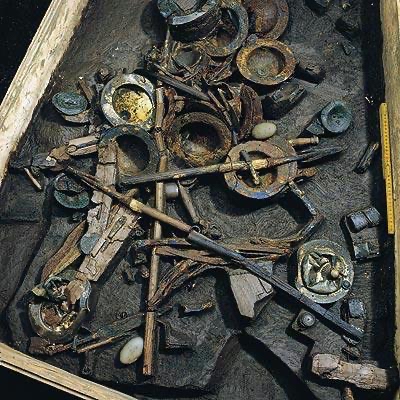
Credit: Vesthimmerlands Museum
Major Germanic Tribes
Spread across Central and Northern Europe (a region the Romans called Magna Germania), these tribes constantly shifted, allied, and clashed. During the Migration Period, their movements completely redrew the map of the continent.
- The Goths (Visigoths & Ostrogoths): Originating from Scandinavia, they migrated south toward the Black Sea. The Visigoths famously sacked Rome in 410 AD and later established a powerful kingdom in Iberia (modern-day Spain).
- The Franks: A confederation of tribes along the Rhine. They conquered Roman Gaul and established the Frankish Empire, from which modern France and Germany derive their names.
- The Angles, Saxons, and Jutes: These maritime tribes crossed the North Sea in the 5th century to colonize Britain, effectively laying the groundwork for the English nation (the Anglo-Saxons).
- The Vandals: Infamous for their brutal sacking of Rome in 455 AD (which gave us the word vandalism), they eventually sailed across the Mediterranean to establish a prosperous kingdom in North Africa.
Roman Influence Raises New Questions
One of the most intriguing aspects of the discovery is the presence of military equipment that shows clear Roman influence. Some swords, belt fittings, and other objects resemble equipment used by Roman soldiers during the same period.
This has led some researchers to suggest that the defeated warriors may have been traveling south with the intention of entering Roman service as auxiliary troops or mercenaries.
The Roman Empire frequently recruited soldiers from beyond its borders. Germanic warriors were valued for their fighting abilities and served in various parts of the empire, often receiving regular pay, military equipment, and, in some cases, Roman citizenship after years of service.
If this interpretation is correct, the army may never have reached Roman territory, having instead been intercepted and defeated in what is now Denmark.
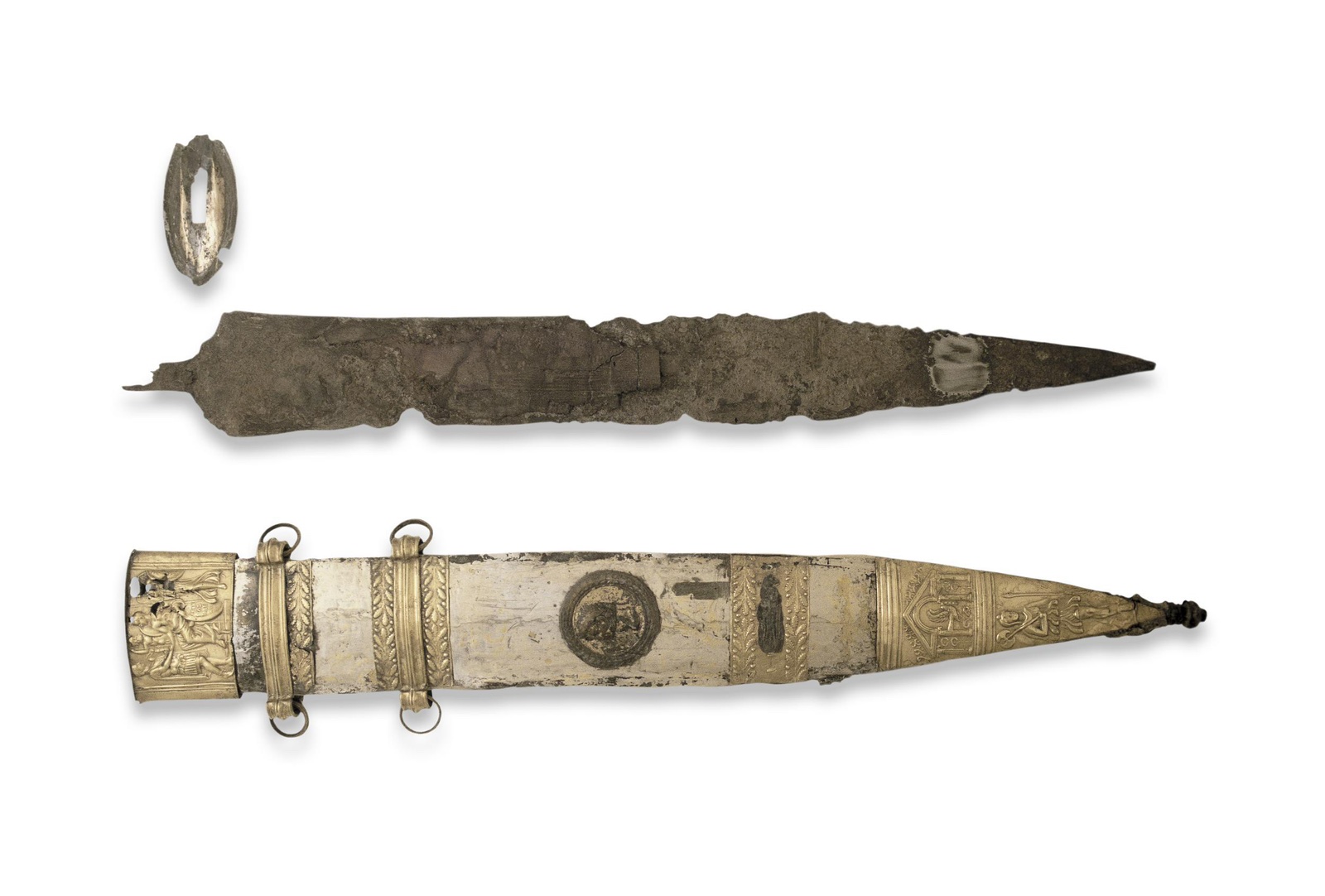
Credit: Roman Army Museum / historical reenactment archive
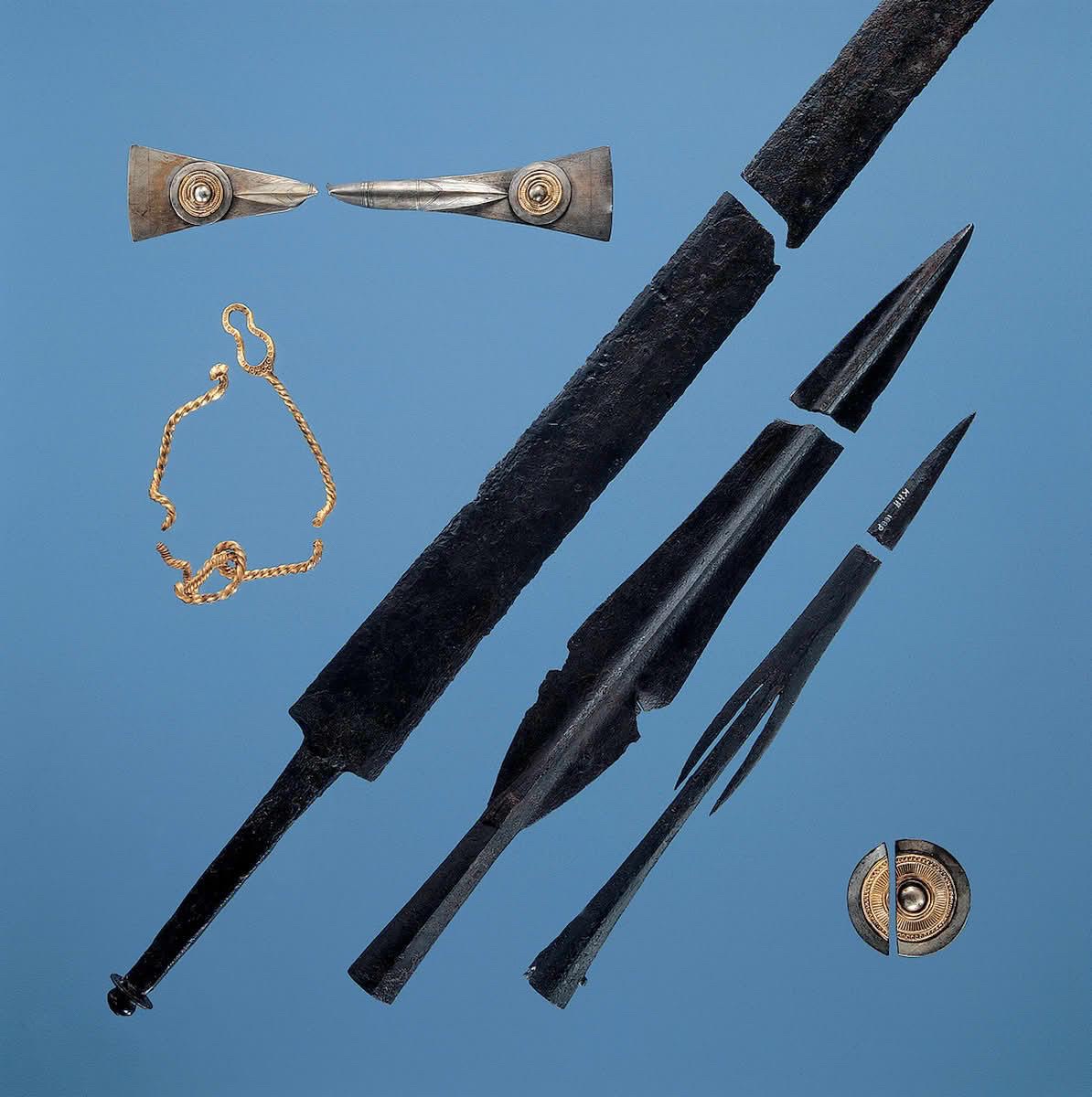
Credit: Preben Delholm / Moesgård Museum
Where Did the Warriors Come From?
Another important question concerns the origin of the defeated force.
Some archaeologists believe that certain personal items and styles of equipment point toward regions in present-day Norway. If true, the warriors may have traveled hundreds of kilometers before meeting their fate on Danish soil.
However, identifying the exact homeland of ancient armies is rarely straightforward. Trade networks, migration, and exchanges between neighboring communities often resulted in similar objects being found across large areas of Northern Europe.
For this reason, researchers continue to examine the evidence carefully before reaching firm conclusions.
Credit: Jørgen Ilkjær / Moesgård Museum
Not All Experts Agree
Despite the excitement surrounding the theory, many specialists urge caution.
Several archaeologists argue that there is currently no definitive proof that the army was heading toward the Roman Empire. Instead, they suggest that the battle could simply have been part of a regional conflict between Scandinavian tribes competing for territory, resources, or political influence.
Likewise, Roman-style equipment does not necessarily indicate direct military service. Such items could have reached northern Europe through trade, diplomatic gifts, or as spoils taken from previous conflicts involving Roman forces.
As a result, the idea that the warriors intended to serve Rome remains an informed hypothesis rather than an established historical fact.
Why the Discovery Matters
Regardless of which interpretation ultimately proves correct, the discoveries at Illerup Ådal represent one of the richest collections of Iron Age military artifacts ever found.
The recovered objects allow researchers to study how ancient armies were equipped, how battles were fought, and how different cultures interacted across Europe nearly two thousand years ago.
Modern scientific techniques, including advanced material analysis and digital reconstruction, continue to reveal new information from artifacts that have already been excavated. Each new study helps historians build a more complete picture of a period when the Roman Empire exerted enormous influence across Europe, even beyond its official borders.
Research Continues
Excavations and scientific analysis at the site are ongoing, and researchers believe further discoveries may provide additional clues about the identity and purpose of the defeated army.
Whether these warriors were marching toward Rome, participating in a regional conflict, or pursuing another mission entirely, the archaeological evidence offers a rare glimpse into a dramatic chapter of European history that remained hidden beneath the Danish landscape for nearly 1,800 years.
For now, the story remains one of archaeology’s most fascinating mysteries—one that continues to inspire new research and fresh debate among experts studying the ancient world.
This article is based on archaeological research conducted by Moesgaard Museum and collaborating institutions, along with reports from scientific and archaeological media.
Written by Hidden Civilizations Editorial Team


One Comment
That’s a really fascinating find. It’s amazing how much archaeology can shift our understanding of ancient Roman influence.