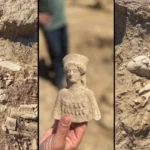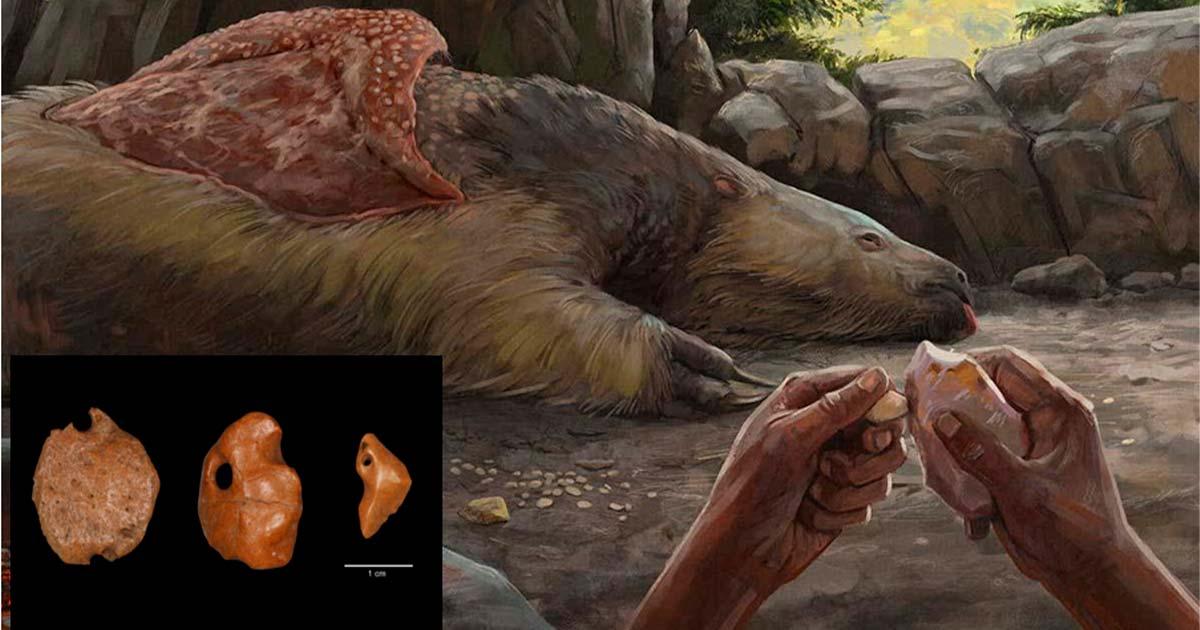
People lived in Brazil earlier than previously thought, suggested by pendants made from prehistoric sloth bones.
The date when humans arrived in South America is pushed back to at least 25,000 years ago, based on an unusual source: bones of extinct giant ground sloths that had been made into pendants by ancient humans.
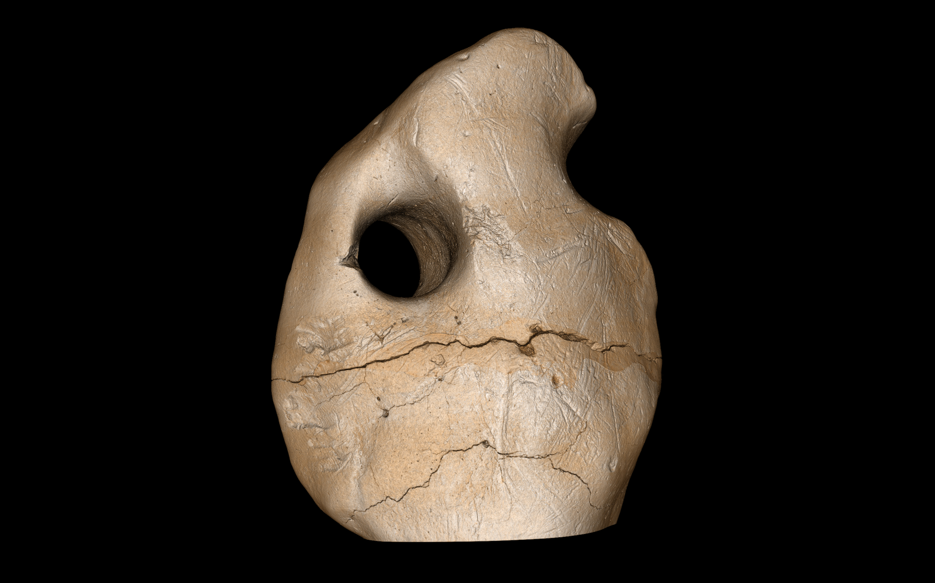
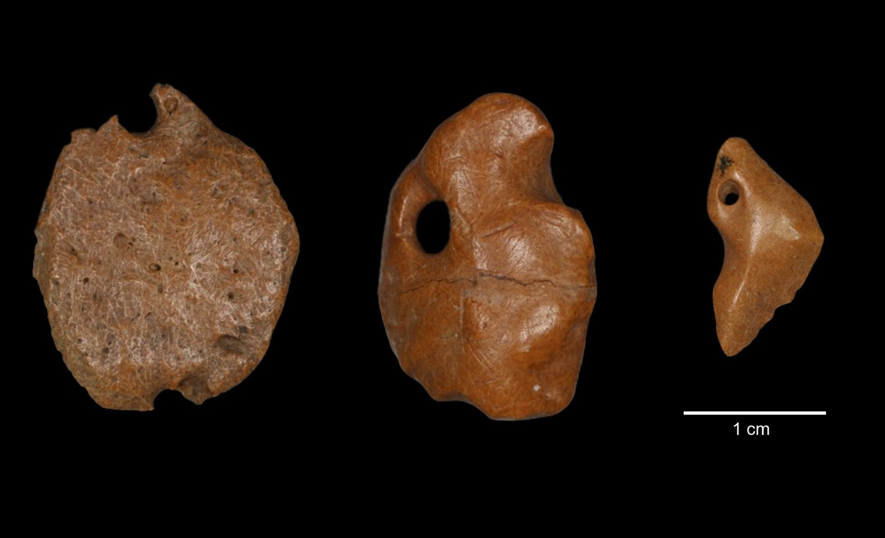
Discovered in the rocky shelter of Santa Elina in central Brazil, three sloth osteoderms — bony deposits that form a type of protective armor over the skin in animals like armadillos — found near stone tools, had small holes that only humans could have made.
The rock shelter of Santa Elina, located in the state of Mato Grosso in central Brazil, has been studied by archaeologists since 1985. Previous research at the site noted the presence of more than 1,000 individual figures and signs drawn on the walls, hundreds of artifacts made of stone tools, and thousands of sloth osteoderms, with three of the osteoderms showing evidence of holes made by human hands.
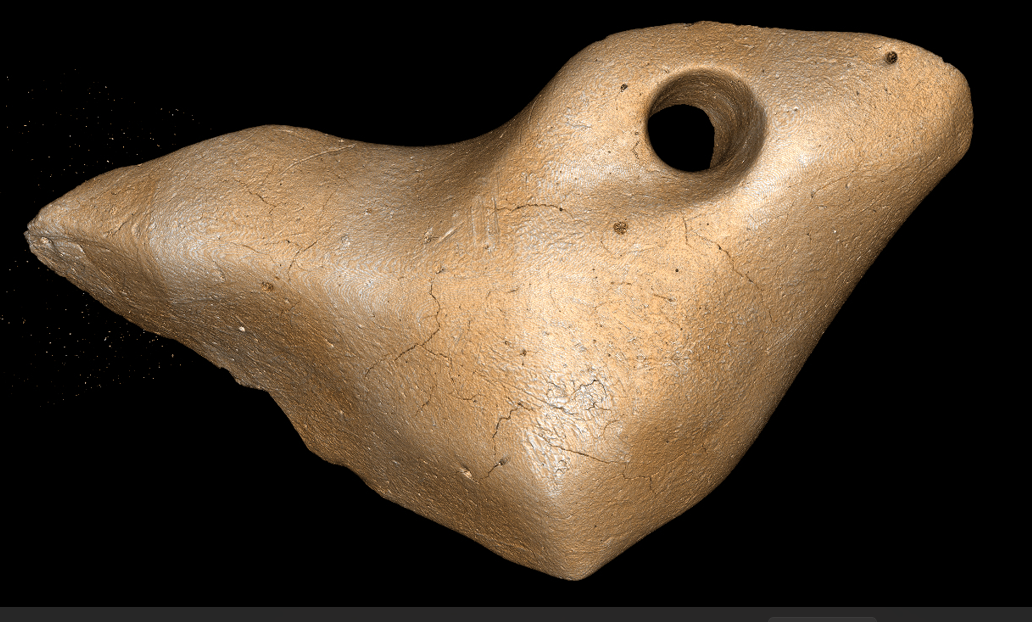
The newly published research documents these sloth osteoderms in extraordinary detail to show that it is extremely unlikely that the holes in the bones were made naturally, implying that these bones shift the date of human settlement in Brazil to 25,000 to 27,000 years ago. These dates are significant due to the growing — but still controversial — evidence for very early human settlement in South America, such as the 22,000-year date for the Toca da Tira Peia cave shelter in eastern Brazil.
Using a combination of microscopic and macroscopic visualization techniques, the team discovered that the osteoderms, and even their small holes, had been smoothed and noted traces of cutting and scraping with stone tools on the artifacts. Animal bites on all three osteoderms led them to rule out rodents as the creators of the holes.
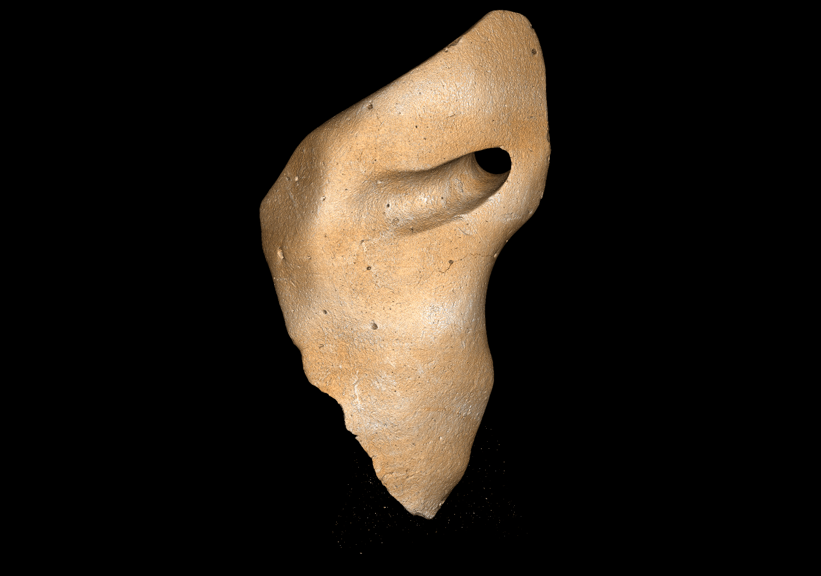
“These observations indicate that these three osteoderms were modified by humans into artifacts, likely personal ornaments,” the researchers wrote in their study.
The study’s co-author, Mirian Pacheco, a lecturer in paleontology at the Federal University of São Carlos, Brazil, noted that “it is practically impossible to define the true meaning that these artifacts had for the inhabitants of Santa Elina.” Nevertheless, the shape and large number of osteoderms “may have influenced the making of a specific type of artifact such as a pendant,” she said.
The presence of human-modified sloth bones in association with stone tools from geological layers dating from 25,000 to 27,000 years ago is strong evidence that humans arrived in South America much earlier than previously thought.
“Our evidence confirms the interpretations that our colleagues working at Santa Elina have been talking about for 30 years,” said Thais Pansani, a paleontologist at the Federal University of São Carlos in Brazil, in an email to Live Science — specifically, that “humans were in central Brazil at least 27,000 years ago.”
The discovery shows that ancient people used the sloth remains in various ways, said Matej Bennett, a geologist at Bournemouth University in the UK, who has researched interactions between humans and sloths in North America, but was not involved in this project.
“This is an exciting study that over time can support the idea of humans settling in America during the Last Glacial Maximum,” the coldest part of the last ice age, Bennett told Live Science via email.
However, many locations in South America are still not fully explored, which means that the debate about the arrival of humans in America is far from over. “We think there should be more evidence waiting to be found in the rocky shelters and caves of Brazil in places that are little or not at all explored,” Pansani said.