Ancient monument hidden in the mountains reveals new details about life during the Roman Empire
An ordinary day for a local goat herder in southwestern Turkey turned into a remarkable archaeological discovery that may help uncover a forgotten chapter of history dating back nearly two thousand years.
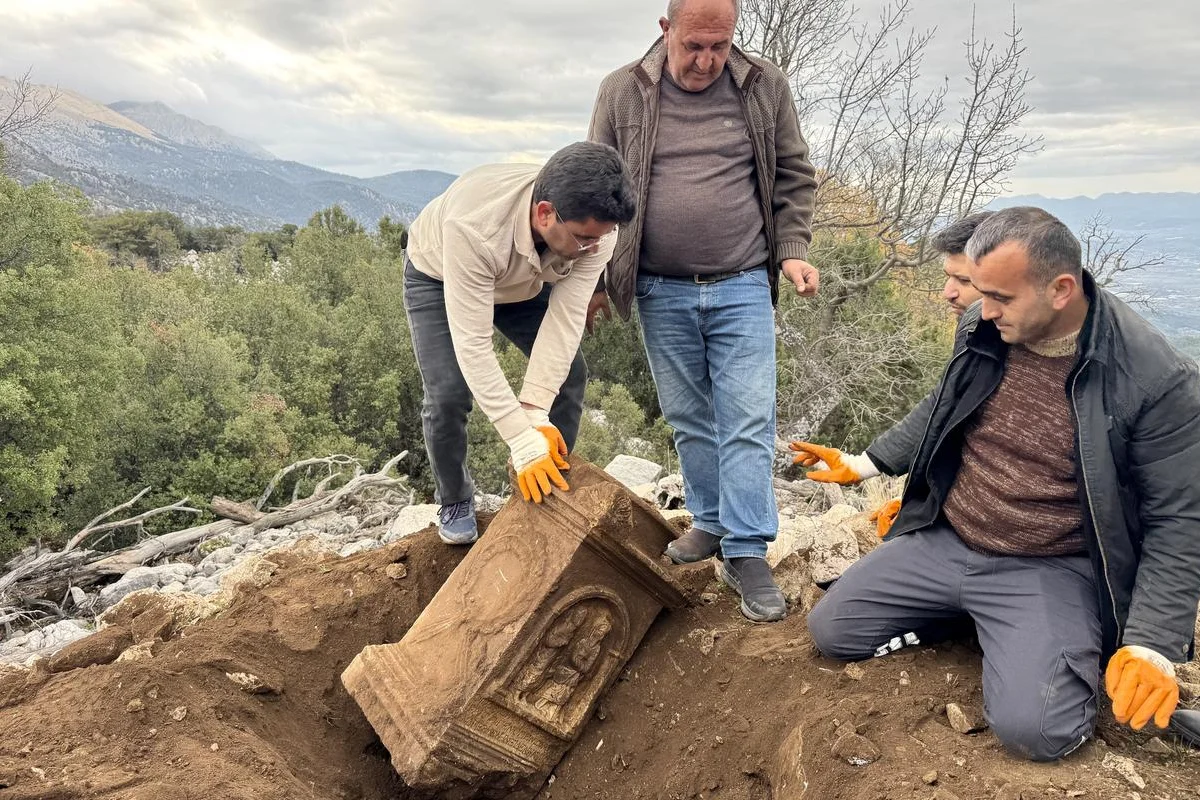
While tending his goats in a mountainous area near the village of Kayacık, in the Seydikemer district of Muğla Province, the herder noticed an unusual stone among the surrounding rocks. Unlike the natural stones around it, this object showed carefully carved details and human figures on its surface.
Instead of ignoring the find, he reported it to the local authorities. Archaeologists from the Fethiye Museum Directorate later examined the site and confirmed that the object was an ancient Roman funerary stele — a carved stone monument created in memory of a deceased person.
Initial studies suggest that the stele dates back to the Roman period, between the 1st and 3rd centuries AD, making it approximately 1,700 to 2,000 years old.
Credit: Ali Riza Akkir / Anadolu Agency
A Stone Monument Preserving the Memory of Ancient People
Roman funerary steles are among the most valuable sources for understanding ancient societies. Unlike ordinary archaeological remains, these monuments often contain inscriptions, portraits, and symbolic decorations that provide information about the people who lived thousands of years ago.
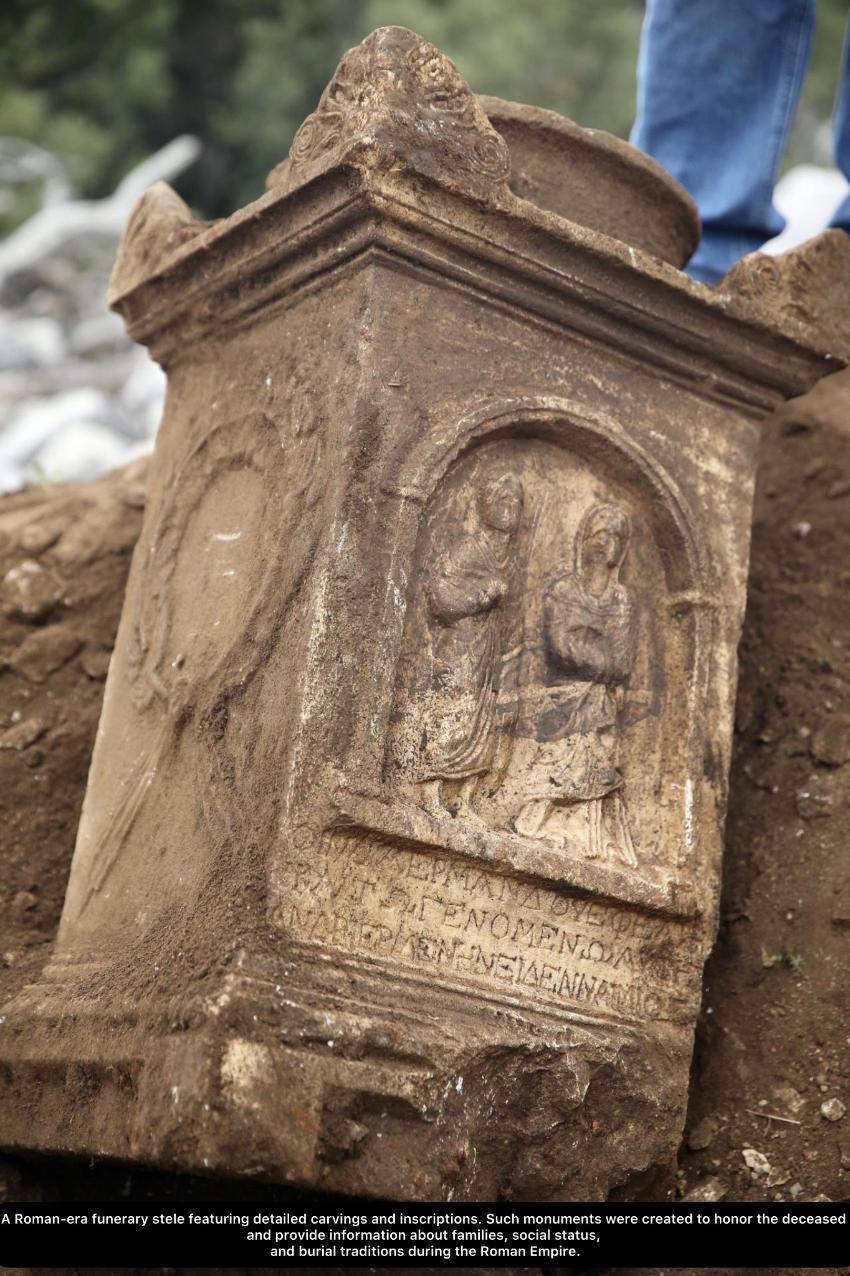
The newly discovered stele has an altar-like shape and features carefully crafted relief carvings. Human figures are displayed on the stone, and archaeologists believe they may represent the deceased individuals or members of a family being honored.
Although research is still ongoing, such images can provide important clues about ancient clothing, appearance, family relationships, and the ways Romans expressed respect for their dead.
The monument also contains an inscription that may become one of the most important parts of the discovery. Roman inscriptions often include names, ages, family connections, and details about the social status of the person commemorated.
Roman Influence in Ancient Anatolia
The modern Muğla region was once part of territories strongly influenced by Roman culture. During antiquity, this area was home to settlements, roads, and communities connected to the wider network of the Roman Empire.
The Romans left behind much more than large monuments such as temples and theaters. Their presence can also be seen through everyday objects, inscriptions, burial monuments, and countless smaller archaeological discoveries.
Funerary monuments were especially important because they allowed families to preserve the memory of their loved ones. More elaborately decorated steles often belonged to families with greater social status or the resources to commission detailed stonework.
The discovery of such a monument in a remote mountainous area demonstrates how deeply Roman traditions spread beyond major cities and urban centers.
Symbols Hidden in Stone
One of the details that attracted the attention of archaeologists is a carved wreath motif found on the monument.
In Roman symbolism, wreaths were often associated with honor, achievement, remembrance, and eternal respect. In a funerary context, they could represent the memory and dignity of the deceased.
Every detail carved into these monuments can carry historical meaning. The way figures are portrayed, their clothing, decorative elements, and inscriptions help researchers understand how ancient people viewed family, death, and remembrance.
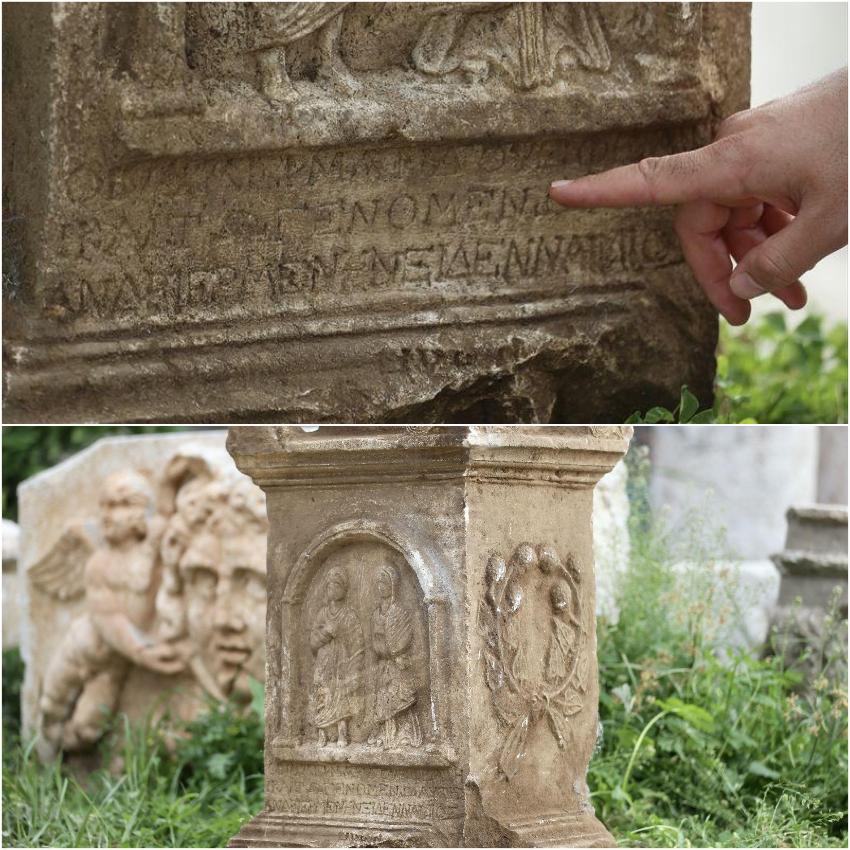
Credit: Muğla Museum Directorate / Turkish Ministry of Culture and Tourism
A Challenging Recovery from Mountainous Terrain
Although the discovery was extremely valuable, recovering the stele was not an easy task.
The monument was located in a difficult mountainous area far from modern roads. Archaeologists had to carefully remove the stone to protect the delicate carvings and inscription from damage.
After being recovered, the stele was transported for conservation and further scientific examination.
Researchers will analyze the stone, the inscription, and the artistic details using modern archaeological methods to learn more about its origin and the people represented on the monument.
Why Discoveries Like This Matter
Archaeological discoveries such as this Roman stele are important not only because of their age, but because they provide a direct connection to people who lived long before us.
Through a single stone monument, researchers can learn:
• how ancient inhabitants lived;
• how families were organized;
• which names were used during the Roman period;
• what beliefs and traditions people followed;
• how burial customs developed;
• how Roman culture spread across different regions.
Every inscription and every carved detail can become a small piece of a much larger historical story.
A Chance Discovery That Opens New Questions
This discovery once again shows that important historical evidence can appear in the most unexpected places. Thanks to the attention of local residents, archaeologists are able to study objects that remained hidden for centuries.
The Roman stele found in the mountains of Muğla is another reminder that modern landscapes often hide layers of forgotten history beneath the surface.
As research continues, scientists hope that this ancient monument will reveal more information about life during the Roman Empire and about the people who left their mark on history nearly two thousand years ago.
This article is based on archaeological research conducted by Turkish archaeologists and the Fethiye Museum Directorate, along with reports from scientific and archaeological media.
Written by Hidden Civilizations Editorial Team