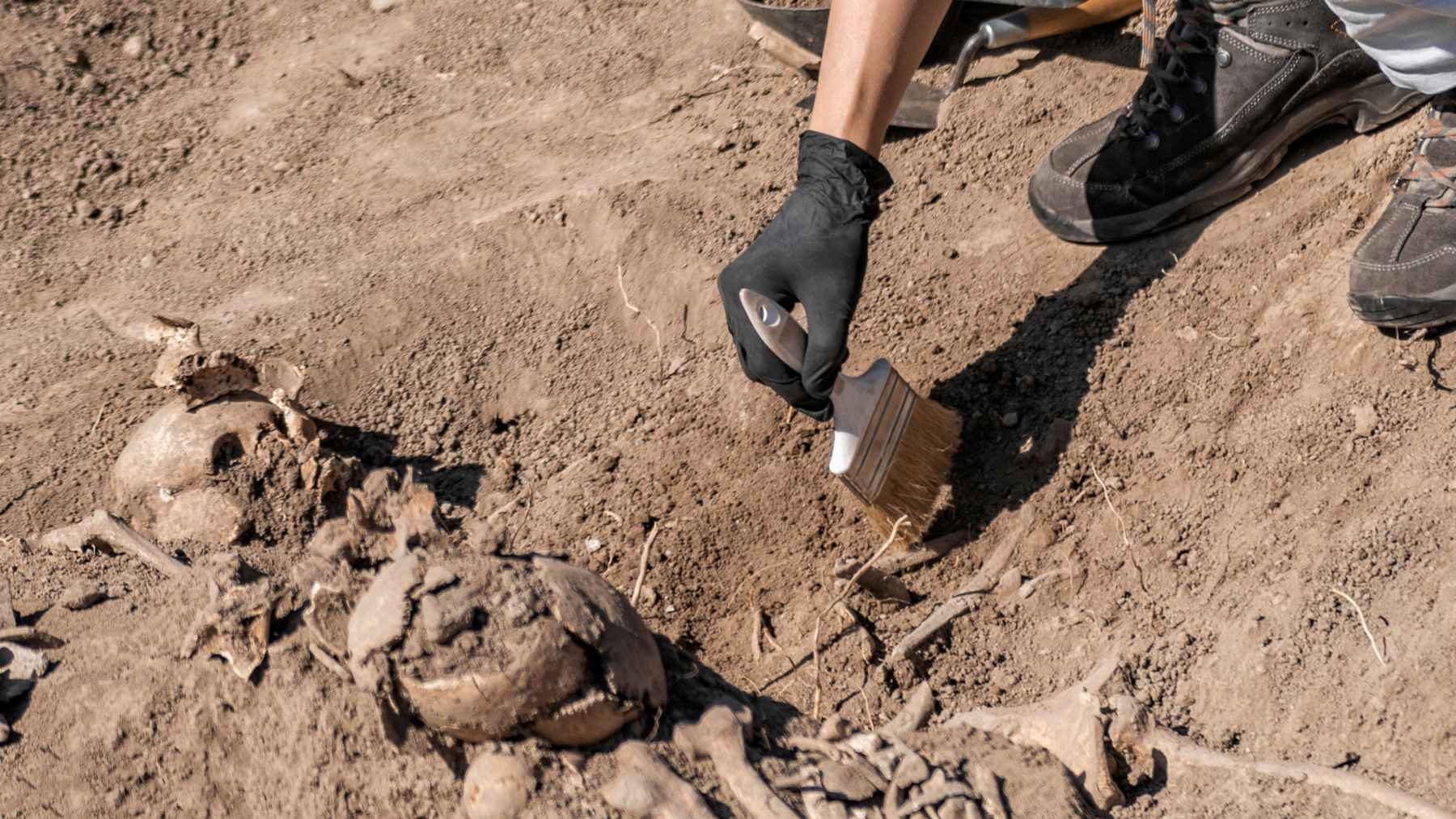
Archaeologists have uncovered one of the most remarkable historical discoveries in recent years during excavations beneath a former department store in the city of Gloucester, England. While preparing the site for redevelopment, researchers discovered 317 human skeletons, 83 brick-lined burial vaults, and numerous historical artifacts, revealing centuries of hidden history beneath the modern city.
The excavation took place on the site of the former Debenhams department store, which had occupied the area for decades. Before construction work could begin on a new development, archaeologists were given the opportunity to investigate the site—a routine procedure in many historic British cities where centuries of human activity often lie beneath modern buildings.
A Medieval Cemetery Hidden Beneath the City
According to the archaeological team, the remains belong to the cemetery of St. Aldate’s Church, a medieval church that once stood on the site. The church served the local community for hundreds of years before it was eventually demolished, and over time new buildings were constructed above the forgotten burial ground. The name of this Church is believed to be linked to Saint Aldhelm, a respected 7th-century Anglo-Saxon bishop, scholar, and abbot who played an important role in spreading Christianity across southern England. Over time, the name “Aldhelm” evolved into “Aldate” in some locations.
Although there was little visible evidence of the cemetery on the surface, the graves had remained remarkably well preserved underground. Each burial is being carefully documented before the remains undergo scientific examination.
Researchers believe that some of the burials date back nearly 1,000 years, while others belong to later medieval and post-medieval periods. This wide time span gives historians a rare opportunity to study how the local population changed over several centuries.
More Than Just Human Remains
The excavation uncovered far more than skeletons. Archaeologists also found 83 brick burial vaults, fragments of pottery, building materials, and other historical objects that help reconstruct the site’s long history.
Even more significant was the discovery of evidence from the Roman period beneath the medieval cemetery. Remains of Roman structures and artifacts indicate that the area had been occupied long before St. Aldate’s Church was built, confirming Gloucester’s importance as one of Britain’s oldest continuously inhabited settlements.
These findings demonstrate how different generations built upon the same location, creating layers of history stretching back nearly two millennia.
What Scientists Hope to Learn
The discovery offers an exceptional opportunity for researchers to learn more about the people who once lived in Gloucester.
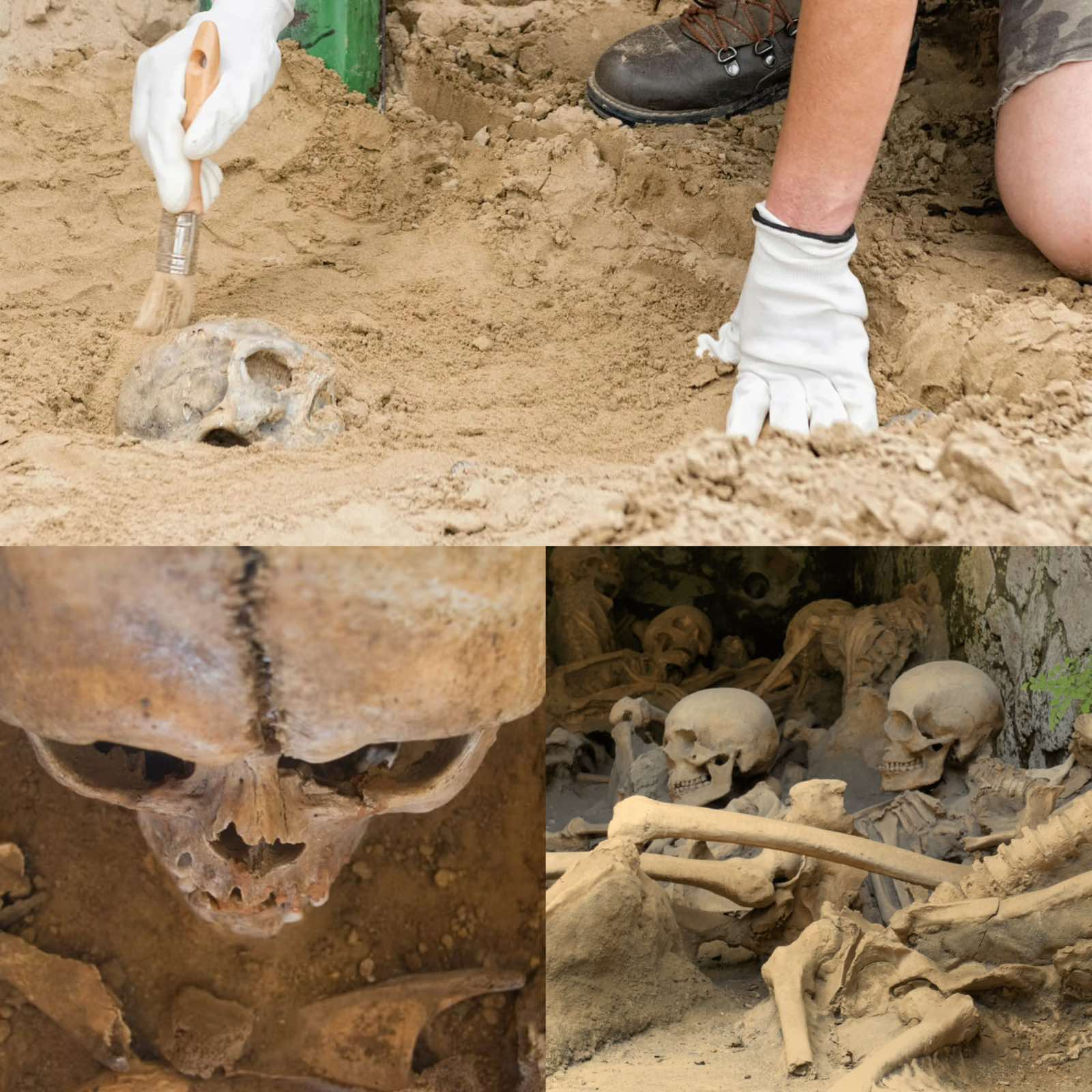
By studying the bones and teeth, specialists can estimate the age, sex, health, and lifestyle of the individuals buried there. Modern scientific techniques may also reveal information about nutrition, diseases, physical labor, injuries, and even migration patterns.
Dental analysis is particularly valuable because teeth often preserve evidence of long-term dietary habits. Scientists hope to identify changes in eating patterns over time, including the increasing consumption of sugar after it became more common in Britain during the post-medieval period.
Researchers may also detect signs of infectious diseases, arthritis, healed fractures, and other medical conditions that affected people centuries ago.
Preserving History During Modern Development
The excavation highlights the important role archaeology plays in modern construction projects. In many parts of the United Kingdom, developers are required to allow archaeological investigations before building begins, particularly in cities with rich historical backgrounds.
Without these surveys, valuable evidence of the past could be permanently lost.
Rather than delaying development, archaeological work ensures that important discoveries are recorded, studied, and preserved before construction continues.
Gloucester’s Rich Historical Legacy
Gloucester has a long and fascinating history dating back to the Roman occupation of Britain. It later became an important medieval religious and commercial center, with churches, markets, and thriving communities shaping the city’s development over hundreds of years.
Many of today’s streets and buildings stand above layers of earlier settlements, making Gloucester one of England’s most archaeologically significant cities.
The latest excavation adds another chapter to that history, offering researchers fresh evidence about how the city evolved through different historical periods.
Why This Discovery Matters
Although headlines have focused on the discovery of more than 300 skeletons beneath a former shopping site, archaeologists emphasize that the real significance lies in the scientific knowledge these remains can provide.
Each skeleton represents an individual who once lived, worked, and contributed to the city’s history. Together, they offer an extraordinary record of everyday life across centuries, helping historians better understand changes in health, diet, social conditions, and burial customs.
As laboratory analysis continues, researchers expect to uncover even more information that will deepen our understanding of medieval England and the people who called Gloucester home.
The discovery serves as a reminder that beneath many modern cities lie forgotten chapters of history waiting to be uncovered. What appeared to be an ordinary redevelopment project has become one of the most valuable archaeological investigations in recent years, preserving an important part of England’s cultural heritage for future generations.