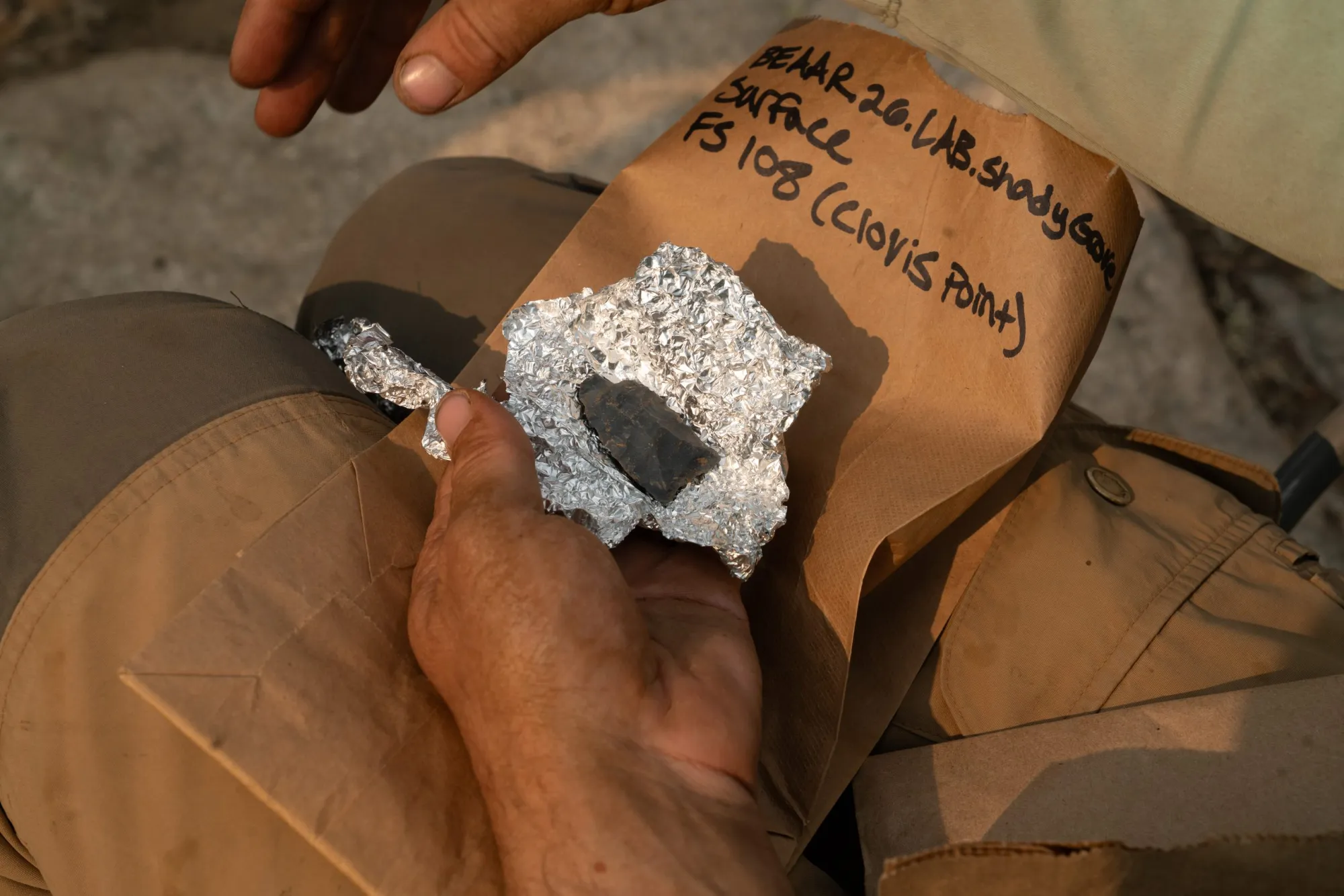
High in Montana’s Beartooth Mountains, archaeologists are uncovering evidence that could force scientists to rethink how early humans used the mountains of North America.
The discoveries are particularly surprising because of where they were made. The sites are located around 9,500 feet above sea level, in a rugged alpine landscape near Yellowstone National Park. Researchers have found stone tools and other traces suggesting that people were present here around 13,000 years ago, during the period associated with the Clovis culture.
That date is important. For decades, archaeologists have generally associated Clovis groups with lower elevations and open landscapes where large animals such as mammoths and ancient bison could be hunted. The high mountains were considered a much less likely place for permanent or repeated human activity.
Now, archaeologist Scott Dersam believes the Beartooth discoveries may tell a different story.
A landscape where humans were not supposed to be
Dersam and his team have spent years searching the Beartooth Mountains for evidence of ancient human activity. Their work became particularly interesting after a major rain-on-snow event in 2022 disturbed the ground across parts of the region.
The flooding and erosion exposed layers of soil that had been buried for thousands of years. In some places, artifacts that had previously been hidden beneath vegetation and sediment suddenly appeared on the surface.
For archaeologists, disturbances like this can be extremely valuable. They can expose stone flakes, tools and other traces of past human activity that would otherwise remain invisible.
Dersam returned to locations he had already investigated and noticed something remarkable: areas that had previously produced only a few artifacts were suddenly revealing many more.
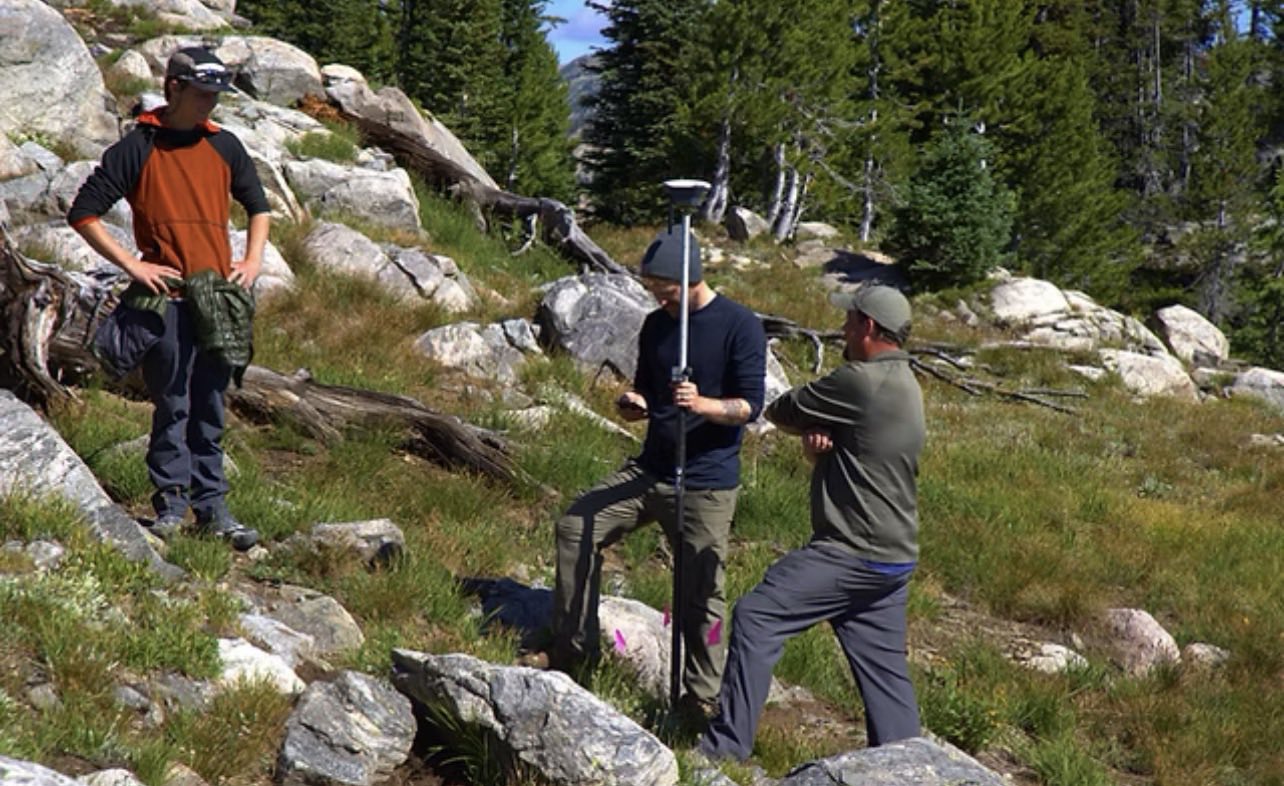
Credit: Nick Mott / Montana Free Press
Among the discoveries were objects that appear to belong to the Clovis period.
Finding one isolated Clovis point in the mountains would be interesting, but it would not necessarily prove that people actually lived or worked there. It could have been carried to the location later or left behind accidentally.
The situation in the Beartooths appears different.
Dersam has identified several high-elevation sites containing multiple artifacts, including Clovis points. Even more intriguing, one recent discovery appears to have been preserved beneath the ground rather than lying on the surface.
A Clovis point inside an ancient hearth
During the 2026 field season, researchers were excavating a small area when they encountered dark material in the soil that appeared to be the remains of an ancient hearth.
Then they found something much more significant.
A fragment of a Clovis projectile point was discovered within the hearth itself.
If future laboratory testing confirms the age and context of the material, the discovery could provide unusually strong evidence that Clovis-era people were actively using this high-altitude environment.
The location of the artifact matters almost as much as the artifact itself.
Because the point appears to have remained buried in place, researchers have a better opportunity to study the archaeological context around it. Soil, charcoal, pollen and other materials can potentially reveal what the environment looked like when the site was being used.
The researchers are particularly interested in determining exactly how old the surrounding sediment is.
The problem with the ice
The biggest mystery is not simply why people would have climbed so high.
It is whether they could have been there at all.
Around 13,000 years ago, much of the Greater Yellowstone region was still recovering from the last Ice Age. The enormous Pinedale glaciation had covered large portions of the landscape.
Traditional models of the region’s ancient environment suggest that many of the high-elevation areas would have been covered by ice or otherwise unsuitable for human occupation.
If that model is correct, the archaeological discoveries create a difficult question.
How were people living at such elevations?
Dersam’s research suggests that the situation may have been more complicated than previously believed. Soil testing from some locations indicates that certain areas may have been exposed to sunlight much earlier than expected, possibly during periods when surrounding landscapes were still heavily glaciated.
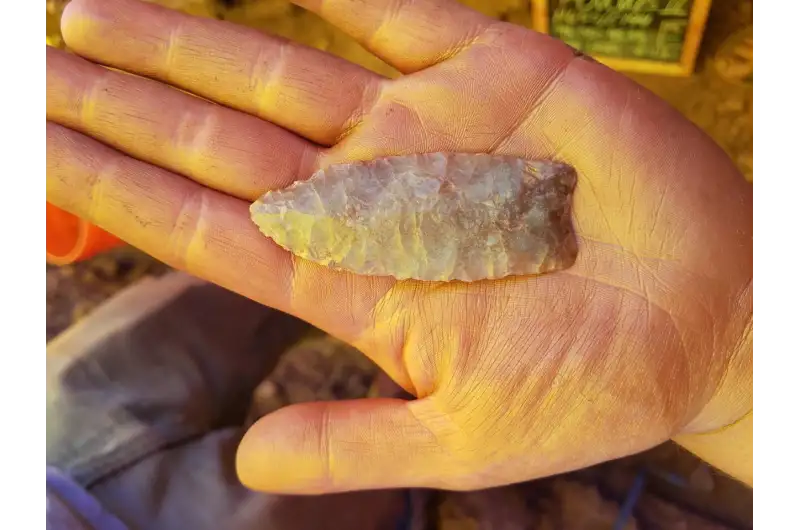
Credit: Nick Mott / Montana Free Press
One possibility is that some mountain basins remained free of ice. Another is that narrow corridors existed between glaciated areas, allowing animals and humans to move through the region.
At this stage, however, these remain hypotheses. More testing will be needed before researchers can determine exactly what the ancient landscape looked like.
Following the clues left by stone
Much of what archaeologists know about Clovis people comes from remarkably small pieces of evidence.
Stone tools may appear insignificant to an untrained eye. A small flake of chert or a fragment of obsidian can look like nothing more than a broken rock.
To an archaeologist, however, its shape, material and manufacturing technique can reveal much more.
Stone-working traditions were passed from generation to generation. Certain techniques and tool styles can therefore help researchers identify cultural connections and establish approximate ages for archaeological sites.
The Beartooth Mountains have already produced thousands of artifacts from different periods.
A major collection was assembled decades ago by Vern Waples, a former game warden who spent years riding through the Beartooth and Pryor mountains. His collection eventually contained more than 2,000 artifacts, together with detailed maps showing where many of them had been discovered.
That collection helped draw Dersam’s attention to the region.
Instead of simply searching randomly, he combined older records with modern archaeological models designed to identify areas where ancient people were most likely to have lived or traveled.
The approach eventually began producing results.
A much older story of mountain use
The discoveries could also change the way archaeologists think about mountains in early North American history.
For a long time, high elevations were often treated as places people entered only later, after climate and environmental conditions changed.
But humans may have been using mountain environments much earlier than the archaeological record has shown.
Dersam’s findings suggest that the mountains may have provided important resources even during the late Ice Age.
Large animals could have moved through high-elevation environments as vegetation changed seasonally. Melting ice and permanently cold ground may also have created natural conditions for preserving meat.
In that scenario, early hunters may not have simply wandered into the mountains by accident. They may have deliberately followed animals and seasonal resources into areas that archaeologists once considered too harsh.
The Indigenous history of the region
There is another important dimension to these discoveries.
The Greater Yellowstone region has a deep Indigenous history, with numerous tribes maintaining historic and cultural connections to the landscape.
Modern archaeology has also had a complicated relationship with Indigenous communities. Human remains and artifacts were often removed from their original locations by collectors and researchers, sometimes without consultation or regard for Indigenous traditions.
One well-known example is the Anzick site near Wilsall, Montana. Human remains discovered there in the 1960s were later identified as belonging to a young child who lived around 12,600 years ago.
The remains became known as the Clovis Child, or Anzick-1.
Decades after the discovery, members of the Crow Tribe and archaeologists worked together to rebury the child in 2014.
The history has become an important reminder that archaeology is not simply about finding objects. The locations, landscapes and people connected to those objects matter as well.
Researchers working in the Beartooths are therefore taking care to disturb the sites as little as possible.
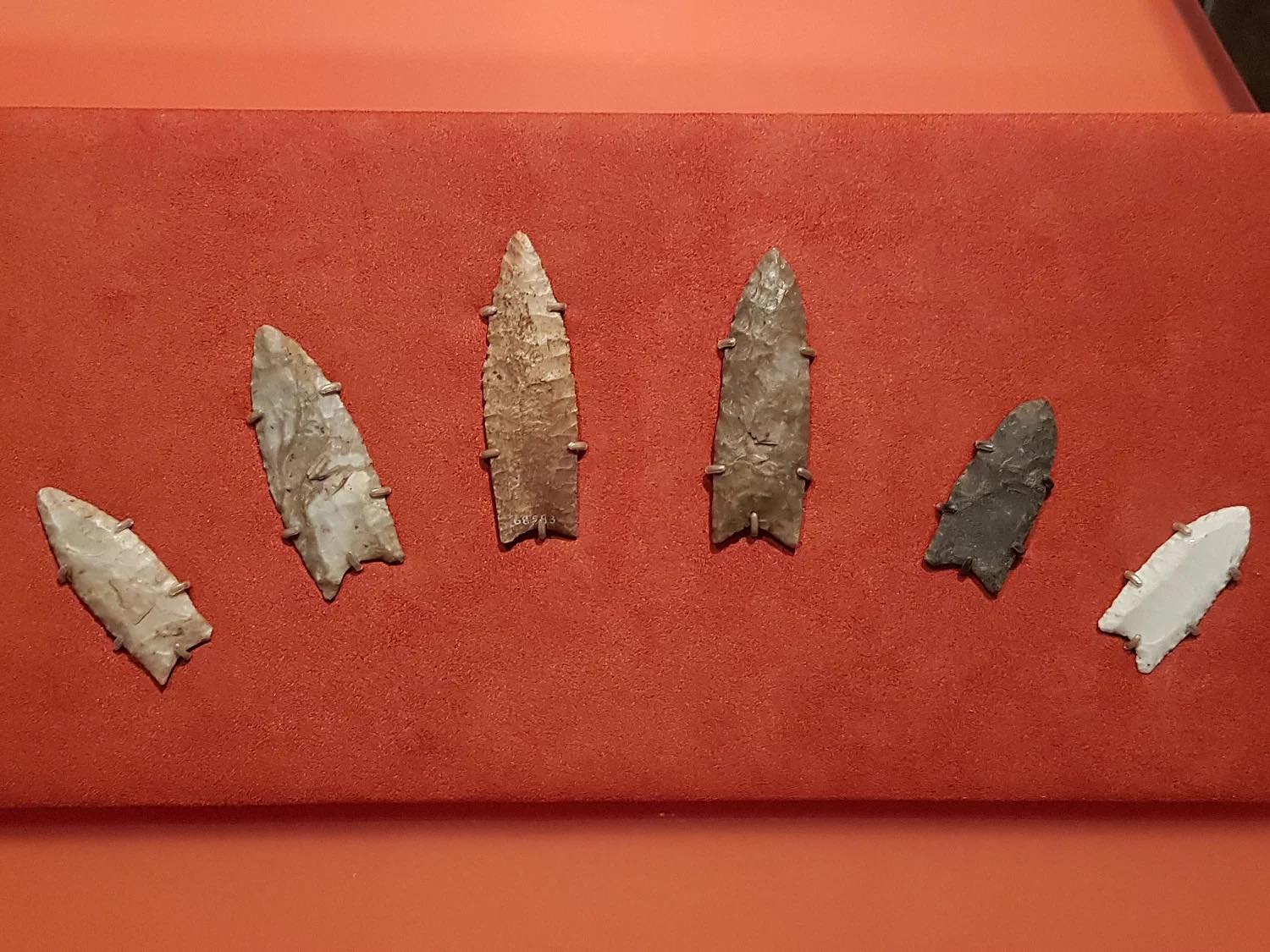
Rather than removing everything they find, the team records locations, photographs artifacts and studies the surrounding soil. Only selected objects are collected when there is a specific scientific reason to do so or when researchers believe they could otherwise be taken by visitors.
The goal is to preserve the archaeological context for future research.
There may be much more hidden in the mountains
Perhaps the most exciting part of the Beartooth discoveries is how little of the region has actually been studied.
Archaeological research has historically concentrated in places where roads, buildings and other development have exposed ancient sites. High mountain landscapes, by comparison, have received far less attention.
That creates a possible bias in the archaeological record.
If researchers rarely search high elevations, the absence of artifacts does not necessarily mean ancient people were absent.
It may simply mean that nobody was looking.
The Beartooth research is beginning to challenge that assumption.
Dersam’s team has now identified multiple Clovis sites at high elevations, including several in the Beartooth Mountains. The recently discovered material inside an ancient hearth could become particularly important if laboratory testing confirms its age and context.
For now, the researchers are waiting for the scientific analysis to tell the rest of the story.
A mystery still waiting to be solved
The discoveries do not yet rewrite the entire history of early America. The results still need to undergo detailed laboratory analysis, peer review and publication.
But they raise an intriguing possibility.
Perhaps the first people who lived in North America were far more adaptable than we have traditionally imagined. Perhaps they were not confined to the plains and valleys but were already exploring some of the continent’s highest landscapes thousands of years ago.
And perhaps the mountains around Yellowstone still contain evidence that could change our understanding of that ancient world.
The Beartooths are enormous, rugged and difficult to search. Researchers believe that countless archaeological traces may still lie beneath their soil.
For Dersam, that means the work is unlikely to end anytime soon.
The real discovery may not be a single Clovis point or an ancient hearth. It may be the realization that the high mountains themselves have been part of the human story for far longer than archaeologists once believed.
Written by Hidden Civilizations Editorial Team