Today, more than 7,000 languages are spoken or signed around the world. They represent thousands of different cultures, histories and ways of describing the world. But according to a new study, the linguistic diversity we see today may be only a small remnant of what once existed.
Researchers have proposed that around 2,000 years ago, humanity may have been living through an extraordinary period of linguistic diversity, when the number of languages spoken across the planet could have reached somewhere between 20,000 and 75,000. If that estimate is close to reality, humans may once have spoken up to ten times as many languages as we do today.
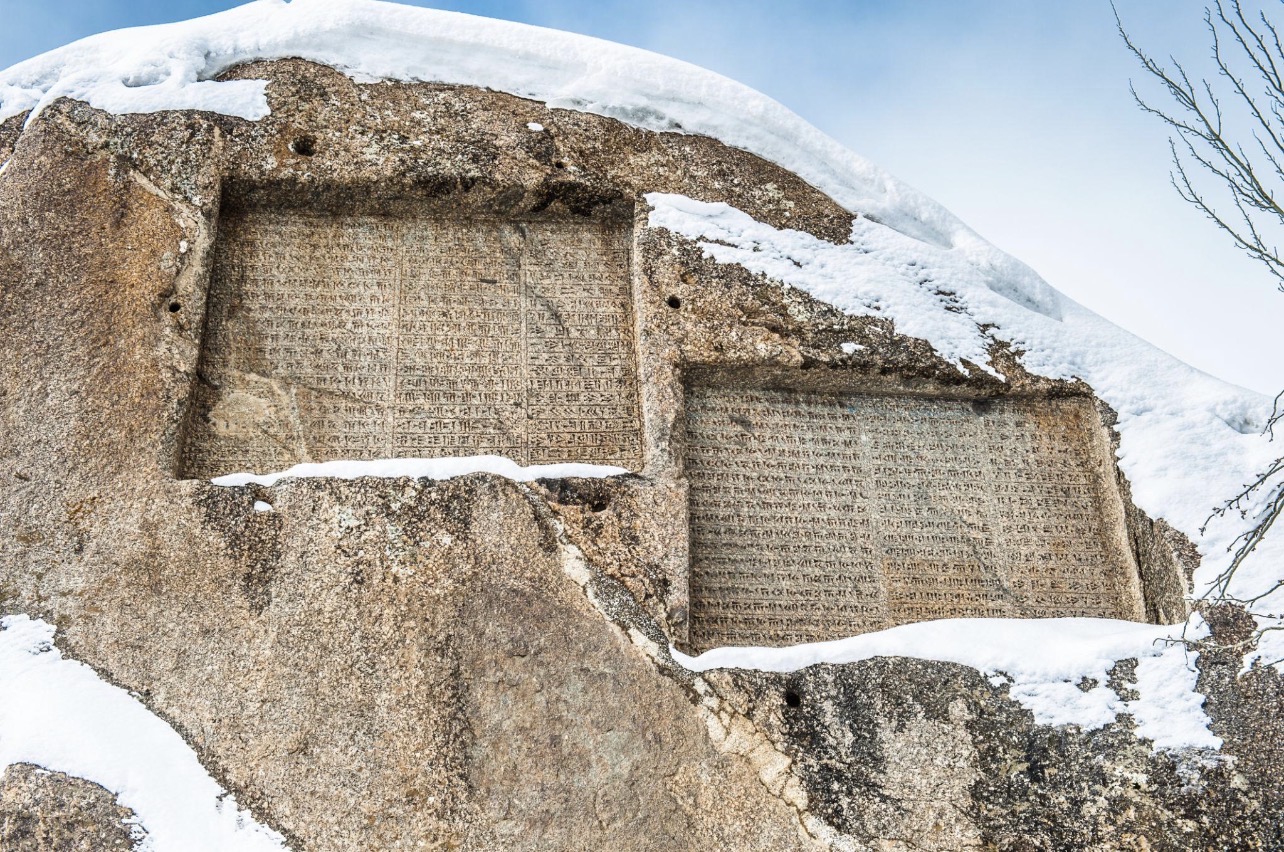
The idea is difficult to imagine because almost all of those ancient languages have disappeared without leaving written records. We know the names and traces of some ancient languages through inscriptions, manuscripts and archaeological discoveries, but countless others were spoken by small communities that left behind little or no evidence of their speech. Their languages disappeared when the communities themselves changed, merged with neighboring groups or adopted another language.

nshot
The researchers behind the new study, led by language-evolution researcher Damián Blasi, attempted to reconstruct this largely invisible history using mathematical and computational models. Instead of trying to identify every individual ancient language, they looked at how population growth, agriculture and the size of human communities could have influenced the number of languages spoken throughout history.
Their reconstruction begins around 12,000 years ago, near the beginning of the Holocene. At that time, the world’s population was estimated to be somewhere between four and seven million people. If prehistoric hunter-gatherer communities were generally similar in size to comparable groups known from more recent periods, the researchers estimate that the world could already have contained roughly 5,000 to 6,000 languages.
As agriculture spread, however, human populations began to grow. Farming made it possible for larger numbers of people to live in the same areas and eventually contributed to the development of permanent settlements, cities and increasingly complex societies. According to the models, linguistic diversity continued to increase alongside this population growth rather than immediately declining.

enshot
Eventually, the number of languages may have reached its highest point around 2,000 years ago. The models produced estimates ranging from approximately 20,000 to 75,000 languages, depending on the assumptions used. That would mean the world of ancient societies may have sounded dramatically different from the one we know today. Instead of thousands of languages, there could have been tens of thousands, many of them spoken by relatively small communities.
This does not mean that every ancient village necessarily had its own completely unrelated language. The researchers themselves acknowledge that the situation may have been much more complicated. Neighboring communities could have spoken different varieties of the same language, shared vocabulary or moved gradually from one dialect to another. In some areas, languages may have formed a continuous spectrum in which there was no clear boundary between one language and the next. (Scientific American)
Still, the general pattern suggested by the study is striking. After reaching this enormous peak, linguistic diversity began to decline.
One possible reason was the rise of large political societies. As states and empires expanded, their languages could spread across enormous territories. People living in smaller communities might gradually adopt the language of a powerful neighboring society for trade, administration, political participation or other forms of interaction.
The Roman Empire provides an obvious historical example. Latin spread across large parts of Europe and the Mediterranean, although it did not completely replace the languages spoken by all of the populations living under Roman rule. In other parts of the world, other large political and cultural systems produced similar processes of linguistic consolidation.
ot
Over long periods of time, a language spoken by a relatively small community could disappear if younger generations stopped learning it and began speaking a more widely used language instead. Once the final speakers died, the language could disappear completely.
This process is not simply an ancient phenomenon. Languages continue to disappear today, and linguists are documenting many communities where older generations still speak languages that younger people are increasingly abandoning. The difference is that modern researchers can record endangered languages and preserve information about them, while most languages of the ancient world vanished without anyone being able to document them.
For a long time, researchers have often focused on colonialism when explaining the dramatic loss of linguistic diversity during the last several centuries. Colonial powers frequently imposed their own languages through government, education, religion and economic systems, putting pressure on Indigenous languages. The new study does not dispute this history, but it suggests that large-scale language loss may have begun much earlier.
According to the researchers’ reconstruction, the emergence and expansion of large societies could have already been reducing linguistic diversity thousands of years before European colonial expansion. In other words, the forces that eventually produced a more linguistically uniform world may have been developing alongside the growth of complex societies themselves.
There is another fascinating implication. If tens of thousands of languages really existed only a few thousand years ago, modern linguists may be studying only a tiny fraction of the linguistic possibilities that humans once developed.
Every language represents more than a collection of words. Languages develop different sounds, grammatical structures and ways of organizing information. Some make distinctions that others do not, while others develop unusual systems for describing time, space, relationships or the natural world. When a language disappears without documentation, some of those characteristics disappear with it.
That means the loss of ancient languages may also have erased an enormous amount of information about the different ways human communities communicated and understood their surroundings.
However, the researchers are careful about how confidently the numbers should be interpreted. There is no ancient census listing every language spoken around the world 2,000 years ago. The vast majority of these languages left no written evidence at all. The estimates therefore come from models based on assumptions about population sizes, community structures and the relationship between population growth and linguistic diversity.
Some linguists have expressed reservations about the idea of a specific ancient “golden age” of language. Lyle Campbell of the University of Hawaii, for example, has pointed out that reconstructing linguistic conditions in the distant past involves many variables that cannot be established with certainty. He described the research as potentially being on the right track, while also emphasizing that the conclusions remain highly speculative.
Johanna Nichols, a linguist at the University of California, Berkeley, has raised another possibility: perhaps many of the supposed ancient languages were not sharply separated from one another at all. Small communities living close together could have spoken varieties that overlapped and gradually blended into one another, creating a broad linguistic continuum rather than thousands of completely separate languages.
These uncertainties do not make the study uninteresting. In fact, they highlight just how difficult it is to reconstruct the linguistic history of humanity. Archaeologists can sometimes uncover an ancient city, pottery, tools or inscriptions thousands of years after they were used. But spoken language is much more fragile. Unless people wrote it down or left some other record, it disappears almost completely.
Imagine walking through a landscape 2,000 years ago. A modern traveler might hear dozens of languages during a long journey, but the people speaking them would have had no reason to think of their languages as something that needed to be preserved for future generations. A small community could have used its own language for centuries, passing it from parents to children, until political changes, migration, intermarriage or economic pressures gradually altered the community.
Eventually, the language could have disappeared with almost no trace.
The new research offers a way to think about that invisible part of human history. Rather than seeing today’s 7,000-plus languages as an enormous number, researchers suggest that they may represent the surviving portion of a much larger and more diverse linguistic world.
It is possible that ancient humanity was far more linguistically fragmented than we usually imagine. The great empires and civilizations that dominate history books may have existed alongside thousands of small communities whose languages never entered the written record.
Their voices are gone, but the consequences of their existence may still be reflected in the languages that survived.
The study therefore raises a fascinating question about what has been lost during humanity’s long transition from small communities to increasingly connected societies. As people began living in larger settlements, building states and participating in wider networks of trade and politics, communication became easier across greater distances—but linguistic diversity gradually became harder to maintain.
Today, globalization is continuing that process. A relatively small number of major languages are used by hundreds of millions or even billions of people, while many smaller languages have only a few thousand speakers or fewer. Every time a language disappears, humanity loses another unique record of its past.
The idea that there may once have been tens of thousands of languages gives a new perspective on that loss. The linguistic world of the past may have been far richer and more varied than anything we can reconstruct today.
And perhaps the most remarkable part is that we may never know exactly what those forgotten languages sounded like, what unusual grammatical systems they developed, or how their speakers described the world around them. For most of them, the final traces disappeared long before anyone realized they were worth preserving.
Written by Hidden Civilizations Editorial Team