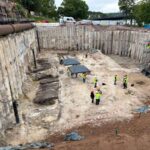
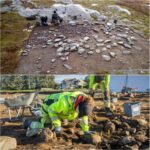
A remarkable archaeological discovery in Northern Ireland is reshaping historians’ understanding of how complex societies developed in prehistoric Europe. Researchers have revealed that Haughey’s Fort, a site dating back around 3,000 years, was far more than a simple hillfort. Instead, evidence suggests it was a large, well-organised settlement that may rank among the earliest urban centres in Europe.
The findings, published in the scientific journal Antiquity, challenge long-held assumptions about life during the Late Bronze Age. Rather than living in scattered farming villages, people at Haughey’s Fort appear to have formed a thriving community with sophisticated planning, specialised activities, and a social structure that was much more advanced than previously believed.
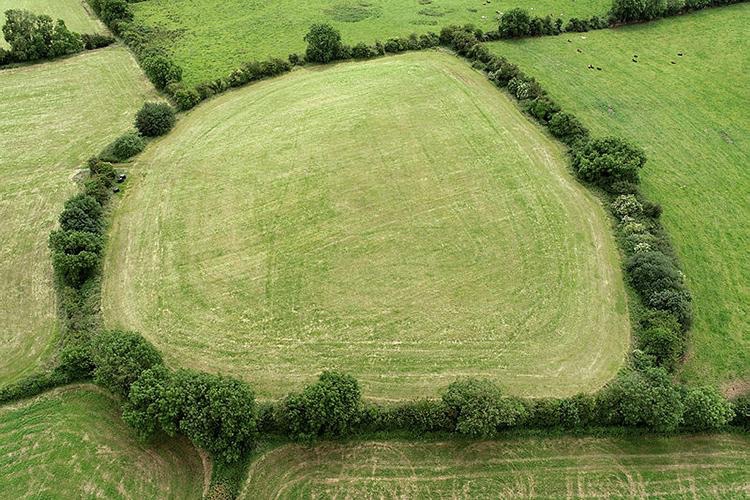
Haughey’s Fort is an ancient Bronze Age archaeological site located in County Armagh, Northern Ireland.
Credit: National Museum of Ireland
A Hidden Settlement Revealed by Modern Technology
The breakthrough came thanks to a combination of cutting-edge archaeological techniques, including aerial laser scanning, geophysical surveys, and remote sensing technologies. These methods allowed researchers to detect structures buried beneath the surface without extensive excavation.
The surveys identified traces of more than 200 possible roundhouses, suggesting that hundreds of people may have lived at the site. Such a dense concentration of dwellings is highly unusual for Bronze Age Europe and indicates that Haughey’s Fort was one of the largest known settlements of its time.
Researchers also discovered several enormous circular structures measuring up to 30 metres in diameter. These buildings were likely used for communal gatherings, ceremonies, political meetings, or other important public functions, highlighting the settlement’s role as a regional centre rather than a simple defensive enclosure.
Credit: Wikimedia Commons — Creative Commons licence.
More Than Just a Fort
For decades, archaeologists believed Haughey’s Fort primarily served as a defensive stronghold. However, the latest evidence paints a much richer picture.
The settlement appears to have been a vibrant centre where people lived, worked, traded, and participated in religious and ceremonial activities. Such a complex community would have required careful planning, social organisation, and effective leadership.
According to researchers, the site may even have served as the seat of a local elite responsible for governing the surrounding region. This would make Haughey’s Fort an important political, economic, and ceremonial hub during the Late Bronze Age.
Daily Life Three Millennia Ago
Although thousands of years have passed, archaeologists can reconstruct many aspects of daily life from the remains uncovered at the site.
Most homes were probably built from timber, with walls made from woven branches covered in clay and roofs thatched with straw or reeds. Families likely shared these circular houses while engaging in farming, animal husbandry, and skilled craftsmanship.
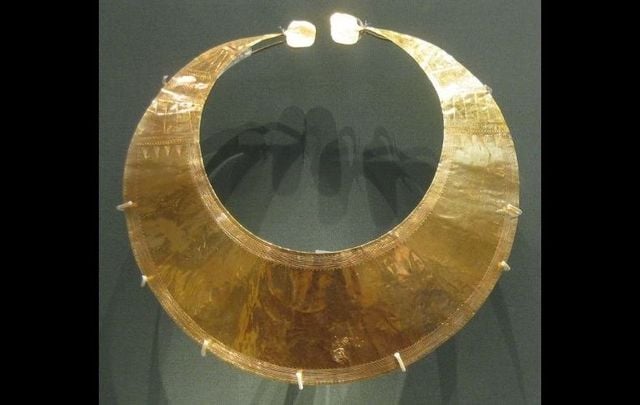
Bronze was one of the most valuable materials of the era. Local craftspeople may have produced tools, weapons, jewellery, and ceremonial objects using advanced metalworking techniques. Manufacturing bronze required both copper and tin, materials that often travelled considerable distances, indicating extensive trade connections across Britain and continental Europe.
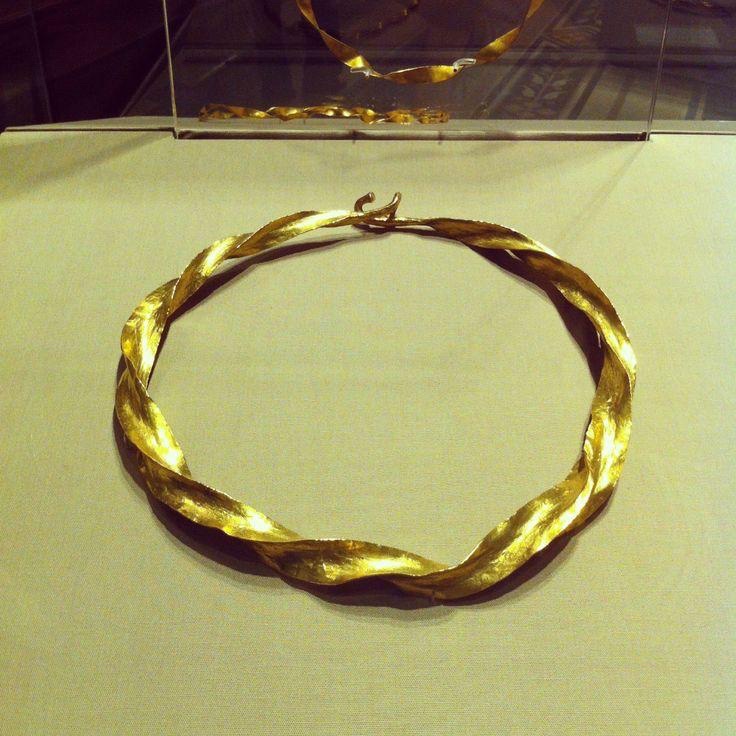
Credit: National Museum of Ireland, Wikimedia Commons — CC BY-SA 4.0.
A Centre for Trade and Exchange
One of the most significant aspects of the discovery is the possibility that Haughey’s Fort played a central role in regional trade networks.
During the Bronze Age, communities exchanged metals, pottery, livestock, textiles, food, and luxury goods over surprisingly long distances. Ireland was already recognised as an important source of valuable natural resources, and Haughey’s Fort may have functioned as a marketplace where merchants, craftspeople, and travellers met to exchange both goods and knowledge.
Trade would have spread not only products but also new technologies, cultural traditions, and innovative ideas, contributing to the rapid development of Bronze Age societies throughout Europe.
Challenging Existing Historical Theories
The discovery raises important questions about when urbanisation truly began in Europe.
For many years, historians believed that large, organised settlements developed much later. However, the evidence from Haughey’s Fort suggests that communities capable of supporting hundreds of inhabitants, coordinating production, and organising ceremonial life already existed around 1200 BC.
If future excavations confirm these findings, historians may need to reconsider how and when Europe’s earliest urban centres emerged.
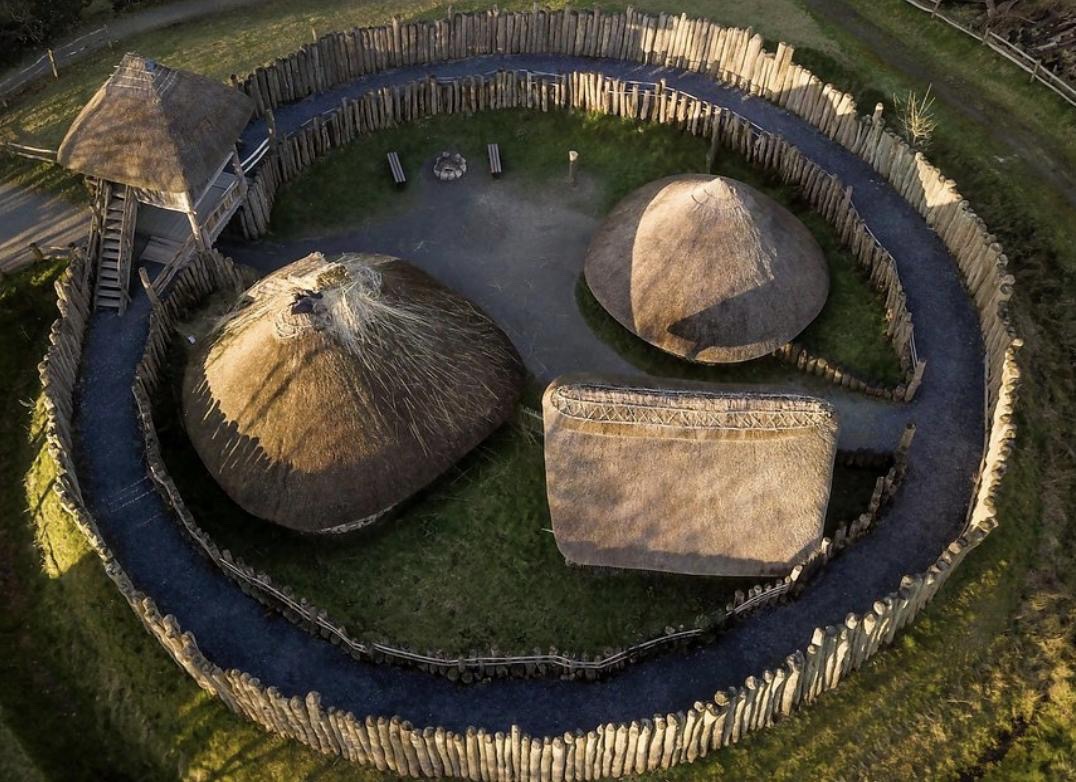
Credit: Wikimedia Commons — CC BY-SA 4.0
Research Is Far From Complete
Scientists emphasise that only part of the archaeological landscape has been fully investigated. Further excavations and detailed analyses are expected to provide additional information about the settlement’s population, economy, diet, social hierarchy, and religious practices.
Future research may also reveal how Haughey’s Fort interacted with neighbouring communities and what role it played in wider Bronze Age trade networks across Ireland and beyond.
Why This Discovery Matters
The significance of Haughey’s Fort extends well beyond Ireland. The site demonstrates that Bronze Age societies were capable of creating large, organised communities with advanced planning, specialised industries, and complex social structures centuries earlier than previously believed.
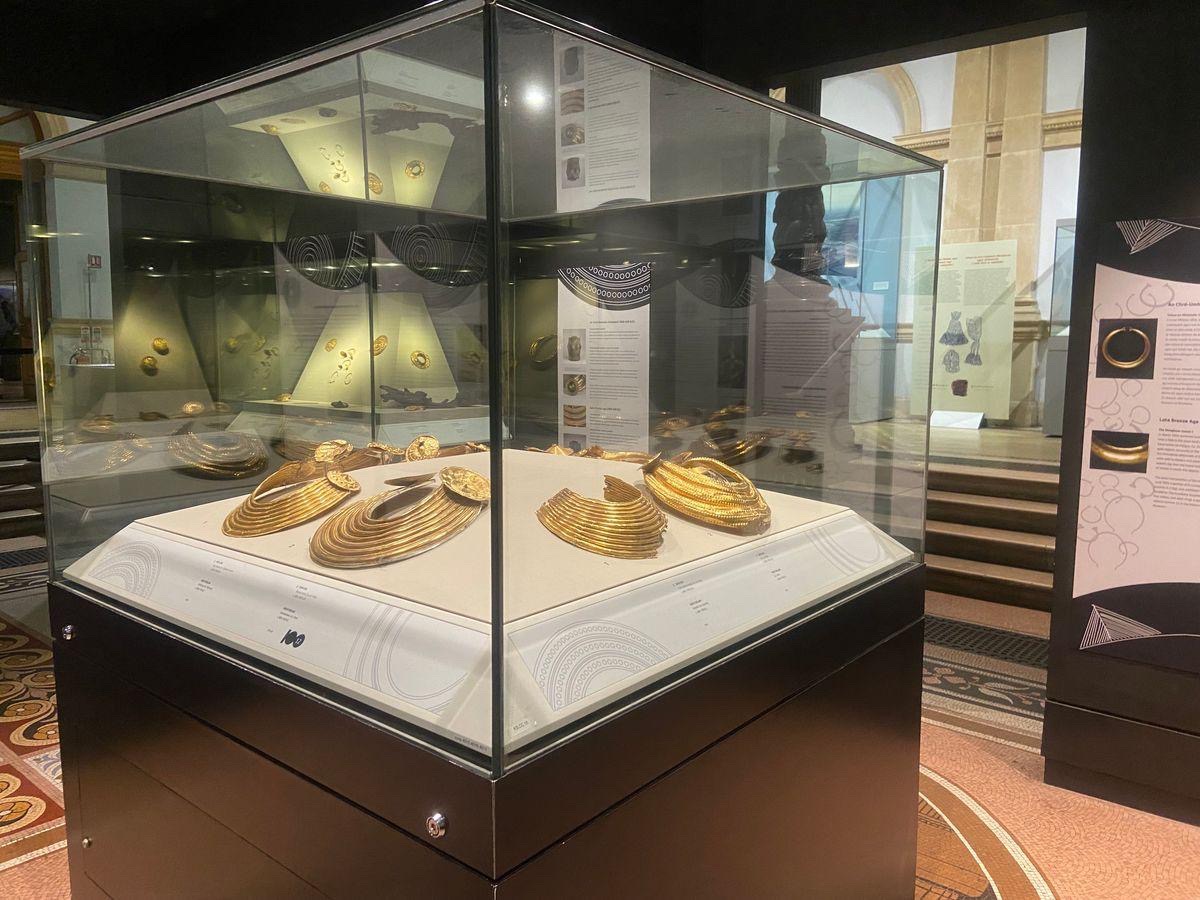
Credit: National Museum of Ireland
Rather than viewing prehistoric Europe as a landscape of isolated farming villages, archaeologists are beginning to see evidence of dynamic regional centres that connected people through trade, craftsmanship, politics, and religion.
As researchers continue to uncover new evidence, Haughey’s Fort promises to become one of the most important archaeological sites for understanding the origins of organised society in northwestern Europe. Its discoveries remind us that history is constantly evolving, and each new excavation has the potential to transform what we know about our ancient past.
Source: Queen’s University Belfast, University of Glasgow, and archaeological research on Haughey’s Fort.
Written by Hidden Civilizations Editorial Team